Last updated: October 2026 · Population figures checked against the IUCN Red List, government surveys and conservation reports
The most endangered animals in the world are down to a few dozen, a few hundred or, in two cases, a handful of individuals. Some live in a single forest or river; others are spread across oceans but have lost most of their numbers. This list of the 20 most endangered animals in 2026 runs roughly from the fewest left to the most, and explains where each one lives, how many remain, why it is in trouble and what is being done to save it. Each entry links to our travel guide for the country where the animal is found.
What Does “Endangered” Mean?
Scientists use the IUCN Red List of Threatened Species to measure extinction risk. Every animal in this list is in one of its two highest threat categories:
Where a figure in our list of the most endangered animals is for a subspecies (such as the Amur leopard or Cross River gorilla), we say so. Population numbers come from the latest published surveys and are rounded, because counting rare, shy animals is difficult.
The 20 Most Endangered Animals at a Glance
| # | Animal | Where | Left in the wild | Status | Main threat |
|---|---|---|---|---|---|
| 1 | Northern White Rhino | Kenya | 2 | Critically Endangered | Poaching (historic) |
| 2 | Vaquita | Mexico | ~7–10 | Critically Endangered | Illegal gillnets (bycatch) |
| 3 | Red Wolf | United States | ~22 adults | Critically Endangered | Vehicles, gunshots, hybridisation |
| 4 | Hainan Gibbon | China | 42 | Critically Endangered | Habitat loss, tiny range |
| 5 | Sumatran Rhino | Indonesia | 34–47 | Critically Endangered | Isolation, poaching |
| 6 | Javan Rhino | Indonesia | ~50 | Critically Endangered | Poaching, one location |
| 7 | Saola | Laos and Vietnam | Unknown | Critically Endangered | Snares |
| 8 | Amur Leopard | Russia and China | ~120–130 (Russia) | Critically Endangered | Poaching, small population |
| 9 | Cross River Gorilla | Nigeria and Cameroon | <300 | Critically Endangered | Hunting, habitat loss |
| 10 | Kākāpō | New Zealand | 325 | Critically Endangered | Introduced predators |
| 11 | Sumatran Tiger | Indonesia | ~400–600 | Critically Endangered | Deforestation, snares |
| 12 | Philippine Eagle | Philippines | ~392 pairs | Critically Endangered | Deforestation, shooting |
| 13 | Tapanuli Orangutan | Indonesia | <800 | Critically Endangered | Dam, mining, floods |
| 14 | Axolotl | Mexico | Unknown | Critically Endangered | Pollution, invasive fish |
| 15 | Mountain Gorilla | Rwanda, Uganda and DR Congo | ~1,060 | Endangered | Disease, snares, small range |
| 16 | Yangtze Finless Porpoise | China | 1,426 | Critically Endangered | River traffic, overfishing |
| 17 | Sunda Pangolin | Indonesia, Malaysia, Thailand, Vietnam and neighbours | Unknown | Critically Endangered | Trafficking |
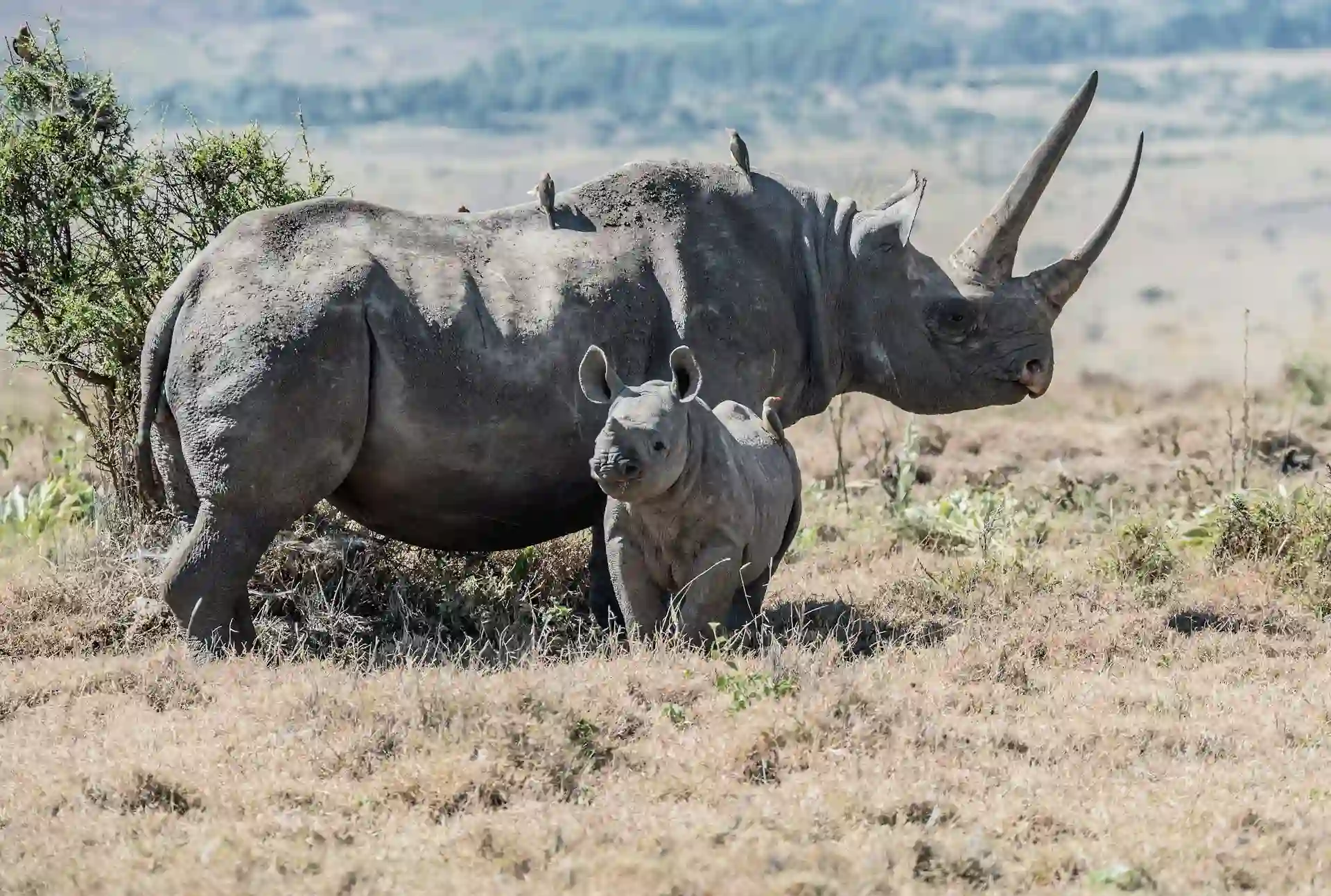
| 18 | Black Rhino | Kenya, Namibia, South Africa, Zimbabwe and Tanzania | 6,788 | Critically Endangered | Poaching |
| 19 | Hawksbill Turtle | Tropical seas worldwide | Unknown | Critically Endangered | Shell trade, reef loss |
| 20 | African Forest Elephant | Gabon, Cameroon, Republic of the Congo and DR Congo | Unknown | Critically Endangered | Ivory poaching, habitat loss |
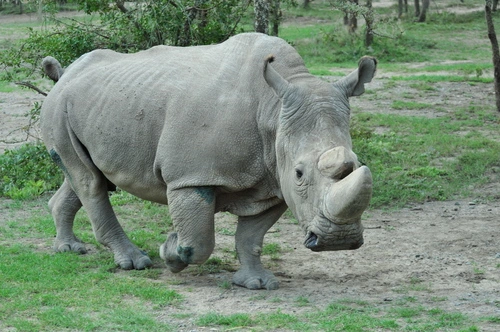
1. Northern White Rhino
Ceratotherium simum cottoni
IUCN: Critically Endangered (possibly extinct in the wild)
Vital statistics
- 📏 Size
- 1.5–1.8 m at the shoulder, up to 4 m long
- ⚖️ Weight
- Up to about 2,300 kg
- ⏳ Lifespan
- 40–50 years
- 🍼 Gestation
- About 16 months
- 🧬 Related species
- Rhinos: 5 living species
Why it is endangered
Poaching for horn wiped out the wild population across Central Africa. The last male, Sudan, died in March 2018, leaving two females, Najin and her daughter Fatu, who cannot carry a pregnancy themselves.
What is being done
The BioRescue project has stored a bank of northern white rhino embryos made in the lab, and in 2024 achieved the first-ever rhino IVF pregnancy, using a southern white rhino surrogate. The next step is transferring a northern white embryo.
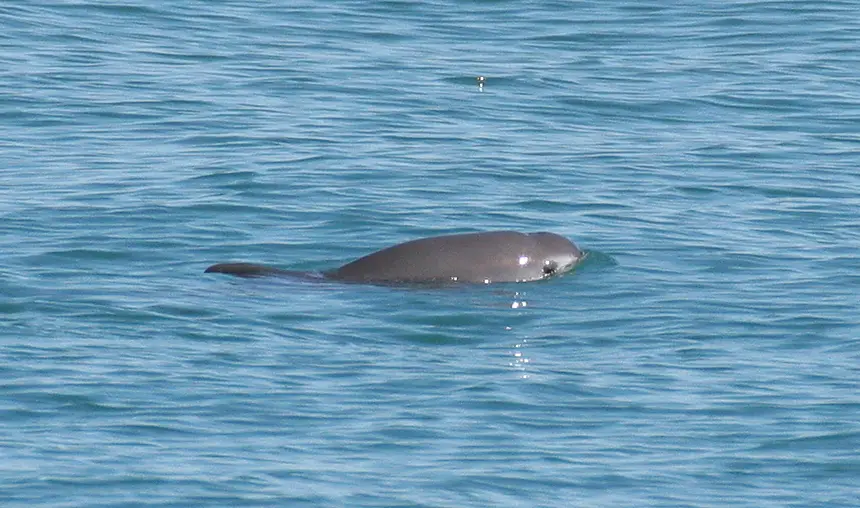
2. Vaquita
Phocoena sinus
IUCN: Critically Endangered
Vital statistics
- 📏 Size
- Up to 1.5 m long
- ⚖️ Weight
- Up to about 55 kg
- ⏳ Lifespan
- About 20 years
- 🍼 Gestation
- 10–11 months; one calf every 1–2 years
- 🧬 Related species
- Porpoises: 7 species (the vaquita is the smallest)
Why it is endangered
Vaquitas drown in illegal gillnets set for the totoaba, a large fish whose swim bladder sells for high prices on the black market. The vaquita is not the target; it is bycatch.
What is being done
Mexico declared a “zero-tolerance” area where gillnets are banned and placed concrete blocks on the seabed to snag nets. Yearly surveys keep finding a handful of animals, including new calves, so the species is still breeding. Its habitat is part of the UNESCO World Heritage Site Islands and Protected Areas of the Gulf of California.
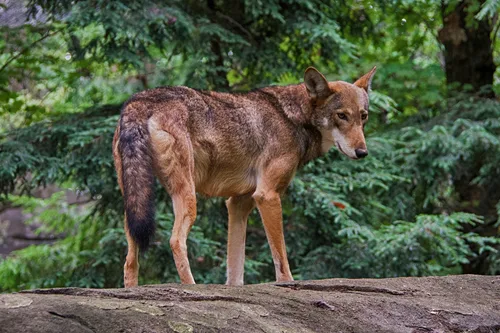
3. Red Wolf
Canis rufus
IUCN: Critically Endangered
Vital statistics
- 📏 Size
- 1.4–1.6 m nose to tail; 65–80 cm at the shoulder
- ⚖️ Weight
- 20–36 kg
- ⏳ Lifespan
- 6–7 years in the wild, up to 15 in captivity
- 🍼 Gestation
- About 2 months (60–63 days)
- 🧬 Related species
- Dog family (Canidae): about 37 species
Why it is endangered
Hunted and trapped almost to extinction in the 20th century, red wolves now face vehicle strikes, gunshots and interbreeding with coyotes, which dilutes the population.
What is being done
The species was declared extinct in the wild in 1980, then reintroduced in 1987 from captive-bred animals. The US Fish and Wildlife Service releases captive wolves and fosters pups into wild dens.
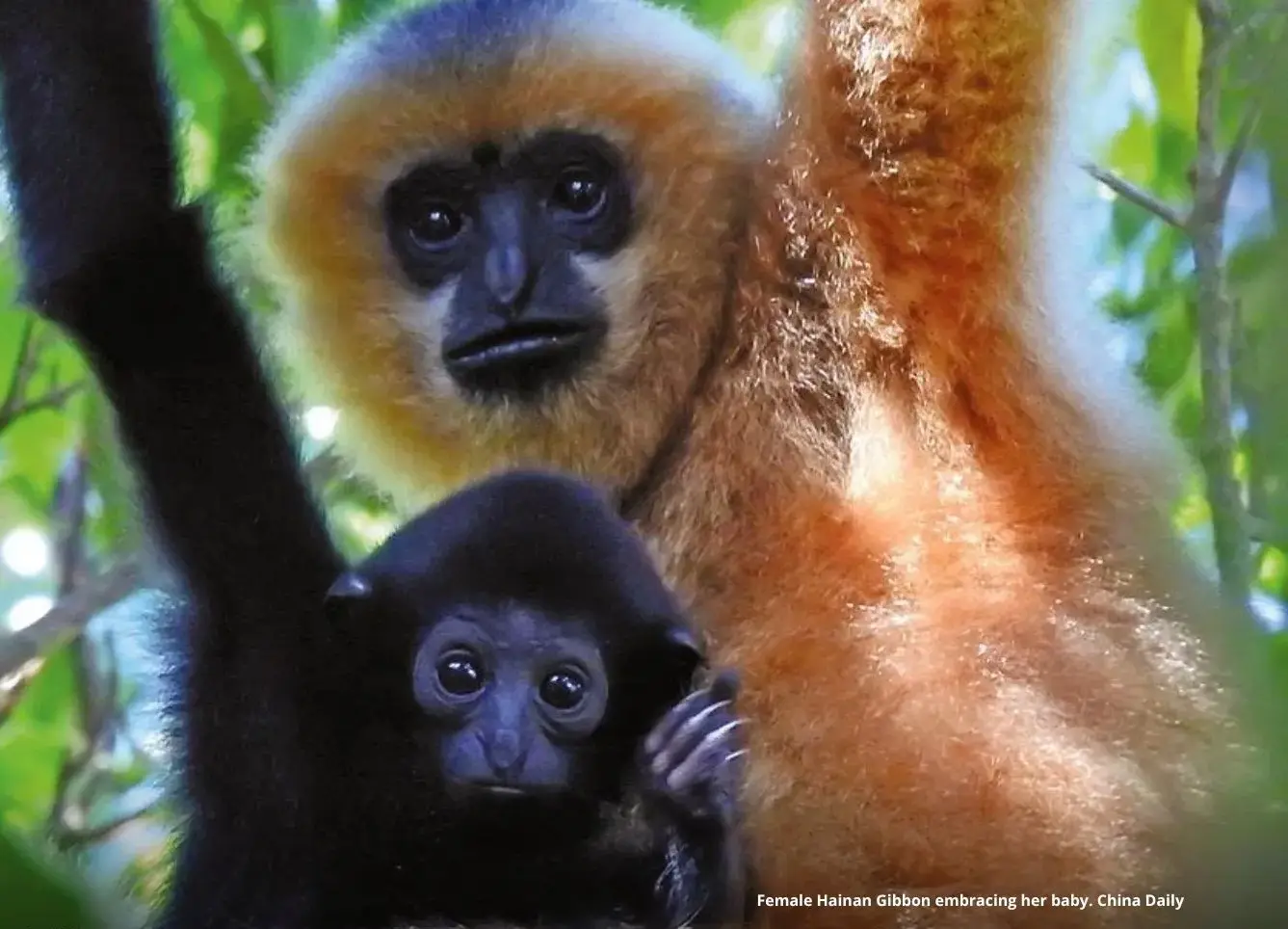
4. Hainan Gibbon
Nomascus hainanus
IUCN: Critically Endangered
Vital statistics
- 📏 Size
- Body about 45–60 cm; no tail
- ⚖️ Weight
- 6–10 kg
- ⏳ Lifespan
- Not measured; gibbons often live 30+ years
- 🍼 Gestation
- About 5–6 months; one baby every 2 years
- 🧬 Related species
- Gibbons: about 20 species
Why it is endangered
Logging and hunting reduced the gibbons to fewer than 10 by the 1970s. With all of them in one forest patch, a storm, disease or fire could wipe out the species.
What is being done
Rangers monitor every family group, and rope bridges have been strung across landslide gaps so gibbons can move between forest fragments. Numbers have slowly climbed back to 42.
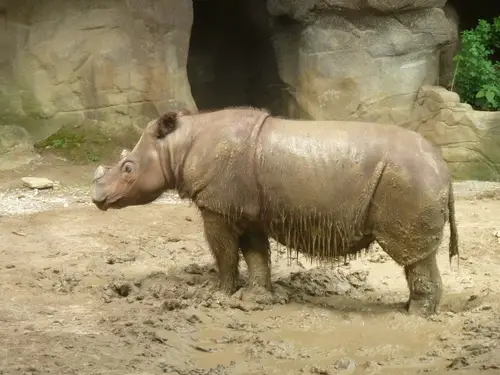
5. Sumatran Rhino
Dicerorhinus sumatrensis
IUCN: Critically Endangered
Vital statistics
- 📏 Size
- 1–1.5 m at the shoulder, 2.4–3.2 m long
- ⚖️ Weight
- 500–960 kg (the smallest rhino)
- ⏳ Lifespan
- 35–40 years
- 🍼 Gestation
- About 15–16 months
- 🧬 Related species
- Rhinos: 5 living species
Why it is endangered
Poaching and forest clearance split the population into tiny groups that rarely meet to breed. The species was declared extinct in Malaysia in 2019.
What is being done
Animals are brought into sanctuaries such as Way Kambas in Sumatra for breeding, and several calves have been born there in recent years.
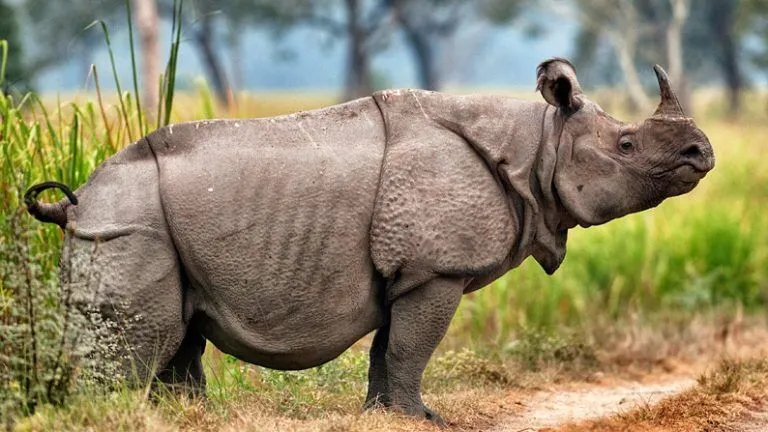
6. Javan Rhino
Rhinoceros sondaicus
IUCN: Critically Endangered
Vital statistics
- 📏 Size
- 1.4–1.7 m at the shoulder, about 3 m long
- ⚖️ Weight
- 900–2,300 kg
- ⏳ Lifespan
- 30–45 years
- 🍼 Gestation
- About 16 months
- 🧬 Related species
- Rhinos: 5 living species
Why it is endangered
The whole species lives in one national park. A poaching ring is alleged to have killed 26 rhinos in recent years, cutting the population by about a third. The last Javan rhino in Vietnam was killed in 2010.
What is being done
Indonesia has strengthened ranger patrols and prosecuted poachers, and conservationists are working towards a second population elsewhere so a single disaster cannot end the species. Its habitat is part of the UNESCO World Heritage Site Ujung Kulon National Park.
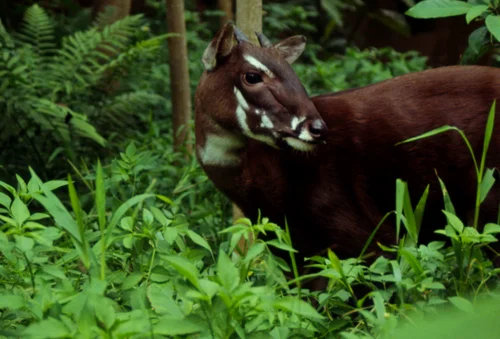
7. Saola
Pseudoryx nghetinhensis
IUCN: Critically Endangered
Vital statistics
- 📏 Size
- 80–90 cm at the shoulder, about 1.5 m long
- ⚖️ Weight
- About 100 kg
- ⏳ Lifespan
- Unknown (at least 8–9 years)
- 🍼 Gestation
- Estimated about 8 months
- 🧬 Related species
- Cattle and antelope family (Bovidae): about 140 species; the saola is the only one in its genus
Why it is endangered
Wire snares set by the thousands for other animals catch saolas by accident. The species is so rarely seen that the last confirmed record is a camera-trap photo from 2013.
What is being done
Rangers remove snares from the forest. In 2025 scientists published the first saola genome and found two distinct populations, which would help a captive-breeding plan if any animals are found.

8. Amur Leopard
Panthera pardus orientalis
IUCN: Critically Endangered (subspecies)
Vital statistics
- 📏 Size
- 64–78 cm at the shoulder; 1.1–1.4 m long plus an 80–90 cm tail
- ⚖️ Weight
- 25–48 kg
- ⏳ Lifespan
- 10–15 years in the wild, up to 20 in captivity
- 🍼 Gestation
- About 3 months (90–105 days)
- 🧬 Related species
- Cat family: about 41 species; the leopard has 8 subspecies
Why it is endangered
Poaching, forest fires and the loss of deer and other prey pushed the population down to about 30 in the early 2000s.
What is being done
Russia’s Land of the Leopard National Park, created in 2012, protects their core range, and camera traps now count every adult. Numbers have roughly quadrupled.
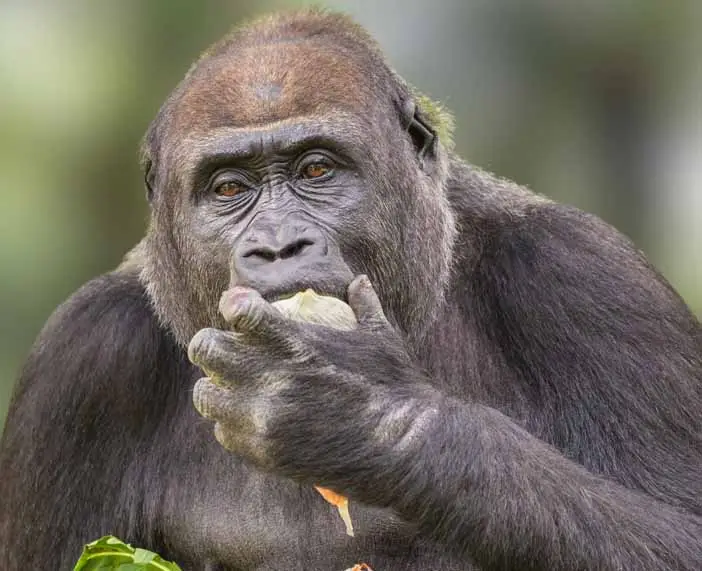
9. Cross River Gorilla
Gorilla gorilla diehli
IUCN: Critically Endangered (subspecies)
Vital statistics
- 📏 Size
- Males stand up to about 1.7 m
- ⚖️ Weight
- Males up to about 200 kg; females about 100 kg
- ⏳ Lifespan
- 35–40 years
- 🍼 Gestation
- About 8.5 months
- 🧬 Related species
- Gorillas: 2 species, 4 subspecies
Why it is endangered
Hunting for bushmeat and the clearing of forest for farms have split the gorillas into about a dozen small groups spread over rugged hills.
What is being done
Protected areas such as Cross River National Park and Afi Mountain in Nigeria and Takamanda in Cameroon, plus community ranger programmes, protect the remaining groups.
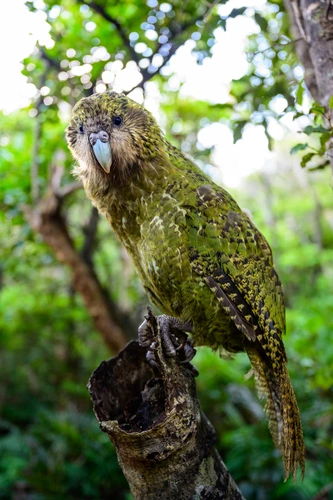
10. Kākāpō
Strigops habroptilus
IUCN: Critically Endangered
Vital statistics
- 📏 Size
- Up to 64 cm long
- ⚖️ Weight
- Up to 4 kg (the heaviest parrot)
- ⏳ Lifespan
- Estimated 60–90 years
- 🍼 Incubation
- About 30 days; breeds only every 2–4 years
- 🧬 Related species
- Parrots: about 400 species; the only flightless one
Why it is endangered
Introduced predators such as stoats, cats and rats wiped out this flightless parrot on the mainland. By 1995 only 51 were left.
What is being done
Every kākāpō has a name and is monitored. The 2026 breeding season produced a record 90 chicks, and the population is the highest it has been in decades.
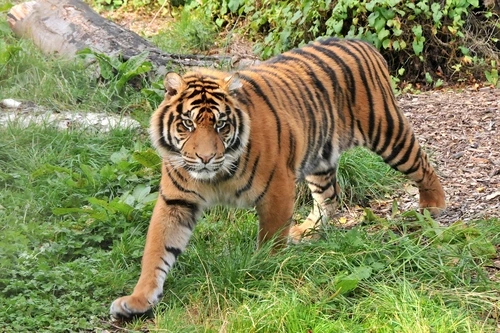
11. Sumatran Tiger
Panthera tigris sondaica
IUCN: Critically Endangered
Vital statistics
- 📏 Size
- Males up to about 2.4 m including the tail
- ⚖️ Weight
- Males 100–140 kg; females 75–110 kg
- ⏳ Lifespan
- 10–15 years in the wild, about 20 in captivity
- 🍼 Gestation
- About 3.5 months (about 103 days)
- 🧬 Related species
- Tiger: 1 species, 2 subspecies (continental and Sunda)
Why it is endangered
Forest is cleared for palm oil and paper plantations, and tigers are killed in snares or poached for skins and bones.
What is being done
Anti-poaching patrols operate in parks such as Kerinci Seblat and Gunung Leuser, and teams remove snares and work with villages to reduce conflict. Its habitat is part of the UNESCO World Heritage Site Tropical Rainforest Heritage of Sumatra.
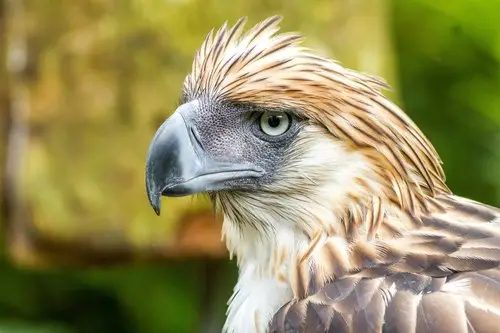
12. Philippine Eagle
Pithecophaga jefferyi
IUCN: Critically Endangered
Vital statistics
- 📏 Size
- 90–100 cm long; wingspan up to 2 m
- ⚖️ Weight
- 4.7–8 kg
- ⏳ Lifespan
- Up to about 40 years (42 recorded in captivity)
- 🍼 Incubation
- About 2 months; one chick every 2 years
- 🧬 Related species
- Hawks and eagles (Accipitridae): about 250 species
Why it is endangered
Logging and farming have removed much of its forest, and eagles are still shot or trapped. A pair raises only one chick every two years.
What is being done
The Philippine Eagle Foundation breeds eagles, protects nests with local communities and releases birds back into the wild. Killing one is a crime.
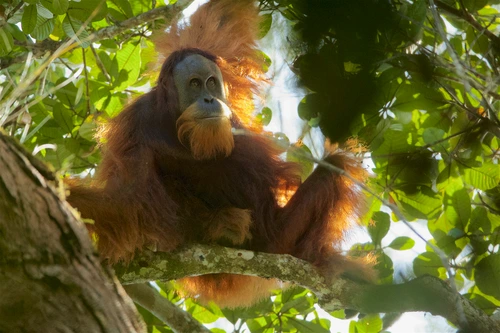
13. Tapanuli Orangutan
Pongo tapanuliensis
IUCN: Critically Endangered
Vital statistics
- 📏 Size
- Males about 1.4 m tall, with an arm span over 2 m
- ⚖️ Weight
- Males up to about 90 kg; females 30–50 kg
- ⏳ Lifespan
- 40–50 years
- 🍼 Gestation
- About 8.5 months; one baby every 8–9 years
- 🧬 Related species
- Orangutans: 3 species (this one was named in 2017)
Why it is endangered
The species survives in just a few percent of its historical range. A hydroelectric dam, a gold mine and roads threaten its forest, and floods in December 2025 killed at least 58 orangutans.
What is being done
In 2026 the Indonesian government paused the dam and mine for post-disaster reviews. Conservation groups are pushing for wildlife corridors to reconnect the forest blocks.

14. Axolotl
Ambystoma mexicanum
IUCN: Critically Endangered
Vital statistics
- 📏 Size
- 15–30 cm long (usually about 23 cm)
- ⚖️ Weight
- Usually 60–230 g
- ⏳ Lifespan
- 10–15 years
- 🍼 Eggs hatch in
- 10–14 days; a female lays up to 1,000 eggs
- 🧬 Related species
- Mole salamanders (genus Ambystoma): about 30 species
Why it is endangered
Pollution, the growth of Mexico City and invasive carp and tilapia, which eat axolotl eggs and young, have almost emptied the canals. A 2025 survey netted no axolotls, though environmental DNA showed some remain.
What is being done
Farmers are restoring traditional chinampa fields as clean-water refuges, and labs and zoos keep large captive populations. Its habitat is part of the UNESCO World Heritage Site Historic Centre of Mexico City and Xochimilco.

15. Mountain Gorilla
Gorilla beringei beringei
IUCN: Endangered (subspecies; improved from Critically Endangered in 2018)
Vital statistics
- 📏 Size
- Males stand up to about 1.7 m
- ⚖️ Weight
- Males up to about 200 kg; females about 100 kg
- ⏳ Lifespan
- 35–40 years
- 🍼 Gestation
- About 8.5 months; one baby every 4 years
- 🧬 Related species
- Gorillas: 2 species, 4 subspecies
Why it is endangered
Habitat loss, snares, disease caught from humans and conflict in the region once pushed numbers to about 250 in the early 1980s.
What is being done
Strictly managed gorilla trekking pays for rangers and community projects. Mountain gorillas are the only great ape whose numbers are rising. A new census of Bwindi was carried out in 2025. Its habitat is part of the UNESCO World Heritage Site Bwindi Impenetrable National Park.
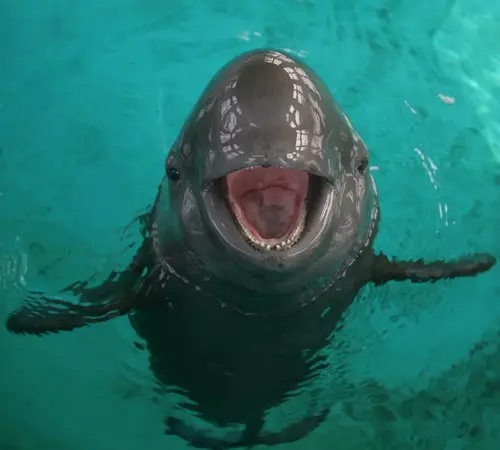
16. Yangtze Finless Porpoise
Neophocaena asiaeorientalis asiaeorientalis
IUCN: Critically Endangered
Vital statistics
- 📏 Size
- 1.2–1.7 m long
- ⚖️ Weight
- Up to about 70 kg
- ⏳ Lifespan
- About 20–25 years
- 🍼 Gestation
- About 11 months
- 🧬 Related species
- Porpoises: 7 species
Why it is endangered
Overfishing, ship traffic, sand dredging, dams and pollution turned the Yangtze into one of the busiest rivers on Earth. The baiji, a river dolphin, was declared functionally extinct there in 2006.
What is being done
China banned fishing on the Yangtze for 10 years from 2021. Porpoise numbers rose from about 1,249 in 2022 to 1,426 in 2025, the first recorded increase.
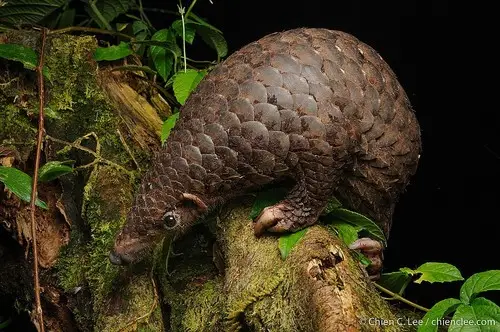
17. Sunda Pangolin
Manis javanica
IUCN: Critically Endangered
Vital statistics
- 📏 Size
- 79–88 cm including the tail
- ⚖️ Weight
- Up to about 10 kg
- ⏳ Lifespan
- Unknown in the wild; close relatives reach about 20 years in captivity
- 🍼 Gestation
- About 4–6 months (estimates vary); usually one baby
- 🧬 Related species
- Pangolins: 8 species, all threatened
Why it is endangered
Pangolins are the most trafficked wild mammals in the world. They are taken for their meat and for their scales, which are used in traditional medicine even though they are made of keratin, like human fingernails.
What is being done
All international commercial trade in pangolins has been banned under CITES since 2017. Rescue centres rehabilitate seized animals and release them.

18. Black Rhino
Diceros bicornis
IUCN: Critically Endangered
Vital statistics
- 📏 Size
- 1.4–1.8 m at the shoulder, 3–3.75 m long
- ⚖️ Weight
- 800–1,400 kg
- ⏳ Lifespan
- 35–50 years
- 🍼 Gestation
- About 15 months
- 🧬 Related species
- Rhinos: 5 living species
Why it is endangered
Poaching for horn caused a fall of about 98% in the 20th century, to roughly 2,400 animals in 1995. Poaching remains the biggest threat.
What is being done
Guarded sanctuaries, dehorning, ranger dog units and moving rhinos to safer areas have helped the population more than double since its low point.
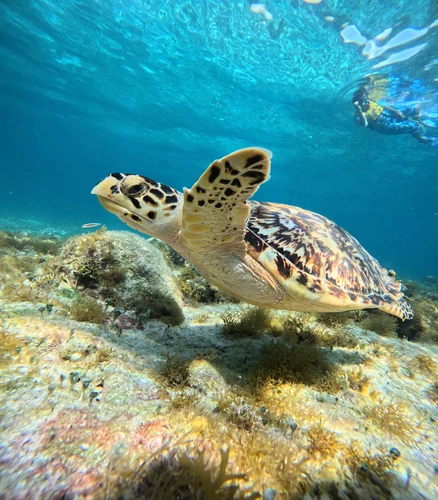
19. Hawksbill Turtle
Eretmochelys imbricata
IUCN: Critically Endangered
Vital statistics
- 📏 Size
- Shell 60–90 cm long
- ⚖️ Weight
- 45–70 kg
- ⏳ Lifespan
- 30–50+ years
- 🍼 Incubation
- About 2 months; about 140 eggs per nest
- 🧬 Related species
- Sea turtles: 7 species
Why it is endangered
For centuries hawksbills were killed for their beautiful shell, sold as “tortoiseshell”. Black-market trade continues, along with egg collection, beach development and the loss of coral reefs.
What is being done
International trade has been banned under CITES since 1977, and protected nesting beaches in places like the Seychelles and the Caribbean have seen numbers recover.
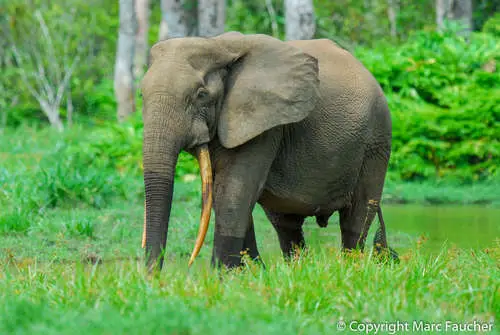
20. African Forest Elephant
Loxodonta cyclotis
IUCN: Critically Endangered
Vital statistics
- 📏 Size
- 2–2.5 m at the shoulder
- ⚖️ Weight
- 2,000–5,000 kg
- ⏳ Lifespan
- 60–70 years
- 🍼 Gestation
- About 22 months (the longest of any land mammal)
- 🧬 Related species
- Elephants: 3 species
Why it is endangered
Ivory poaching and the clearing of forests for farms and logging caused a decline of more than 86% over 31 years, according to the IUCN assessment that listed it as a separate species in 2021.
What is being done
Gabon, home to the largest remaining population, has strengthened protection in its national parks and banned the ivory trade.
The Good News: Animals That Are Coming Back
Extinction is not inevitable. Several of the most endangered animals in this list are slowly recovering, and these comebacks show what protection can achieve:
51 birds in 1995, 325 in 2026, after predators were removed from island refuges.
About 250 in the early 1980s, over 1,000 today, funded largely by gorilla tourism.
Up from about 1,249 to 1,426 between 2022 and 2025 after a 10-year fishing ban.
Roughly 2,400 in 1995, 6,788 at the end of 2024, thanks to anti-poaching work.
How You Can Help the Most Endangered Animals
- Never buy wildlife products: ivory, tortoiseshell, pangolin scales, rhino horn, coral and exotic pets all fuel the trade.
- Choose certified products: look for sustainable seafood and responsibly sourced palm oil, which protect turtles, porpoises, tigers and orangutans.
- Travel responsibly: on safari or a wildlife trip, pick licensed operators that fund local conservation and keep a respectful distance from animals.
- Support the people doing the work: rangers and community conservation groups protect most of the species in this list.
- Learn and share: students and teachers can explore the countries in this list with our Compare Countries tool and quizzes below.
Many of the most endangered animals live inside UNESCO World Heritage Sites, from the rainforests of Sumatra to Bwindi in Uganda. See the most famous natural and cultural sites in our guide to UNESCO World Heritage Sites, or find out how many World Heritage Sites there are.
Endangered Animals: Frequently Asked Questions
What is the most endangered animal in the world?
The northern white rhino has only two individuals left, both female, so it can no longer breed naturally. Among full species, the vaquita porpoise of Mexico is the rarest, with only about 7 to 10 animals seen in the 2025 survey.
What does “critically endangered” mean?
Critically Endangered is the highest risk category on the IUCN Red List before “Extinct in the Wild”. It means a species faces an extremely high risk of extinction in the wild, based on criteria such as a very small or rapidly shrinking population.
How many species are endangered?
The IUCN Red List has assessed well over 160,000 species, and more than 46,000 of them are threatened with extinction (Critically Endangered, Endangered or Vulnerable). That includes about 4 in 10 amphibians, a quarter of mammals and more than 1 in 10 birds.
What is the main cause of animals becoming endangered?
Habitat loss is the biggest driver worldwide, followed by overexploitation (hunting, poaching and fishing), invasive species, pollution and climate change. Most of the animals in this list face several of these threats at once.
Can endangered animals recover?
Yes. The kākāpō has grown from 51 birds in 1995 to 325 in 2026, mountain gorillas have more than quadrupled since the 1980s, and Yangtze finless porpoises are increasing after a fishing ban. Recovery needs protected habitat, an end to hunting and long-term funding.
Which country has the most endangered animals on this list?
Indonesia, with five: the Sumatran rhino, Javan rhino, Sumatran tiger, Tapanuli orangutan and Sunda pangolin. Its rainforests are among the richest and most threatened on Earth.
How can I help endangered animals?
Never buy products made from wildlife (ivory, tortoiseshell, pangolin scales, exotic pets), choose certified sustainable seafood and palm oil, travel with responsible wildlife operators, and support conservation groups that work with local communities.
Final Thoughts
The most endangered animals on Earth are not doomed. The same story repeats across this list: species collapse when their habitat is cleared or they are hunted for trade, and they recover when people protect their homes and stop the killing. Every country linked above has a part to play, and so do the travellers, students and shoppers who choose what to support.
Sources
- IUCN Red List of Threatened Species: status of every species and subspecies.
- International Rhino Foundation, State of the Rhino 2025: black rhino numbers.
- Mongabay (Aug 2025): IUCN and TRAFFIC report on Javan and Sumatran rhinos.
- Mexico Business News (Oct 2025): 2025 vaquita survey.
- US Fish and Wildlife Service: red wolf recovery programme.
- New Zealand Department of Conservation (Sept 2026): kākāpō population.
- China Daily (Apr 2025): Hainan gibbon population.
- Red Apes / SOCP: Tapanuli orangutan status and threats.
- Philippine Eagle Foundation: global population estimate.
- Conservation International: axolotl surveys.
- IUCN SSC Pangolin Specialist Group: Sunda pangolin.
- SEE Turtles: hawksbill turtle status.
Photo credits
- Featured image (black rhino mother and calf, Lewa, Kenya) and black rhino: David Clode / Unsplash
- Northern White Rhino: © janaohrner
- Vaquita: Paula Olson / NOAA
- Red Wolf: © Valerie, some rights reserved, via Flickr
- Hainan Gibbon: China Daily
- Sumatran Rhino: JJ Jackson / © International Rhino Foundation
- Javan Rhino: SeeTheWild
- Saola: © testerpro, some rights reserved, via iNaturalist
- Cross River Gorilla: © 2026 The Gorilla Organization
- Kākāpō: © Jake Osborne, some rights reserved, via Flickr
- Sumatran Tiger: © Joachim S. Müller, some rights reserved, via Flickr
- Philippine Eagle: © kdonbo, some rights reserved, via iNaturalist
- Tapanuli Orangutan: © Tim Laman, some rights reserved, via Wikimedia Commons
- Yangtze Finless Porpoise: © Huangdan2060, some rights reserved, via Wikimedia Commons
- Sunda Pangolin: © Chien Lee, all rights reserved, via iNaturalist
- Hawksbill Turtle: © malu_md, some rights reserved, via iNaturalist
- African Forest Elephant: © pfaucher, some rights reserved, via iNaturalist
- Amur leopard: William Warby / Unsplash
- Axolotl: Lutz Stallknecht / Unsplash
- Mountain gorilla: Emmy Shingiro / Unsplash
✈️ Planning this trip?
Compare hotel prices for your dates on Booking.com. Many rooms have free cancellation, so you can lock in a good price now.
📖 Keep reading
12 Best Places to Visit in 2027: Travel Destinations Worth Planning For
Discover 10 of the best places to visit in 2027, from Norway's spectacular fjords and Egypt's ancient wonders to Jaipur's literary festival, Chile's southern…

12 Best Christmas Towns in the USA for 2026: Markets, Lights and Dates
The best Christmas towns in the USA for 2026: New York, Leavenworth, Chicago's Christkindlmarket, and more, with dates and where to stay.

Total Solar Eclipse 2027: Where and When to See the Eclipse of the Century
Total solar eclipse 2027 guide: where and when to see it, totality times in Spain, Morocco and Egypt, weather odds, hotels and how to…