
Antarctica
Antarctica
Ice Sheets • Glaciers • Polar Science • Extreme Wildlife
Antarctica is Earth's southernmost, coldest, driest, and windiest continent. Almost entirely covered by ice, it holds about 60% of the world's freshwater. With no permanent human population, it serves as a global scientific sanctuary and an extraordinary marine wildlife haven.
Antarctica at a Glance
Fifth-largest continent on Earth
Learn More→Average ice thickness ~1.9 km
Learn More →Recorded at Vostok Station, 1983
Learn More →Vinson Massif peak elevation
Learn More →Locked within the ice sheet
Learn More→Across 70 research stations
Explore Stations →The Geography of Antarctica
The largest single ice mass on Earth, containing over 26.5 million cubic kilometers of ice.
Explore Ice Sheets →Divides the continent into East and West Antarctica, featuring the peak of Vinson Massif.
Explore Mountains →Earth's largest glacier, stretching over 400 km in length and up to 80 km wide.
Explore Glaciers →Massive floating platform extending from the coast, roughly equivalent in area to France.
Learn More →The cold ocean surrounding Antarctica driving global thermohaline ocean currents.
Explore Southern Ocean →Antarctic Wildlife
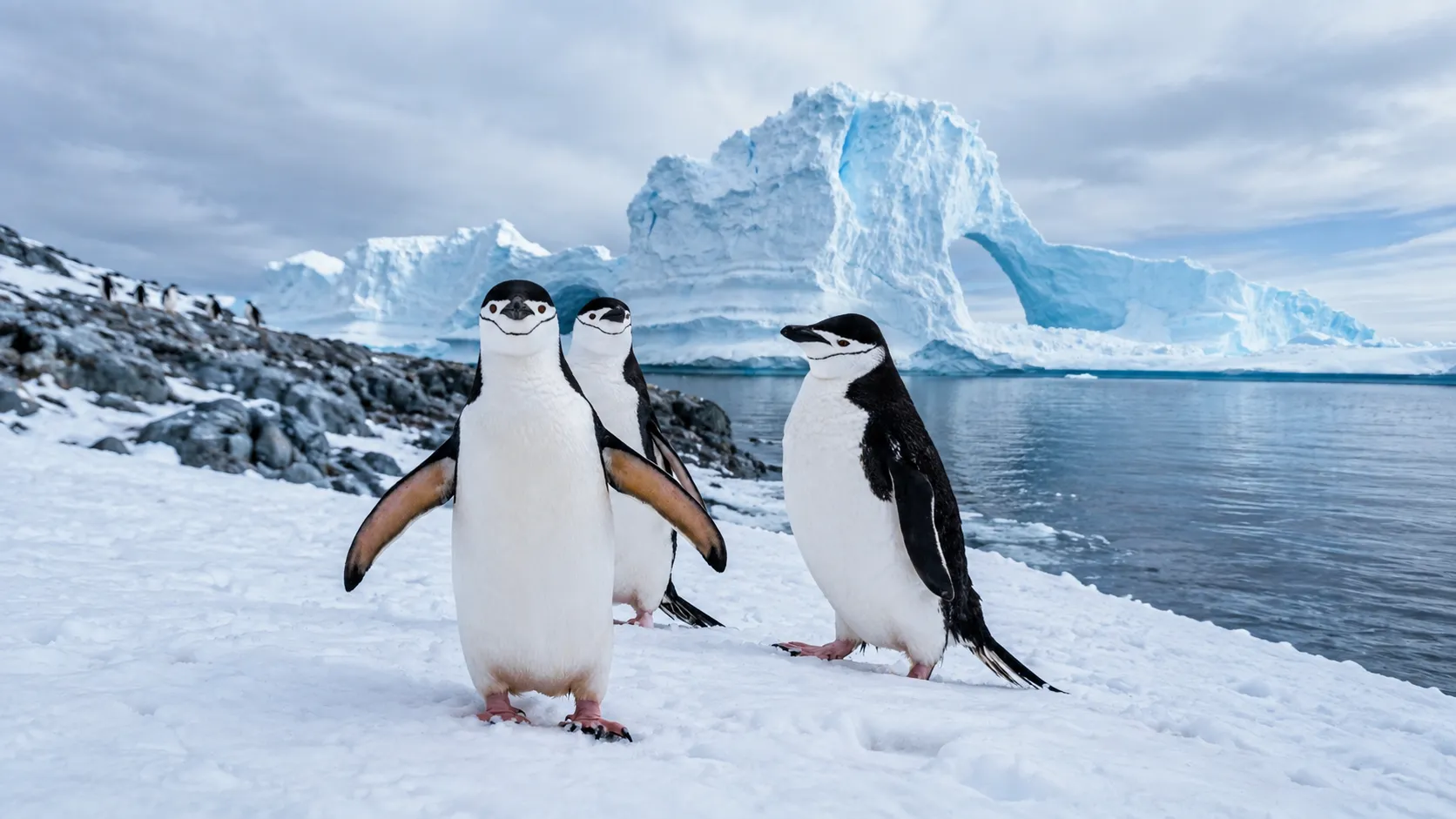
Emperor, Adélie, Chinstrap, and Gentoo colonies adapted to extreme polar conditions.
Explore More→Weddell, crabeater, fur, and apex predator leopard seals on sea ice floes.
Explore More →Blue, humpback, minke, and orcas feeding on rich summer Antarctic krill blooms.
Explore More →Wandering albatrosses, snow petrels, and skuas navigating Southern Ocean winds.
Explore More→Antarctic Research
Around 70 research stations operated by 30+ nations; McMurdo is the largest hub.
Explore Stations →Glaciology, astrophysics, and biology; ice cores preserve 800,000 years of climate data.
Explore Exciting Research →Historic 1959 treaty reserving the continent for peaceful global scientific collaboration.
Read Treaty →Antarctica & Climate
A natural archive revealing global atmospheric changes and paleoclimate records.
Explore More →Antarctica holds enough ice to impact sea levels globally by nearly 60 meters.
Explore Sea Level Rise →Glacial retreat and shelf collapse serve as crucial indicators of planetary warming.
Explore Global Warming →Exploration & History
James Cook crossed the Antarctic Circle in 1773; land sightings confirmed in 1820.
Read on Britannica →Heroic era ventures to modern solo unsupported record crossings.
Guinness World Record →Historic polar huts and monuments protected as testament to human endurance.
Explore Heritage →Travel to Antarctica
Departing from Ushuaia across the Drake Passage on ice-strengthened vessels.
Austral summer (Nov–Mar) offers 24-hour daylight and mild polar weather.
Witness penguin colonies, seal ice-floes, and whale feeding grounds up close.
IAATO-guided operations ensuring biosecurity and environmental safety.
Learn About Antarctica
Featured Antarctic Regions
Explore the World with AtlasWise
From Antarctica to every continent — discover geography, wildlife, polar science, and travel seamlessly.
Discover Natural Wonders →