
🇸🇲 Travel Guide to San Marino — The World's Oldest Republic
This comprehensive travel guide to San Marino will help you discover one of the world's most fascinating and enduring microstates. From the iconic Three Towers of Monte Titano to the cobbled streets of the UNESCO-listed historic centre, this travel guide to San Marino covers everything you need to plan an unforgettable journey. As the oldest surviving sovereign state and constitutional republic in the world, San Marino offers travellers a breathtaking blend of medieval history, stunning panoramic views, and enduring independence. Whether you're exploring the Palazzo Pubblico, watching the Changing of the Guard, or savouring the local Torta Tre Monti, this travel guide to San Marino is your essential companion.
San Marino is the fifth-smallest country in the world, completely surrounded by Italy. Its historic centre and Mount Titano were inscribed as a UNESCO World Heritage site in 2008.
📢 AdSense Leaderboard #1 (728x90 or responsive)
📊 Quick Facts
- Capital: City of San Marino 💡 Perched on Mount Titano at over 700 metres altitude
- Currency: Euro (EUR) 💡 San Marino uses the Euro as its official currency
- Language: Italian 💡 Italian is the official language; English is widely spoken in tourist areas
- Population: ~33,600 (2026 est.)
- Area: 61.2 km²
- Time Zone: UTC +1 (CET) / +2 (CEST)
📅 Plan Your Perfect Trip with This Travel Guide to San Marino
When planning your travel guide to San Marino, the best time to visit is during the shoulder seasons of late May to June and mid-September to mid-October, when temperatures range from 15–25°C and crowds are thinner. Summer (June–August) brings warm, sunny weather but also peak crowds, with tour groups flocking from Rimini and Bologna. Winter (November–April) offers a quieter experience, though some attractions have reduced hours. For the best photography, visit early morning or during the "blue hour" around sunrise and sunset. This travel guide to San Marino will help you plan the perfect trip for every season.
Best for: Pleasant temperatures (10–18°C) and lush greenery
Best for: Warm weather — but expect massive midday crowds
Best for: Crisp air, fewer crowds, and the best overall value
Feast of Saint Agatha (5 February) · San Marino Song Contest (6 March)
📢 AdSense Leaderboard #2 (728x90 or responsive)
🛂 Visa Information for Your Travel Guide to San Marino
Visa‑Free Access: San Marino does not have its own visa system; entry is governed by European Union and Italian visa regulations. Citizens of 60+ countries can enter visa‑free for stays up to 90 days, including the UK, US, Canada, Australia, New Zealand, Japan, and most European nations. Other nationalities must obtain a Schengen visa from an Italian embassy. For a complete travel guide to San Marino, verify your requirements before booking.
🌍 Visa‑Free Countries (Select List)
📋 Entry Requirements
- Passport Validity Must be valid for at least six months beyond your stay
- ETIAS San Marino is not part of the ETIAS system (it's not an EU member), but entry is via Italy
- Return Ticket Proof of onward/return travel is recommended
- Sufficient Funds Proof of sufficient funds for your stay may be required
🔗 Official Resources: San Marino Tourism Board · Italian Ministry of Foreign Affairs
📚 Trusted Resources for Your Travel Guide to San Marino
- Visit San Marino — Official Tourism Official tourism board of San Marino
- UNESCO — San Marino Historic Centre World Heritage site inscribed in 2008
- Britannica — San Marino Comprehensive country profile
- San Marino Site Detailed guide to towers, monuments, and museums
🌍 Explore our other guides: Italy · Vatican City · Monaco
💡 Key Travel Tips for Your San Marino Adventure
The Euro (EUR) is official — credit cards are widely accepted; ATMs are available in the city centre
Take the Bonelli Bus from Rimini train station (€6, 50 minutes) or the panoramic cable car from Borgo Maggiore
San Marino is best explored on foot — the historic centre is compact and walkable
Visit early morning or during the "blue hour" around sunrise and sunset for the best light
Buy the €10 Multi-museum card for access to multiple museums
Get your passport stamped at the Tourist Office as a souvenir
🏛️ Top Attractions to Visit in San Marino
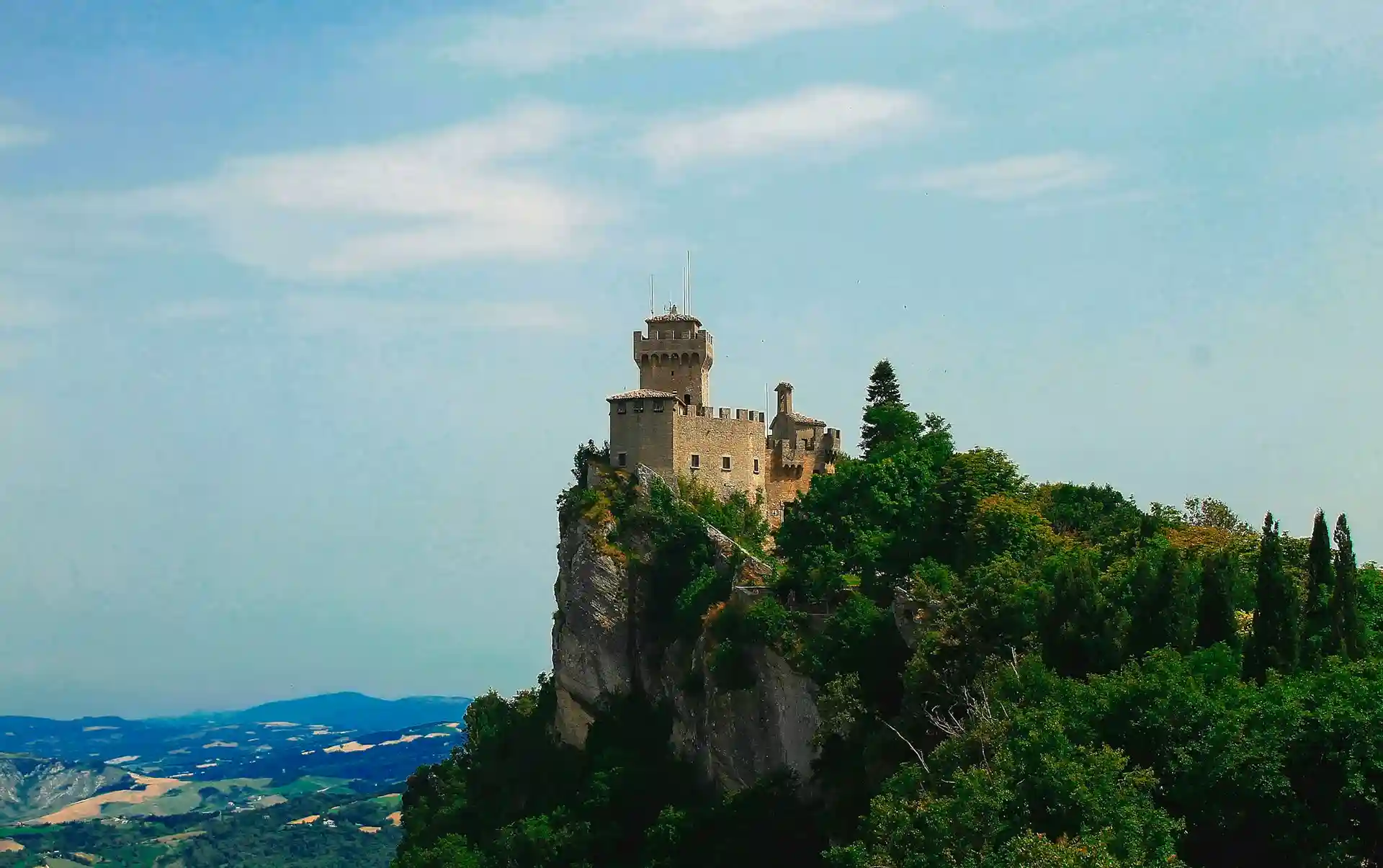
The oldest and most iconic of the three towers — constructed in the 11th century, it served as a prison
💡 The most visited of the three towersThe highest tower on Mount Titano — houses the Museum of Ancient Weapons with over 1,550 weapons
💡 Single ticket €6The seat of government on Piazza della Libertà — built between 1884–1894
💡 Watch the Changing of the Guard in summerThe largest church in San Marino — built in 1836 in Neoclassical style
💡 The relics of Saint Marinus are enshrined hereCovering art, history, archaeology, and cultural objects
💡 Includes Egyptian artefacts and works by GuercinoShowcasing historical stamps and early coins of San Marino from the 19th and 20th centuries
💡 A unique attraction for collectorsA scenic ride from Borgo Maggiore to the historic centre with views of the Adriatic Sea
💡 Runs every few minutesThe Crossbow Quarry — watch traditional crossbow practice demonstrations
💡 An ancient tradition still practised today📢 AdSense Leaderboard #3 (728x90 or responsive)
🏨 Top Hotels in San Marino
Accommodation in San Marino ranges from boutique hotels in the historic centre to more affordable options in Borgo Maggiore and the lowlands. Book well in advance during peak seasons.
Borgo Maggiore
Contact directly 🏡 Affordable guesthouses in the cable‑car base town⚠️ Please note: Hotel availability may be limited, especially in the historic centre. Book well in advance.
🎓 Top Universities in San Marino
City of San Marino
Visit Website → 🏆 The only university in San MarinoCity of San Marino
Visit Website → 📚 Graduate school for historical studies📘 San Marino's higher education system is small but specialised, with a focus on historical and musical studies.
🌺 Culture & Cuisine in San Marino
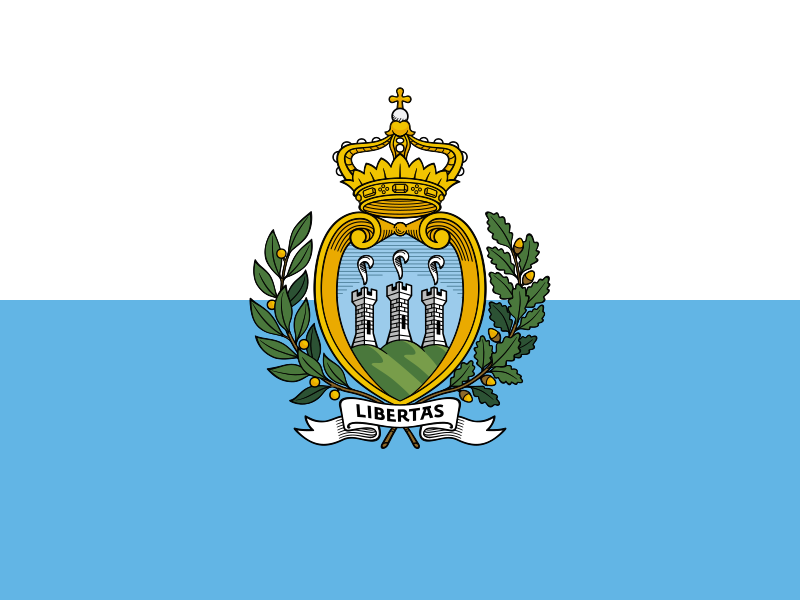
San Marino's culture is deeply rooted in its remarkable history of independence. Founded in 301 CE by Saint Marinus, a stonemason from Dalmatia, it is the world's oldest surviving republic. The country has maintained its independence through wars, papal interference, and foreign occupation, never joining any alliance or union. The Three Towers of San Marino — Guaita, Cesta, and Montale — are the national symbol, appearing on the flag and coat of arms. The Changing of the Guard ceremony, performed by the Guardie di Rocca, takes place multiple times daily in summer. Traditional crafts include crossbow making and the production of collectible stamps and coins.
Sammarinese cuisine is strongly influenced by the Italian regions of Emilia-Romagna and Marche. Signature dishes include fagioli con le cotiche (Christmas bean and bacon soup), pasta e ceci (chickpea and noodle soup), nidi di rondine (baked pasta with smoked ham, beef, and tomato sauce), and erbazzone (spinach, cheese, and onion pie). The local Torta Tre Monti (a layered wafer cake with chocolate and hazelnuts) and bustrengo (a traditional fruit and cornmeal cake) are must‑try desserts.
The country's agricultural products include cheese, wine, and livestock, with local wines such as Brugneto, Tessano, Biancale, and Roncale. Dress codes are casual but respectful — modest attire is appreciated when visiting churches and religious sites.
🇸🇲 Ready to explore San Marino?
Start planning your microstate adventure with our expert guides and resources.
Read Our Full Travel Guide →This travel guide to San Marino is your ultimate resource for planning an unforgettable trip to the world's oldest republic. Start your adventure today with our expert tips, insider recommendations, and practical advice.