

 Travel Guide to France 2026: Paris, Provence, the Riviera & Normandy
Planning to visit France? This travel guide to France covers everything for a first trip: where France is, the best time to go, Schengen entry rules and new 2026 museum prices, the 10 best places to visit, a 7-day itinerary, realistic costs, safety tips, and the best hotels and universities. From the Eiffel Tower and the Louvre in Paris to the palace of Versailles, the tidal island of Mont-Saint-Michel, the lavender fields of Provence and the beaches of the French Riviera, France is the world's most visited country for good reason.
Last updated: October 2026 · Entry rules and taxes in this travel guide to France were checked against official sources
📊 Quick Facts for Your Travel guide to France
- Capital: Paris💡 The "City of Light"
- Currency: Euro (EUR, €)💡 Contactless cards work almost everywhere. Check today's rate
- Language: French💡 A polite "Bonjour" before any question makes a big difference
- Population: About 68 million💡 2026 estimate, including overseas regions
- Area: 551,500 km² (mainland)💡 The largest country in the EU
- Time zone: CET (UTC+1), CEST (UTC+2) in summer💡 Convert times
- UNESCO sites: 56💡 Including Versailles, Mont-Saint-Michel and, from 2026, the D-Day beaches
- Power: 230 V, plug type E (C fits)💡 Bring a European adapter
ℹ️ Figures in this travel guide to France are 2026 estimates from official and international sources.
📍 Where Is France?
France is in western Europe, bordered by Belgium, Luxembourg, Germany, Switzerland, Italy, Monaco, Andorra and Spain. It has coasts on the English Channel, the Atlantic Ocean and the Mediterranean, the Alps and Pyrenees mountains, and the island of Corsica. Overseas regions such as Martinique and Réunion are also part of France.
Paris is one of the world's best-connected cities. TGV high-speed trains reach Lyon in 2 hours, Marseille in about 3 hours and Bordeaux in about 2 hours; the Eurostar links Paris with London in about 2 hours 20 minutes. Check the distance from your city with our distance calculator, or explore more in our Europe travel guides.
📅 Best Time to Visit France
Spring (April–June) and autumn (September–October) are the best times for most of France, with mild weather and fewer queues. Summer (July–August) is peak season on the Riviera and in Provence, when lavender blooms (late June–July), but Paris empties of locals in August and some small shops close. Winter brings skiing in the Alps and Christmas markets in Strasbourg and Alsace; Paris is quieter and cheaper.
Paris in bloom, Loire châteaux and the Cannes Film Festival in May.
Lavender in Provence, Riviera beaches and Bastille Day on 14 July.
Wine harvests in Bordeaux, Burgundy and Champagne.
Skiing in the Alps and Christmas markets in Strasbourg and Colmar.
📅 Use the seasons in this travel guide to France to match your trip to the weather, festivals and prices you want.
🛂 France Visa & Entry Requirements
Schengen rules apply: France is in the EU and the Schengen Area. Citizens of the USA, UK, Canada, Australia, New Zealand and many other countries can visit visa-free for up to 90 days in any 180-day period across the whole Schengen Area. EU citizens only need an ID card. Other nationalities need a Schengen visa before travel.
- PassportValid at least 3 months after you leave the Schengen Area, and issued within the last 10 years.
- Entry/Exit System (EES)Fully running since April 2026: non-EU visitors have fingerprints and a photo taken at the border on their first visit.
- ETIASA new online travel authorisation (€20) for visa-free visitors, expected in late 2026. It is not required yet, so check before you fly and use only the official EU website.
- Main airportParis Charles de Gaulle (CDG), about 35–45 minutes from the centre on the RER B train.
🔗 Official sources: France-Visas (official) · EU: EES and ETIAS. Entry rules change, so always confirm before booking.
🛂 Entry rules in this travel guide to France were last checked in October 2026.
🗼 10 Best Places to Visit in France
These are the places we recommend most in this travel guide to France, with the best months to see each one.
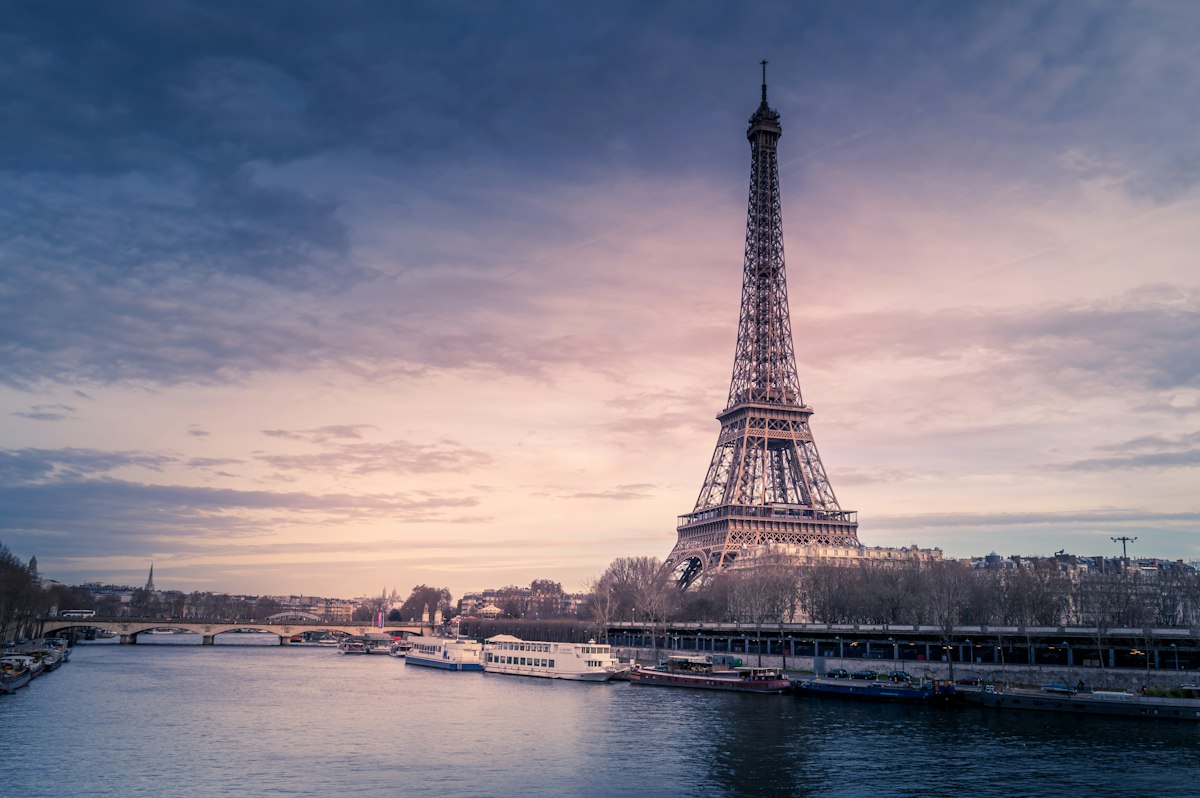
The Eiffel Tower, the Louvre, the restored Notre-Dame, Montmartre and the Seine (UNESCO).
💡 Best time: Apr–Jun, Sep–OctLouis XIV's palace, the Hall of Mirrors and vast gardens, 40 minutes from Paris.
💡 Best time: Apr–OctA medieval abbey on a tidal island in Normandy; see it at high tide or sunset.
💡 Best time: All yearOmaha and Utah beaches, memorials and cemeteries, added to the UNESCO list in 2026.
💡 Best time: Apr–OctChambord, Chenonceau and dozens of Renaissance castles among vineyards.
💡 Best time: Apr–OctLavender fields, hill villages, Avignon's Papal Palace and Roman Arles.
💡 Best time: Jun–Jul for lavenderNice, Cannes, Antibes and clifftop Èze along the Mediterranean.
💡 Best time: May–OctAn elegant UNESCO-listed port city and world-famous wine country.
💡 Best time: May–OctWestern Europe's highest mountain, cable cars and Alpine hiking or skiing.
💡 Best time: Dec–Apr, Jun–SepHalf-timbered towns, the Grande Île (UNESCO) and France's best Christmas markets.
💡 Best time: Nov–Dec, May–Oct🗺️ 7-Day France Itinerary for First-Time Visitors
Use the TGV between regions and rent a car for Normandy and Provence villages.
Follow this route from our travel guide to France day by day, or shorten it to fit your trip.
- Paris: the Eiffel Tower, a Seine cruise and the Latin Quarter.
- Paris: the Louvre and Notre-Dame, then Montmartre and Sacré-Cœur at sunset.
- Versailles: half-day trip to the palace and gardens, then back for dinner in Le Marais.
- Normandy: train to Bayeux; the D-Day beaches and memorials.
- Mont-Saint-Michel: the abbey and walls, ideally staying overnight.
- Provence: TGV south to Avignon; the Papal Palace and the Pont du Gard.
- French Riviera: continue to Nice; the old town, the promenade and Èze, then fly home.
➕ With more time: add the Loire Valley châteaux, Bordeaux's wine country, Lyon's food scene or the Alps around Chamonix.
💵 How Much Does a Trip to France Cost?
France can be expensive in Paris and on the Riviera but good value in rural regions. These are approximate daily costs per person in 2026, excluding international flights. Use our currency converter to see them in your own currency.
| Travel style | Per day (approx.) | What it covers |
|---|---|---|
| Budget | US$90–140 | Hostels, bakeries and lunch menus, regional trains |
| Mid-range | US$200–330 | 3–4 star hotels, bistros, TGV trains and museum tickets |
| Luxury | US$600 + | Palace hotels, Michelin dining, private tours |
💡 All prices in this travel guide to France are per person, per day, and change with the season and exchange rates.
🍽️ Set lunch menus (formule) are the best-value way to eat well. Tap water (carafe d'eau) is free in restaurants.
💡 Safety & Travel Tips for Your Travel guide to France
France is generally safe. In Paris, watch for pickpockets on the metro (especially line 1), around the Eiffel Tower, the Louvre and Sacré-Cœur, and ignore petition and "gold ring" scams. Use official taxis or ride-hailing apps from airports. Strikes (grèves) can disrupt trains and flights, so check before travelling, and expect visible security at major sites.
The Louvre, Eiffel Tower and Versailles sell out in season.
Always greet staff before asking anything.
Buy tickets on the Bonjour RATP app or a Navigo Easy card.
Lunch is 12–2 pm; many kitchens close between services.
SNCF Connect fares rise closer to the date.
Every town has a weekly market for cheese, bread and fruit.
🏨 Best Hotels in France: 8 Top Picks
Stay in central Paris for sightseeing and in a château or Riviera hotel for a memorable splurge.
An 18th-century palace overlooking the Place de la Concorde.
Check prices on Booking.com →Classic luxury on the Rue du Faubourg Saint-Honoré.
Check prices on Booking.com →Famous flower displays and three Michelin-starred restaurants.
Check prices on Booking.com →The pink-domed landmark on the Promenade des Anglais.
Check prices on Booking.com →Stone houses perched above the Mediterranean.
Check prices on Booking.com →On the Croisette, opposite the Film Festival palace.
Check prices on Booking.com →A wine-therapy spa among the vines of Château Smith Haut Lafitte.
Check prices on Booking.com →Stay inside the walls, famous for its fluffy omelettes.
Check prices on Booking.com →🔎 How we chose for this travel guide to France: hotels are picked for location, reputation and a spread of styles and prices. Prices and availability change daily, so the buttons open live Booking.com results for each property.
🤝 Affiliate disclosure: hotel buttons are affiliate links. If you book through them, AtlasWise may earn a small commission at no extra cost to you. It never changes which hotels we list.
🎓 Top Universities in France
France has low public tuition fees, many English-taught master's programmes and elite grandes écoles.
| University | City | Type |
|---|---|---|
| Sorbonne University | Paris | Public |
| Université Paris-Saclay | Paris region | Public |
| PSL University | Paris | Public |
| Sciences Po | Paris | Public |
| University of Strasbourg | Strasbourg | Public |
Heir to the medieval Sorbonne, strong in humanities, science and medicine.
Visit website →France's top-ranked research university, especially in mathematics and physics.
Visit website →A group of elite schools including the École Normale Supérieure.
Visit website →World-renowned for political science and international relations.
Visit website →A leading research university in the European capital.
Visit website →🔎 How we chose for this travel guide to France: the leading universities in France by research, reputation and international programmes. Last checked: October 2026.
🌺 French Culture & Food
France has shaped art, philosophy, fashion and film, from the Impressionists and the Enlightenment to Chanel and the Cannes Film Festival. Cafés and markets are at the heart of daily life, and every region has its own identity, from Breton crêpes and Basque traditions to Alsatian half-timbered villages.
The gastronomic meal of the French is on UNESCO's intangible heritage list. Try croissants and fresh baguettes, coq au vin, bœuf bourguignon, Provençal bouillabaisse, Lyon's bouchon dishes and hundreds of cheeses, with wines from Bordeaux, Burgundy and Champagne.
❓ Travel Guide to France: FAQ
Do I need a visa for France?
Citizens of the USA, UK, Canada, Australia and many other countries can visit visa-free for up to 90 days in any 180-day period under Schengen rules. ETIAS is expected in late 2026.
How much does the Louvre cost in 2026?
€32 for visitors from outside the EU/EEA since 14 January 2026. Under-18s still enter free. Book a timed slot online.
Is Notre-Dame open again?
Yes. Notre-Dame de Paris reopened in December 2024 after the 2019 fire, and entry to the cathedral is free.
What is the best time to visit France?
April–June and September–October. Late June–July is best for lavender in Provence.
How many days do you need in France?
Three to four days for Paris; a week to add Normandy, Mont-Saint-Michel or Provence.
Is Paris safe for tourists?
Yes, but pickpocketing is common in tourist areas and on the metro, so keep valuables secure.
Are the D-Day beaches a UNESCO site?
Yes. The Beaches of the D-Day Landings in Normandy were added to the World Heritage List in July 2026.
How many UNESCO sites does France have?
France has 56 World Heritage Sites as of 2026, the third most in the world.
📚 Trusted Resources for Your Travel guide to France
- France.frOfficial tourism portal of France
- Paris Je t'aimeOfficial Paris tourist office
- UNESCO: FranceWorld Heritage Sites in France
- SNCF ConnectFrench train tickets
Finished this travel guide to France? 🌍 More Europe guides: Italy · Spain · Monaco · Andorra · All of Europe
⚖️ Compare France with other countries in Compare Countries.
🏛️ Planning a bucket list? See the 20 best World Heritage Sites to visit.
 Ready to plan France?
Use our free travel tools to compare costs, time zones and distances, or browse our printable AtlasWise guides for other destinations.
Free travel tools → Browse AtlasWise travel guides🔖 Bookmark this travel guide to France and check it again before you fly: we update entry rules, prices and hotels regularly.