
🇱🇾 Travel Guide to Libya — Land of Ancient Roman Empires & Saharan Oases
This comprehensive travel guide to Libya will navigate you through North Africa's most extraordinary, off-the-beaten-path destination—where classical Mediterranean history meets the vast majesty of the Sahara Desert. Holding five UNESCO World Heritage sites, Libya harbors the finest and most intact ancient Roman ruins on Earth. From the marble archways and colossal amphitheater of Leptis Magna and the coastal Mediterranean ruins of Sabratha to the bustling medina of Tripoli, the mudbrick oasis of Ghadames ("Jewel of the Desert"), and the ancient Greek sanctuaries of Cyrene, this travel guide to Libya covers every essential detail. Whether discovering Ottoman alleyways, marveling at Saharan rock art in Tadrart Acacus, or tasting traditional M'bakbaka pasta, this travel guide to Libya serves as your authoritative resource.
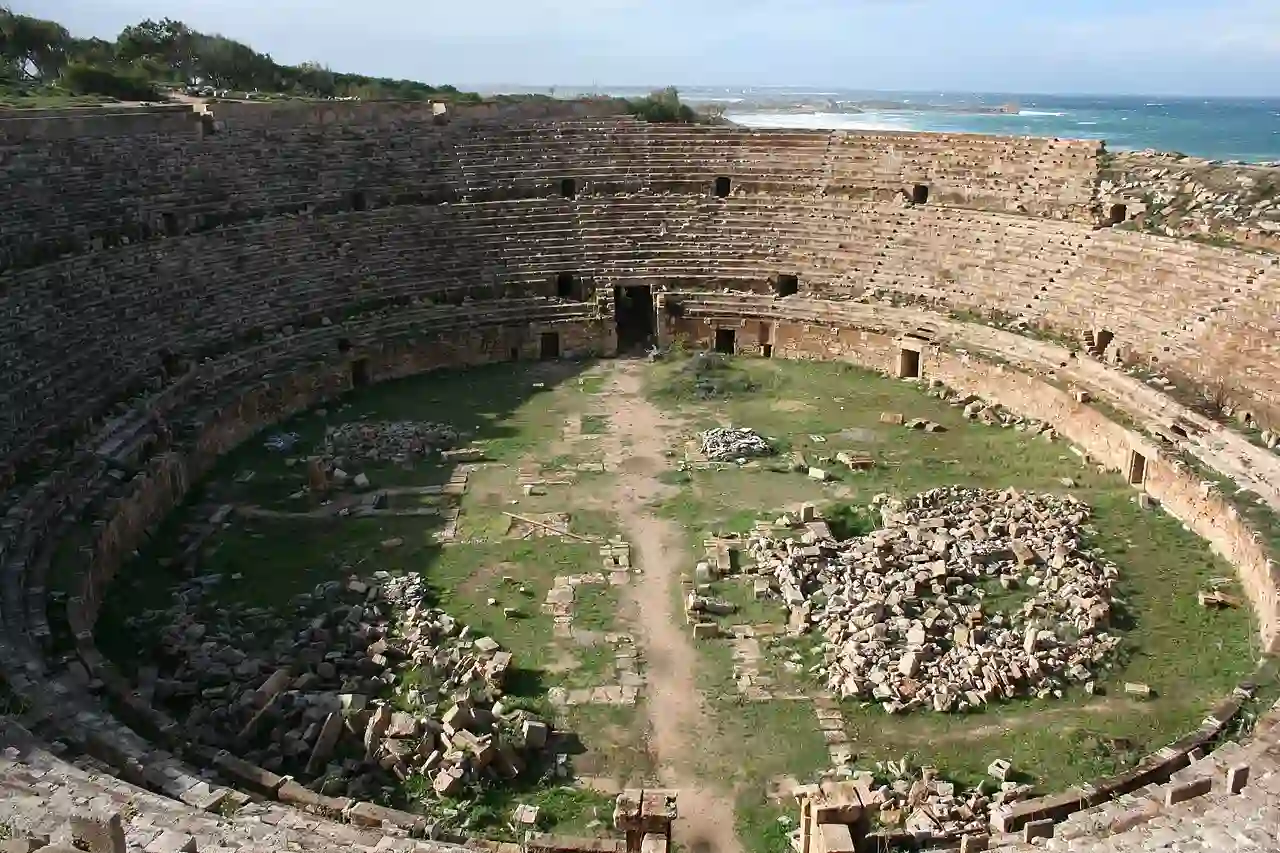
Leptis Magna was the birthplace of Roman Emperor Septimius Severus, who transformed his home city into a grand metropolis rivaling Rome itself.
⚠️ Essential Travel Requirement: Independent tourist travel in Libya is currently not permitted. All international visitors must travel with a licensed local agency holding an approved Letter of Invitation (LOI) and pre-arranged itinerary security clearance.
📢 AdSense Leaderboard #1 (728x90 or responsive)
📊 Quick Facts
- Capital: Tripoli 💡 Historic Mediterranean city known as the "Bride of the Sea"
- Currency: Libyan Dinar (LYD / د.ل) 💡 Strictly cash economy; foreign credit cards not accepted
- Language: Arabic (Official) 💡 English spoken in hotels & by professional tour guides
- Population: ~7.2 million (2026 est.)
- Land Area: 1,759,540 km²
- Time Zone: UTC +2 (EET)
📅 Plan Your Perfect Trip with This Travel Guide to Libya
When consulting your travel guide to Libya, timing your visit to match seasonal climate windows is essential for a safe and comfortable trip. Libya features a Mediterranean climate along its northern coast and an arid desert climate across the vast Saharan interior. The cooler winter and spring months (November to April) are the ideal time to travel, offering comfortable temperatures (15°C–24°C) for walking through archaeological sites like Leptis Magna and Sabratha and for exploring desert oasis towns like Ghadames. The summer months (June to September) bring extreme Saharan heat, with interior temperatures frequently surpassing 40°C–45°C. Utilize this travel guide to Libya to structure your itinerary.
Best for: Archaeological site tours in Leptis Magna, medina walks in Tripoli, and Ghadames oasis visits
Best for: Camping under desert skies in Ubari Sand Sea and viewing rock art in Tadrart Acacus
Ghadames Date Festival (Oct) · Tripoli International Fair · Traditional Libyan Tea Ceremonies
National celebration marking independence in 1951 — cultural displays and public gatherings in Martyrs' Square
📢 AdSense Leaderboard #2 (728x90 or responsive)
🛂 Visa & Entry Regulations for Your Travel Guide to Libya
eVisa & Tour Operator Clearance: Entry to Libya requires a visa for almost all foreign nationals prior to travel. Travelers can apply via the official Libya Official eVisa Portal or through an authorized embassy with a local sponsor. To obtain visa approval, visitors must book a pre-arranged tour package with a licensed Libyan travel agency, which issues an official Letter of Invitation (LOI). Flights land primarily at Mitiga International Airport (MJI) in Tripoli or Benina International Airport (BEN) in Benghazi, with direct regional connections from Tunis, Cairo, Amman, Rome, and Istanbul. Passports must be valid for at least 6 months past arrival dates with no Israeli entry stamps or visas. Review this travel guide to Libya before confirming flights.
📋 Entry Requirements
- eVisa / Pre-Approved Visa Must be pre-approved via an authorized local agency LOI prior to departure
- Guided Tour Escort Independent travel is restricted; local guide escort required for all travel
- Passport Validity & Stamp Rules Valid for 6+ months; passport must contain zero Israeli visa or border stamps
- Cash Currency Declaration Sufficient foreign cash (USD or EUR) required as international cards do not work
🔗 Official Resources: Libya Official eVisa Portal · Tourism Libya Portal · UNESCO Libya World Heritage Sites
📚 Trusted Resources for Your Travel Guide to Libya
- Tourism Libya — Official Portal National destination guide, historical site overviews, and official operator directories
- UNESCO — Libya World Heritage Official archives for Leptis Magna, Sabratha, Cyrene, Ghadames, and Tadrart Acacus
- Libya Government eVisa System Official government portal for electronic visa applications and status tracking
- Lonely Planet — Libya Guide Expert background history, regional insights, and cultural destination overviews
🌍 Explore our other North African guides: Egypt · Tunisia · Morocco
💡 Key Travel Tips for Your Libya Expedition
Bring clean, unblemished USD or EUR cash notes — foreign ATMs and credit card transactions do not function in Libya
Try M'bakbaka (spiced pasta cooked in tomato broth), Asida, steamed couscous with lamb, and fresh Mediterranean seafood
Libya is conservative — modest clothing covering shoulders and knees is appropriate; female travelers should carry a light scarf
Enjoy thick, sweet Libyan mint tea topped with roasted peanuts or strong Italian-style espresso in Tripoli's historic cafes
Never take photos of military checkpoints, government installations, or security personnel — ask permission before photographing locals
Plugs use European Type C and L (230V / 50Hz) — carry a portable power bank as temporary power cuts can occur
🏛️ Top Destinations & World Heritage Sites in Libya
UNESCO World Heritage site near Khoms — impeccably preserved Roman triumphal arches, Severan Basilica, forum, and seaside theater
💡 Best time: Nov–AprPhoenician trading post turned Roman coastal city featuring a iconic three-story restored sandstone theater overlooking the Mediterranean
💡 Best time: Nov–AprUNESCO-listed mudbrick Saharan oasis city — whitewashed covered streets, rooftop walkways, and traditional Berber architecture
💡 Best time: Nov–MarAssai al-Hamra fortress, Arch of Marcus Aurelius, Ottoman souks, Gurgi Mosque, and lively Martyrs' Square
💡 Best time: Year-roundUNESCO Greek mountain city in Green Mountain (Jebel Akhdar) region — Temple of Apollo, sanctuary complex, and ancient port of Apollonia
💡 Best time: Nov–AprMesmerizing Saharan dune fields surrounding turquoise saltwater oasis lakes like Gaberoun and Umm al-Maa
💡 Best time: Nov–MarUNESCO Saharan mountain massif featuring prehistoric cave paintings and rock carvings dating back 12,000 years
💡 Best time: Nov–MarBerber highland region home to circular fortified granaries (Qasr al-Hajj) and troglodyte cave dwellings in Gharyan
💡 Best time: Nov–Apr📢 AdSense Leaderboard #3 (728x90 or responsive)
🏨 Premier Hotels & Accommodations in Libya
Accommodations in Tripoli and Benghazi feature high-end business hotels and restored boutique properties, complemented by authentic oasis lodges in Saharan towns.
Al Fatah Street, Tripoli Waterfront
Visit Website → 🏆 5-star Mediterranean luxury hotel featuring ocean views, outdoor pool & executive facilitiesTripoli Business Center
Visit Website → ⭐ Iconic 5-star landmark hotel overlooking the Mediterranean Sea near the historic Old CityCentral Tripoli
Visit Website → 🏢 Modern upscale hotel offering comfortable guest rooms and fine dining in the city centerGhadames Oasis
Visit Website → 🌴 Traditional oasis lodge designed in authentic Saharan mudbrick architecture near Old GhadamesBenghazi City Centre
Visit Website → 🏢 Popular business hotel offering modern amenities for visitors exploring CyrenaicaTripoli City Centre
Visit Website → Visit Website → 🏛️ Classic central hotel located convenient to Martyrs' Square and the Red Castle Museum⚠️ Please note: Hotel reservations must be handled and verified in advance through your pre-arranged local licensed tour operator in Tripoli or Benghazi.
🎓 Top Higher Education Institutions in Libya
Tripoli
Visit Website → 🏆 Libya's largest public university, founded in 1957, leading in engineering, medicine & humanitiesBenghazi
Visit Website → 📜 Historic public university established in 1955, prominent for petroleum engineering, law & scienceSebha, Fezzan Region
Visit Website → 🎓 Major public higher education center serving southern Libya in agriculture, science & educationMisrata
Visit Website → ⚙️ Rapidly expanding public university renowned for technical engineering, medical sciences & economics📘 Higher education in Libya is governed by the Ministry of Higher Education and Scientific Research, with Arabic and English utilized as main mediums of instruction.
🌺 Culture & Cuisine in Libya
Libya's culture reflects a synthesis of indigenous Amazigh (Berber) heritage, Arab traditions, Ottoman influences, and Mediterranean Italian architecture. Family and generous hospitality (Karam) form the bedrock of daily life. Artisans in Tripoli's medina continue centuries-old traditions of crafting beaten copperware, silver jewelry, leatherwork, and woven carpets. Traditional music combines bedouin flutes and drums with North African Andalusian classical rhythms.
Libya is home to five UNESCO World Heritage Sites: Archaeological Sites of Leptis Magna, Sabratha, and Cyrene, Old Town of Ghadames, and Rock-Art Sites of Tadrart Acacus.
Libyan cuisine is rich, savory, and aromatic. The undisputed national comfort dish is M'bakbaka (also called Macarona Imbakbaka—a one-pot pasta dish cooked in a flavorful tomato, garlic, and chili sauce with tender lamb or chicken). Other beloved specialties include Asida (a smooth cooked dough dish served with honey and melted butter during celebrations), steamed couscous topped with spiced lamb and chickpeas, Sharba Libiya (savory lamb soup with mint and orzo), and fresh Mediterranean grilled fish. Finish your meal with sweet dates from Saharan palm groves paired with thick cardamom-spiced coffee or foamy mint tea.
Arabic is the official language. Exchanging a respectful "Salam Alaikum" (Peace be upon you) is customary and welcomed warmly by locals everywhere.
🇱🇾 Ready to explore Libya?
Start planning your Roman archaeological and Saharan expedition to Libya with our expert travel resources.
Read Our Full Travel Guide →This travel guide to Libya is your ultimate resource for planning an unforgettable journey to North Africa's ancient empires. Start your expedition today!