
🇲🇳 Travel Guide to Mongolia — The Land of Eternal Blue Sky & Nomad Steppes
This comprehensive travel guide to Mongolia will help you explore one of the world's last remaining nomadic frontiers—a vast, untamed realm of endless horizons, snow-capped Altai peaks, pristine alpine lakes, and legendary desert dunes. From the vibrant urban cultural mix of Ulaanbaatar to the dramatic sand formations and dinosaur fossil beds of the Gobi Desert, the crystal-clear waters of Lake Khövsgöl, and the ancient capital ruins of Karakorum in the Orkhon Valley, this travel guide to Mongolia covers every essential detail. Whether experiencing traditional ger hospitality, galloping across endless grasslands, or attending the historic Naadam Festival, this travel guide to Mongolia serves as your definitive reference.
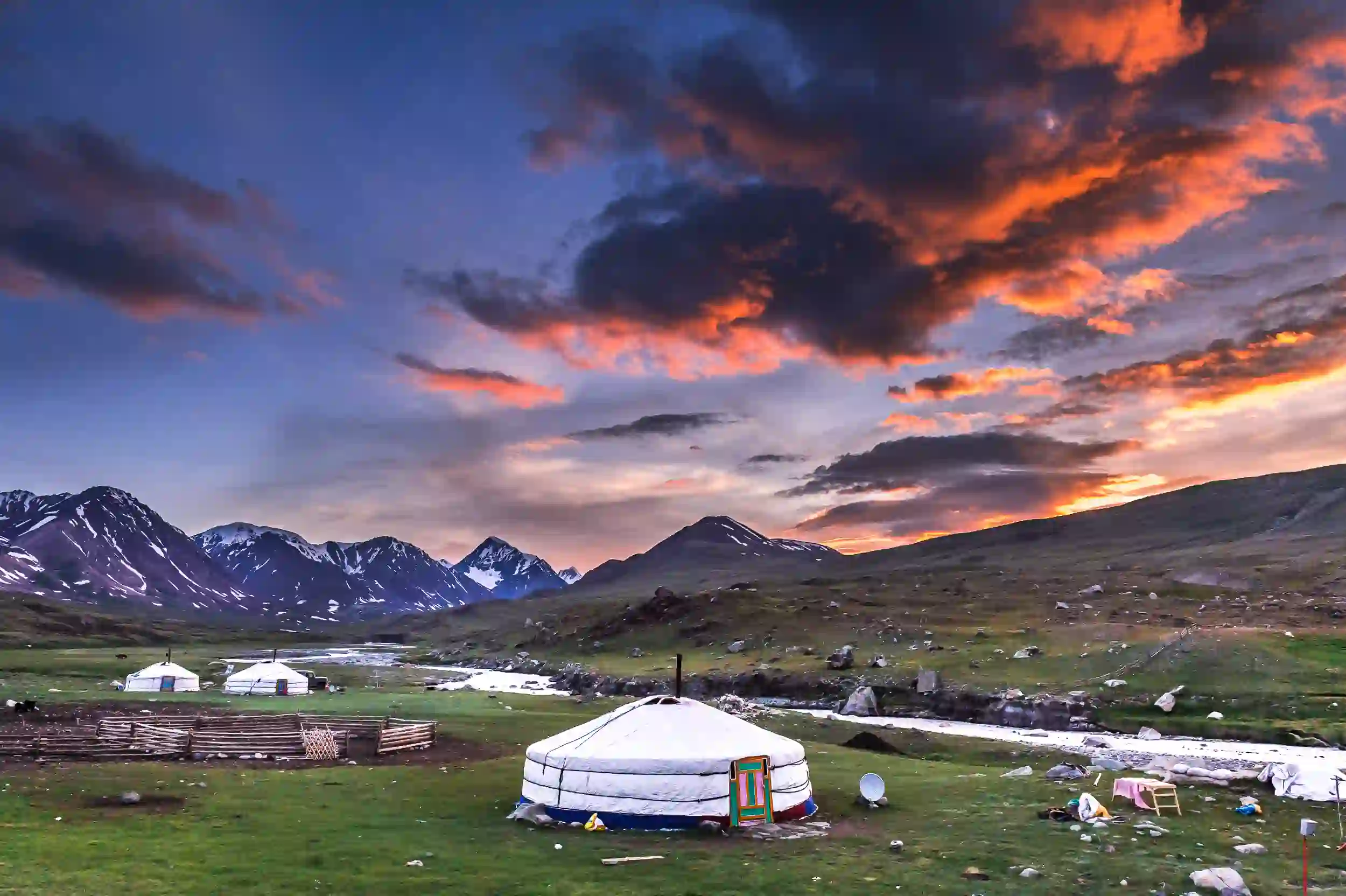
Known as the "Land of Eternal Blue Sky," Mongolia enjoys more than 250 sunny days per year and preserves a living nomadic culture unchanged for centuries.
🎪 Naadam Festival Tip: The annual Naadam Festival (July 11–15) is Mongolia's largest cultural showcase featuring "the three manly games"—wrestling, horse racing, and archery. Flight and ger camp bookings during Naadam must be secured at least 4–6 months in advance.
📢 AdSense Leaderboard #1 (728x90 or responsive)
📊 Quick Facts
- Capital: Ulaanbaatar 💡 Modern commercial, cultural & transit heart of the nation
- Currency: Mongolian Tögrög / Tugrik (MNT / ₮) 💡 Cash essential for countryside trips; cards accepted in Ulaanbaatar
- Language: Mongolian (Official) 💡 Written in Cyrillic; English spoken in tourism hubs
- Population: ~3.5 million (2026 est.)
- Land Area: 1,564,116 km²
- Time Zone: UTC +8 (ULAT) / UTC +7 (HOVT in western aimags)
📅 Plan Your Visit with This Travel Guide to Mongolia
When consulting your travel guide to Mongolia, choosing the right time of year is essential due to extreme continental weather shifts. Mongolia experiences long, harsh winters and short, warm summers. The summer season (June to August) is universally considered the best time to visit—offering comfortable warm days (20°C–28°C), lush green countryside, ideal overland driving conditions, and the vibrant Naadam Festival celebrations. The autumn season (September to October) brings crisp sunny air, golden larch forests around Lake Khövsgöl, and the iconic Golden Eagle Festival in Bayan-Ölgii. Winter (November to March) drops well below freezing (-20°C to -35°C), suited primarily for specialized ice festival trips and winter photography. Plan using this travel guide to Mongolia.
Best for: Gobi Desert expeditions, ger camp homestays, Naadam Festival, and horseback trekking
Best for: Golden Eagle Festival in Altai Mountains, fall foliage at Khövsgöl, and fewer tourists
Naadam Festival (July 11–15) · Golden Eagle Festival (October) · Tsagaan Sar Lunar New Year (Feb)
National Day celebrating the proclamation of the Republic in 1924 with ceremonies and cultural events in Ulaanbaatar
📢 AdSense Leaderboard #2 (728x90 or responsive)
🛂 Visa & Entry Regulations for Your Travel Guide to Mongolia
Welcoming Visa Initiatives: Mongolia maintains open visa policies to encourage international tourism. Citizens of over 60 countries—including European Union member states, United Kingdom, United States, Canada, Australia, Japan, South Korea, and Thailand—can enter Mongolia visa-free for stays up to 30 days. Travelers requiring an entry visa can apply online via the official evisa.mn portal for electronic tourist visas prior to departure. Passports must be valid for at least 6 months past intended departure date with blank pages. Chinggis Khaan International Airport (UBN), situated 52 km south of Ulaanbaatar, serves as the main international flight hub. Review this travel guide to Mongolia before departure.
📋 Entry Requirements Checklist
- Visa-Free Access (30 Days) Valid for US, UK, EU, CA, AU, JP, and qualifying passport holders
- Official eVisa System Apply online via the official government portal evisa.mn where required
- Passport Validity Must be valid for at least 6 months beyond intended stay
- Travel Insurance Required Medical evacuation coverage strongly advised for remote countryside travel
🔗 Official Resources: Mongolia Tourism Organization Portal · Official eVisa Portal of Mongolia · UNESCO World Heritage Sites in Mongolia
📚 Trusted Official Resources for Your Travel Guide to Mongolia
- Mongolia Travel — Official National Board Official destination maps, tour operator listings, and cultural itineraries
- UNESCO — Orkhon Valley Cultural Landscape Documentation on historic Karakorum, Erdene Zuu Monastery, and nomadic heritage
- Ulaanbaatar Official City Portal Capital city attractions, museums, public transport, and seasonal events
- Lonely Planet — Mongolia Guide Expert Central Asian travel advice, overland transit guides, and maps
🌍 Explore neighboring East Asian destinations: China · South Korea · Japan
💡 Key Travel Tips for Visiting Mongolia
Step over the wooden threshold when entering a ger (never step on it), walk clockwise inside, and accept offered tea with your right hand
Sample Mongolian cuisine staples: Khorkhog (barbecued mutton cooked with hot river stones in a milk jug), Buuz (steamed meat dumplings), and Suutei Tsai (salted milk tea)
Outside Ulaanbaatar roads are unpaved dirt tracks; hiring an experienced local driver in a Russian UAZ van or 4WD vehicle is essential
Temperatures shift drastically between day and night, even in summer in the Gobi Desert and Altai Mountains
Stock up on Mongolian Tögrög cash in Ulaanbaatar before embarking on countryside tours; rural ger camps do not take cards
Mongolia uses European Type C and E electrical sockets running at 220V / 50Hz; bring a high-capacity power bank for remote stays
🐫 Top Destinations & Attractions to Visit in Mongolia
Vast desert expanse — singing sand dunes of Khongoryn Els, red sandstone Bayanzag fossil cliffs, Yolyn Am ice canyon, and two-humped Bactrian camel riding
💡 Best time: May–OctCapital city hub — Sukhbaatar Square, National Museum of Mongolia, Choijin Lama Temple, and active Gandan Buddhist Monastery
💡 Best time: Year-round"The Blue Pearl of Mongolia" — pristine alpine lake containing 70% of Mongolia's fresh water, surrounded by larch forests and reindeer herder communities
💡 Best time: Jun–SepHistoric cradle of nomadic empires — ancient capital city ruins of Karakorum, Erdene Zuu Monastery, and Orkhon Waterfall
💡 Best time: May–SepGiant 40-meter stainless steel equestrian statue of Genghis Khan rising above the steppes with an internal elevator to the horse's head viewpoint
💡 Best time: Year-roundProtected mountain reserve famous for the reintroduction of Takhi (Przewalski's wild horse), the world's last wild horse species
💡 Best time: May–OctFar western mountain territory — glaciers, highest peaks in Mongolia, Kazakh eagle hunters, and ancient petroglyphs
💡 Best time: Jun–OctScenic alpine park close to Ulaanbaatar — Turtle Rock formation, Aryapala Meditation Temple, rock climbing, and horse riding
💡 Best time: Year-round📢 AdSense Leaderboard #3 (728x90 or responsive)
🏨 Top Hotels & Eco Ger Resorts in Mongolia
Mongolia offers modern 5-star hotels in central Ulaanbaatar and luxury eco-ger camps across countryside wilderness regions.
Olympic Street, Sukhbaatar District, Ulaanbaatar
Visit Website → 🏆 Premier 5-star luxury address in downtown Ulaanbaatar with fine dining, spa, and city viewsEast Cross Road, Bayanzurkh, Ulaanbaatar
Visit Website → ⭐ Established 5-star hotel offering European luxury standards, international cuisine, and event venuesBulgan Sum, Ömnögovi Province
Visit Website → 🐫 Award-winning eco-luxury ger lodge set against the Gurvansaikhan Mountains in the Gobi DesertTerelj National Park, Nalaikh
Visit Website → 🌲 Luxury riverfront resort situated inside Terelj National Park featuring heated indoor pool and spaBaga Toiruu, Sukhbaatar, Ulaanbaatar
Visit Website → 🏢 Modern 4-star city center hotel within short walking distance of Sukhbaatar SquareKhatgal, Khövsgöl Province
Visit Website → 🌊 Scenic lakeside ger camp providing wooden cabins, traditional felt gers, and kayak rentals⚠️ Please note: Wilderness ger camps across the Gobi Desert and Lake Khövsgöl operate seasonally from late May through late September. Advance booking is required.
🎓 Major Academic Institutions in Mongolia
University Street, Ulaanbaatar
Visit Website → 🏆 Founded in 1942, Mongolia's oldest and highest-ranked public higher education institutionBaga Toiruu, Ulaanbaatar
Visit Website → ⚙️ Premier public technical university specializing in engineering, mining, geology, and technologyBaga Toiruu, Ulaanbaatar
Visit Website → 🎓 Leading institution for teacher training, educational research, and humanities in MongoliaZorig Street, Ulaanbaatar
Visit Website → 🩺 Country's primary medical university, training doctors, dentists, and traditional Mongolian medicine specialists📘 Higher education in Mongolia operates under the Ministry of Education and Science.
🌺 Culture & Culinary Heritage of Mongolia
Mongolian culture is defined by nomadic tradition, deep harmony with nature, Tibetan Buddhism, and the historical legacy of Genghis Khan. Nearly a third of the population lives a nomadic lifestyle, moving herds of horses, sheep, goats, cattle, and camels seasonally across public pastures. Traditional performing arts include mesmerizing Khöömii (throat singing), long song (Urtiin Duu), and the horsehead fiddle (Morin Khuur), recognized by UNESCO as Masterpieces of Intangible Cultural Heritage.
Mongolia hosts several UNESCO World Heritage Sites, including the Orkhon Valley Cultural Landscape, Petroglyphic Complexes of the Mongolian Altai, and Great Burkhan Khaldun Mountain.
Mongolian cuisine is hearty and nutritious, designed to sustain nomadic herders through harsh weather. Staples center on free-range meat (mutton, beef, goat) and dairy products. Enjoy Khorkhog (tender mutton braised with red-hot river stones in a sealed container with potatoes and carrots), Buuz (steamed dumplings filled with minced meat and onion), Tsuivan (pan-fried handmade noodles with mutton and vegetables), and Airag (fermented mare's milk, a traditional summer delicacy).
Mongolian is the official language. Exchanging a friendly "Sain baina uu?" (Hello / How are you?) or "Bayarlalaa" (Thank you) is warmly appreciated across nomadic encounters.
🇲🇳 Ready to explore Mongolia?
Start planning your steppe, desert dune, and nomadic adventure to Mongolia with our expert travel resources.
Read Our Full Travel Guide →This travel guide to Mongolia is your ultimate reference for exploring Central Asia. Start your journey today!