

🇹🇻 Travel Guide to Tuvalu — The World's Most Remote Island Nation
This comprehensive travel guide to Tuvalu will help you discover one of the world's smallest and most isolated nations – a true Pacific paradise untouched by mass tourism. From the pristine lagoon of Funafuti to the uninhabited islets of the Funafuti Conservation Area, this travel guide to Tuvalu covers everything you need to plan an unforgettable journey. As the fourth-smallest country in the world with a land area of just 26 km², Tuvalu offers travellers an extraordinary glimpse into a way of life that has remained unchanged for centuries. Whether you're snorkelling over vibrant coral reefs, walking the airport runway at sunset, or experiencing the warmth of Tuvaluan hospitality, this travel guide to Tuvalu is your essential companion.
⚠️ Important Travel Advisory: Tuvalu is one of the world's least-visited countries, receiving only around 2,000 tourists per year. This travel guide to Tuvalu is intended for informational purposes. Visitors should be aware of the nation's extreme vulnerability to sea-level rise and the need to travel with respect, sensitivity, and comprehensive preparation.
📢 AdSense Leaderboard #1 (728x90 or responsive)
📊 Quick Facts
- Capital: Funafuti 💡 The main atoll and the nation's only urban centre
- Currency: Australian Dollar (AUD) 💡 The only accepted currency – cash is essential
- Language: Tuvaluan, English 💡 English is widely spoken in tourist areas
- Population: ~11,000
- Area: 26 km²
- Time Zone: UTC +12
📅 Plan Your Perfect Trip with This Travel Guide to Tuvalu
When planning your travel guide to Tuvalu, the tropical climate offers warm temperatures year-round with little variation – around 30°C day and night. The best time to visit Tuvalu is during the dry season from May to October when rainfall is lower and seas are calmer. July and August are the peak months. The wet season from November to April brings higher humidity and a risk of cyclones. For the best beach and snorkelling conditions, target August to September. This travel guide to Tuvalu will help you plan the perfect trip for every season.
Best for: Snorkelling, beach activities, and exploring – calmer seas and lower rainfall
Best for: Budget travellers – higher humidity and cyclone risk
Best for: Hot-weather activities – ideal conditions for swimming and snorkelling
Almost everything closes – a strict day of rest with beautiful church services
📢 AdSense Leaderboard #2 (728x90 or responsive)
🛂 Visa Information for Your Travel Guide to Tuvalu
Visa‑Free Access: Citizens of 30+ countries can enter Tuvalu without a visa, including the UK, Fiji, Samoa, Tonga, Malaysia, and South Korea. Most other nationalities, including US, Australian, and Indian passport holders, can obtain a visa on arrival for a fee of AUD 100 for up to one month. For a complete travel guide to Tuvalu, verify your requirements before booking.
🌍 Entry Requirements
All travellers must present: a passport valid for at least six months, an onward/return ticket, and proof of sufficient funds for their stay. Visitor permits are issued for up to one month for a fee of AUD 100.
📋 Visa Types
- Visa on Arrival Available for most nationalities – valid for up to 30 days, AUD 100 fee
- Visa‑Free Entry Citizens of 30+ countries – no fee, valid for up to 30 days
- E‑Visa Available for some nationalities – processing typically takes around 12 days
🔗 Official Resource: Tuvalu Ministry of Foreign Affairs (Check local embassy for visa details)
📚 Trusted Resources for Your Travel Guide to Tuvalu
- Tuvalu Tourism Official tourism information
- Smartraveller – Tuvalu Australian government travel advisory
- Lonely Planet – Tuvalu Travel information and attractions
💡 Key Travel Tips for Your Tuvalu Adventure
Bring enough Australian Dollars in cash – the single ATM runs out of cash before weekends
Almost everything closes on Sunday – stock up on supplies Saturday
Internet is extremely slow – download offline maps and reading materials before arrival
Do not use sunscreen containing oxybenzone – the reef here is fragile
Medical facilities are basic – comprehensive travel insurance is non-negotiable
Motorbike rentals are the best way to explore – ask at your guesthouse, around AUD 10–20 per day
🏝️ Top Destinations to Visit in Tuvalu
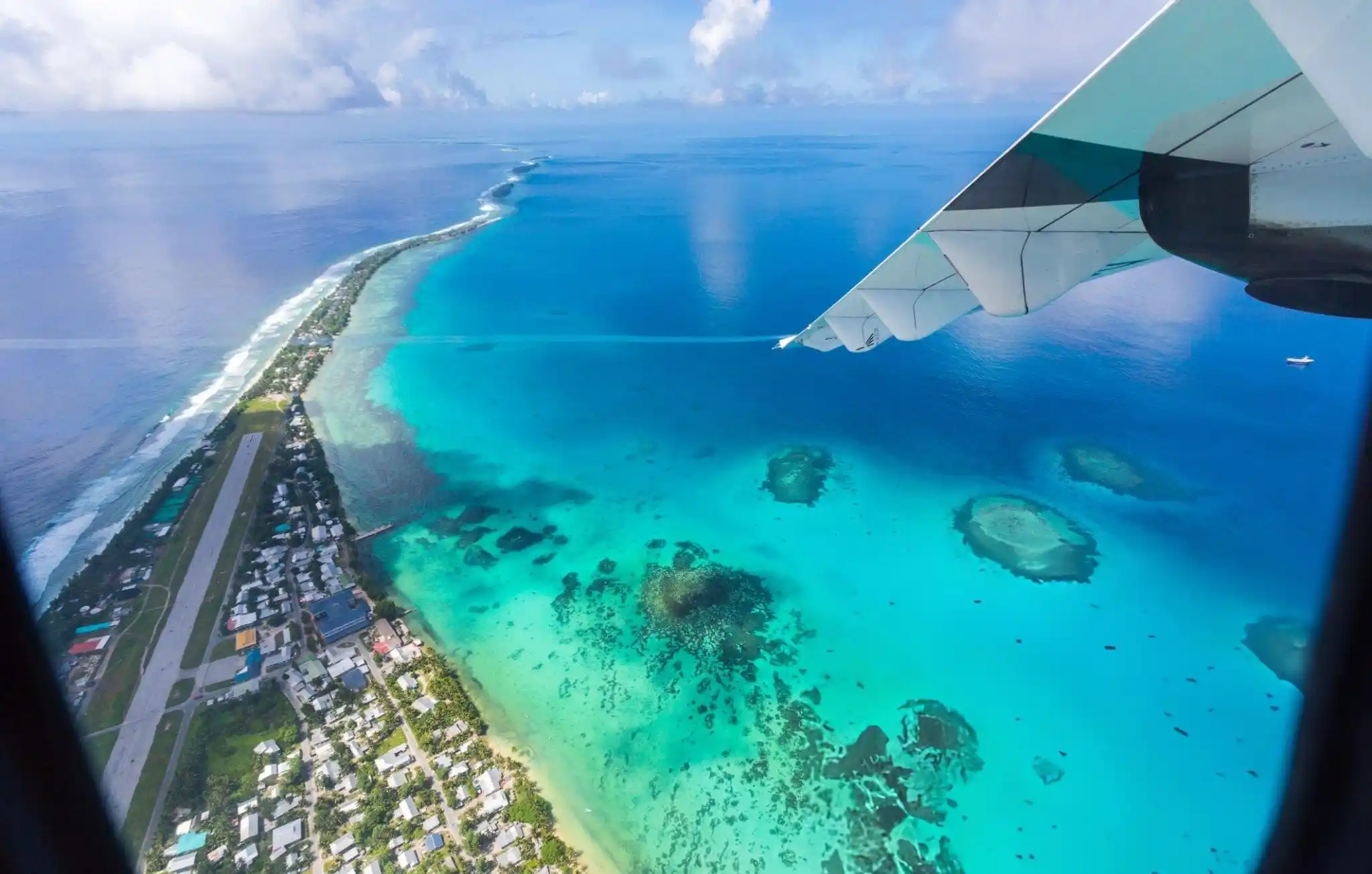
The capital atoll – the nation's only urban centre with the airport, guesthouses, and government buildings
💡 Best time: May–OctA 33 km² marine park – six uninhabited islets, incredible snorkelling, and untouched coral
💡 Best time: Aug–SepThe main road doubles as an active runway – transforms into a communal sports field at sunset
💡 Best time: SunsetA popular castaway island within the Conservation Area – shallow waters, nesting seabirds, and turtles
💡 Best time: Aug–SepWorld‑famous Tuvaluan stamps – a unique souvenir for collectors
💡 Best time: WeekdaysThe remaining eight atolls – Vaitupu, Niutao, Nui, and others – offer homestays and authentic village life
💡 Best time: May–OctSunday is a day of rest – attend a service for harmonious, moving singing
💡 Best time: SundaySunken American aircraft and bunkers visible with a mask and snorkel in the lagoon
💡 Best time: May–Oct📢 AdSense Leaderboard #3 (728x90 or responsive)
🏨 Top Hotels in Tuvalu
Accommodation in Tuvalu consists almost entirely of locally owned, family‑run guesthouses. Book months in advance – bring cash in AUD as credit cards are rarely accepted.
Funafuti
Contact directly → 🏨 The only proper hotel in Tuvalu – lagoon‑front, 50m from the airportFunafuti
Contact directly → 🏨 Simple lagoon‑side guesthouse – family warmth and sound of wavesFunafuti
Contact directly → 🏨 Closest to daily Tuvaluan life – arranges trips and scooter rentalsPrivate Motu (islet)
Contact directly → 🏝️ Solar‑powered bamboo bungalow on a tiny coral cay⚠️ Please note: Room rates range between AUD 80–180 per night. Book directly via email or local contacts – online reservation platforms are unreliable.
🎓 Education in Tuvalu
Tuvalu has a limited higher education system. The University of the South Pacific (USP) has an extension centre in Funafuti, and there are a few vocational training institutions.
Funafuti
Visit Website → 🌏 Regional university with an extension centre in TuvaluFunafuti
Learn More → ⛵ Training for seafarers – a key part of Tuvalu's economy📘 Higher education options in Tuvalu are limited – most students pursue tertiary education overseas, particularly in Fiji, New Zealand, and Australia.
🌺 Culture & Cuisine in Tuvalu
Tuvaluan culture is deeply rooted in community, tradition, and the rhythms of island life. The most famous traditional dances are the fakanau and fatele, performed on the maneapa (meeting ground) in the evenings. The traditional ball game te ano is also played on the maneapa.
Tuvaluan cuisine is based on the staple of coconut and the many species of fish found in the ocean and lagoons. Traditional foods include pulaka (swamp taro), breadfruit, coconut, bananas, and seafood. Dishes like palusami and takihi are local favourites. Dining in Tuvalu is a blend of Pacific and Polynesian flavours – expect simple meals centred around fresh fish, root vegetables, and coconut.
Dress is normally casual, but women should avoid wearing brief clothing such as swimming suits in villages. Sunday is a strict day of rest – almost everything closes, and noise is discouraged.
🇹🇻 Ready to explore Tuvalu?
Start planning your journey to one of the world's most remote and authentic destinations.
Read Our Full Travel Guide →This travel guide to Tuvalu is your ultimate resource for understanding this remarkable Pacific nation. Discover its pristine lagoons, vibrant culture, and the warm hospitality of its people through our expert insights and practical advice.