
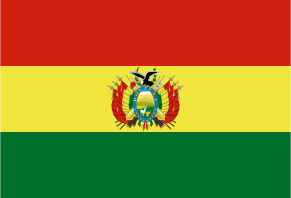
🇧🇴 Travel Guide to Bolivia — Mirror Salt Flats, High-Altitude Cities & Amazon Basin
This comprehensive travel guide to Bolivia opens the door to South America's most geographically diverse and culturally authentic destination. From standing on the world's largest salt expanse at the surreal Salar de Uyuni to soaring over the mountain metropolis of La Paz aboard the Mi Teleférico cable car network, cruising the sacred high-altitude waters of Lake Titicaca and Isla del Sol, exploring white-walled colonial plazas in constitutional capital Sucre (UNESCO), and trekking through pristine jaguar territory in Madidi National Park, this travel guide to Bolivia covers essential visa rules, high-altitude logistics, internal transit, and seasonal itineraries. Whether savoring savory Salteñas or sipping coca leaf tea, this travel guide to Bolivia is your ultimate resource.
Bolivia features 7 UNESCO World Heritage Sites (including Historic City of Sucre, City of Potosí, Tiwanaku, and Noel Kempff Mercado National Park), the highest seat of government in the world (La Paz at 3,640m), and vast biodiversity stretching from Andean peaks down to the Amazon rainforest.
🛂 Visa Guidelines & Entry Rules: Citizens of Group 1 countries (EU nations, UK, Canada, Australia, Japan, Mexico, and South American states) enter visa-free for up to 90 days. Group 2 & 3 national travelers (including US passport holders) can apply for a tourist visa online via the official Bolivian consulate portal or obtain a visa upon arrival at international airports and land borders. The local currency is the Boliviano (BOB / Bs).
📢 AdSense Leaderboard #1 (728x90 or responsive)
📊 Quick Facts
- Constitutional Capital: Sucre 💡 Judicial capital; La Paz is executive and legislative seat
- Currency: Bolivian Boliviano (BOB / Bs) 💡 Cash (Bs) is essential outside major hotels and upscale restaurants
- Official Languages: Spanish & 36 Indigenous Languages 💡 Quechua, Aymara, and Guaraní are widely spoken
- Population: ~12.5 million (2026 est.)
- Land Area: 1,098,581 km²
- Time Zone: UTC -4 (BOT)
📅 Plan Your Visit with This Travel Guide to Bolivia
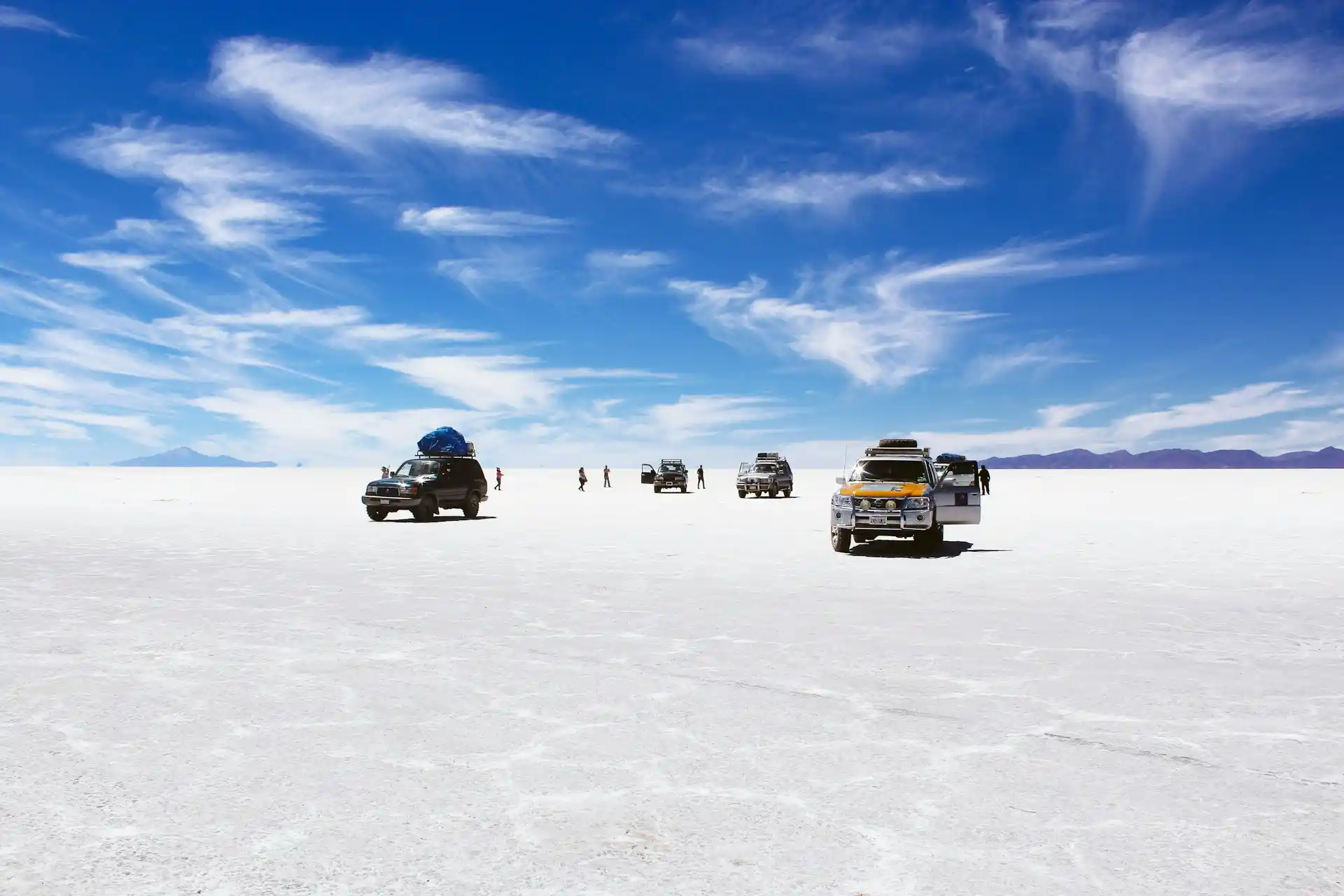
When using your travel guide to Bolivia, aligning your journey with distinct seasonal weather variations is key to an incredible experience. The dry winter season (May to October) delivers clear blue skies, crisp mountain air, and ideal conditions for 4x4 tours across Salar de Uyuni, trekking in the Cordillera Real, and exploring Lake Titicaca. The rainy summer season (December to March) floods Salar de Uyuni, turning the salt flats into the famous "World's Largest Mirror" that reflects sky and clouds in breathtaking photos, though rain can make rural roads muddy. The shoulder seasons (April & November) balance moderate weather and fewer tourist crowds across both highland and lowland regions. Plan using this travel guide to Bolivia.
Best for: Salar de Uyuni overland tours, mountain trekking, and Sucre colonial walks
Best for: Water reflection photos on Salar de Uyuni and vibrant Carnival in Oruro
Best for: Madidi wildlife jungle treks, Pampas riverboat safaris, and ecolodges
Best for: UNESCO masterpiece folkloric dances, Diablada costumes, and brass bands
📢 AdSense Leaderboard #2 (728x90 or responsive)
🛂 Visa & Entry Regulations for Your Travel Guide to Bolivia
Transit & Altitude Logistics: Long-haul international flights land at El Alto International Airport (LPB) serving La Paz (at 4,061m elevation) or Viru Viru International Airport (VVI) in lowland Santa Cruz de la Sierra. Domestic flights (BOA - Boliviana de Aviación) connect La Paz, Uyuni, Sucre, and Rurrenabaque. Intercity buses (flotas) connect major centers overnight. Take time to acclimatize to high altitude upon arrival. Driving is on the right side of the road. Review this travel guide to Bolivia prior to travel.
📋 Entry Requirements Checklist
- Official E-Visa System Apply online via the official Bolivian consulate visa portal or obtain visa upon arrival
- Yellow Fever Certificate Proof of Yellow Fever vaccination required when visiting jungle zones (Madidi/Pampas)
- Passport Validity Must be valid for at least 6 months beyond entry date with blank pages
- Proof of Accommodation & Onward Travel Confirmed hotel booking and round-trip exit flight ticket required at immigration
🔗 Official Resources: Bolivian Ministry of Foreign Affairs E-Visa Portal · UNESCO World Heritage Sites in Bolivia
📚 Trusted Official Resources for Your Travel Guide to Bolivia
- Viceministerio de Turismo de Bolivia Official national destination maps, eco-tourism reserves, and national park guides
- Bolivian Official E-Visa Portal Government portal to submit tourist visa forms and verify fee schedules online
- Lonely Planet — Bolivia Guide Independent travel itineraries, salt flat 4x4 tour reviews, and trekking guides
🌍 Explore neighboring South American destinations: Peru · Chile · Argentina
💡 Key Travel Tips for Visiting Bolivia
Rest upon arriving in high-altitude zones (3,600m+), drink plenty of water, and sip local coca tea (*mate de coca*)
Enjoy spectacular urban aerial views on the world's highest and longest cable car transit network
Discover traditional Aymara herbal medicine, protective amulets, and llama fetuses used for ritual house blessings
Take a passenger ferry from Copacabana to Lake Titicaca's sacred Inca birthplace island
Greeting locals with "Buenos días" (Good morning) or "Gracias" (Thank you) brings warm smiles
Bolivia uses standard American Type A and European Type C electrical plugs operating at 230V / 50Hz
🏰 Top Destinations & Attractions to Visit in Bolivia
World's largest salt flat spanning over 10,000 km², giant cactus-covered Incahuasi Island, and salt hotels
💡 Best time: Year-round (Jan–Mar for mirror effect)Dramatically set in a mountain canyon overlooked by Mount Illimani, Witches' Market, and Moon Valley (*Valle de la Luna*)
💡 Best time: May–OctWorld's highest navigable lake, pilgrimage town of Copacabana, and ancient Inca ruins on sacred Isla del Sol
💡 Best time: May–Oct"La Ciudad Blanca" (The White City) featuring whitewashed colonial architecture, House of Liberty, and Cal Orcko dinosaur footprints
💡 Best time: Year-roundHistoric silver-mining powerhouse at 4,090m altitude, Casa de la Moneda national mint, and working silver mine tours
💡 Best time: May–OctOne of the world's most biodiverse Amazonian reserves—guided jungle ecolodges, pink river dolphins, and capybara safaris
💡 Best time: May–OctPre-Inca ceremonial spiritual capital featuring the Sun Gate (*Puerta del Sol*), Akapana pyramid, and monolithic stone statues
💡 Best time: Year-roundVibrant red-tinted mineral lagoon filled with thousands of pink Andean flamingos, geothermal geysers, and Sol de Mañana
💡 Best time: May–Oct📢 AdSense Leaderboard #3 (728x90 or responsive)
🏨 Top Luxury Hotels & Salt Resorts in Bolivia
Bolivia offers world-unique salt hotels, historic colonial mansions, and modern city boutique stays.
Colchani, Salar de Uyuni
Visit Website → 🏆 The world's first luxury hotel built entirely of salt blocks, featuring heated rooms, spa, and starlight diningCalle 9, Calacoto, La Paz
Visit Website → ⭐ Award-winning Design Hotels member located in La Paz's trendy Zona Sur with indoor pool and gourmet diningCalle Bolivar 442, Sucre
Visit Website → 👑 Restored 18th-century colonial mansion hotel featuring antique courtyards, spa, and rooftop views of SucreAv. San Martin 455, Santa Cruz de la Sierra
Visit Website → 🌿 Landmark resort set in tropical palm gardens featuring outdoor pools, spa facilities, and executive suitesCalle 16 de Calacoto, La Paz
Visit Website → ✨ Luxury boutique hotel constructed with native Comanche stone, rooftop infinity pool, and indigenous art gallerySalar de Uyuni Edge, Potosí
Visit Website → 🏙️ Spectacular salt block eco-lodge perched on a hilltop overlooking the salt flat with cozy fireplaces and spa⚠️ Note: Booking salt hotels in Uyuni 3 to 6 months in advance for the peak dry season (June–October) and mirror season (January–March) is strongly recommended.
🎓 Major Academic Institutions in Bolivia
Av. Villazón 1995, La Paz
Visit Website → 🏆 Founded in 1830, the flagship public university leading higher education across medicine, engineering, and social sciencesAv. Oquendo y Sucre, Cochabamba
Visit Website → ⚙️ Premier public research university in central Bolivia renowned for agronomy, health sciences, and engineeringAv. Busch, Santa Cruz de la Sierra
Visit Website → 📜 Largest public university in eastern Bolivia specializing in business, petroleum engineering, and tropical agricultureAv. 14 de Septiembre, Obrajes, La Paz
Visit Website → 🌱 Top private higher education institution with campuses across La Paz, Cochabamba, Santa Cruz, and Tarija📘 Higher education in Bolivia is supervised by the Ministry of Education (Ministerio de Educación de Bolivia).
🌺 Culture & Culinary Heritage of Bolivia
Bolivia's vibrant cultural fabric is rooted deeply in indigenous Andean (Aymara and Quechua) traditions combined with Spanish colonial influence. Vibrant traditional dress worn by *Cholitas* (layered pollera skirts, embroidered shawls, and iconic bowler hats), traditional panpipe music (*siku*), and colorful textile weaving thrive across markets and festivals.
Bolivia proudly protects 7 UNESCO World Heritage Sites: City of Potosí (1987), Jesuit Missions of Chiquitos (1990), Historic City of Sucre (1991), Fuerte de Samaipata (1998), Noel Kempff Mercado National Park (2000), Tiwanaku (2000), and Qhapaq Ñan Andean Road System (2014).
Bolivian cuisine is hearty, flavorful, and deeply rooted in native potatoes (over 200 varieties), quinoa, maize, and savory grilled meats. The beloved mid-morning snack is the Salteña (a golden baked pastry filled with juicy stewed beef or chicken, potatoes, peas, and mild spices). Try **Pique Macho** (heaping platter of sliced beef, sausages, french fries, onions, and boiled eggs), **Silpancho** (thin breaded beef steak over rice and potatoes topped with fried eggs), **Anticuchos** (grilled beef heart skewers served with spicy peanut sauce), and refresh with **Mocochinchi** (sweet dried peach drink) or **Singani** (grape brandy used in the national *Yungueño* or *Chuflay* cocktails).
Spanish is official alongside 36 native languages. Warm greetings like "Buenos días" (Good morning) and "Gracias" (Thank you) will bring warm hospitality everywhere you travel.
🇧🇴 Ready to explore Bolivia?
Start planning your Salar de Uyuni salt tour, La Paz cable car ride, and Lake Titicaca getaway with our expert travel resources.
Read Our Full Travel Guide →This travel guide to Bolivia is your ultimate reference for exploring this Andean wonderland. Start planning today!