

 Travel Guide to Poland 2026: Kraków, Warsaw, Gdańsk, Wrocław & the Tatras
Planning to visit Poland? This travel guide to Poland covers everything for a first trip: where Poland is, the best time to go, Schengen entry rules, the 10 best places to visit, a 7-day itinerary by train, realistic costs, safety tips and the best hotels and universities. From the medieval Main Square of Kraków and the rebuilt Old Town of Warsaw to the Baltic port of Gdańsk, the bridges and dwarfs of Wrocław and the peaks of the Tatra Mountains, Poland is one of Europe's best-value destinations.
Last updated: October 2026 · Entry rules and taxes in this travel guide to Poland were checked against official sources
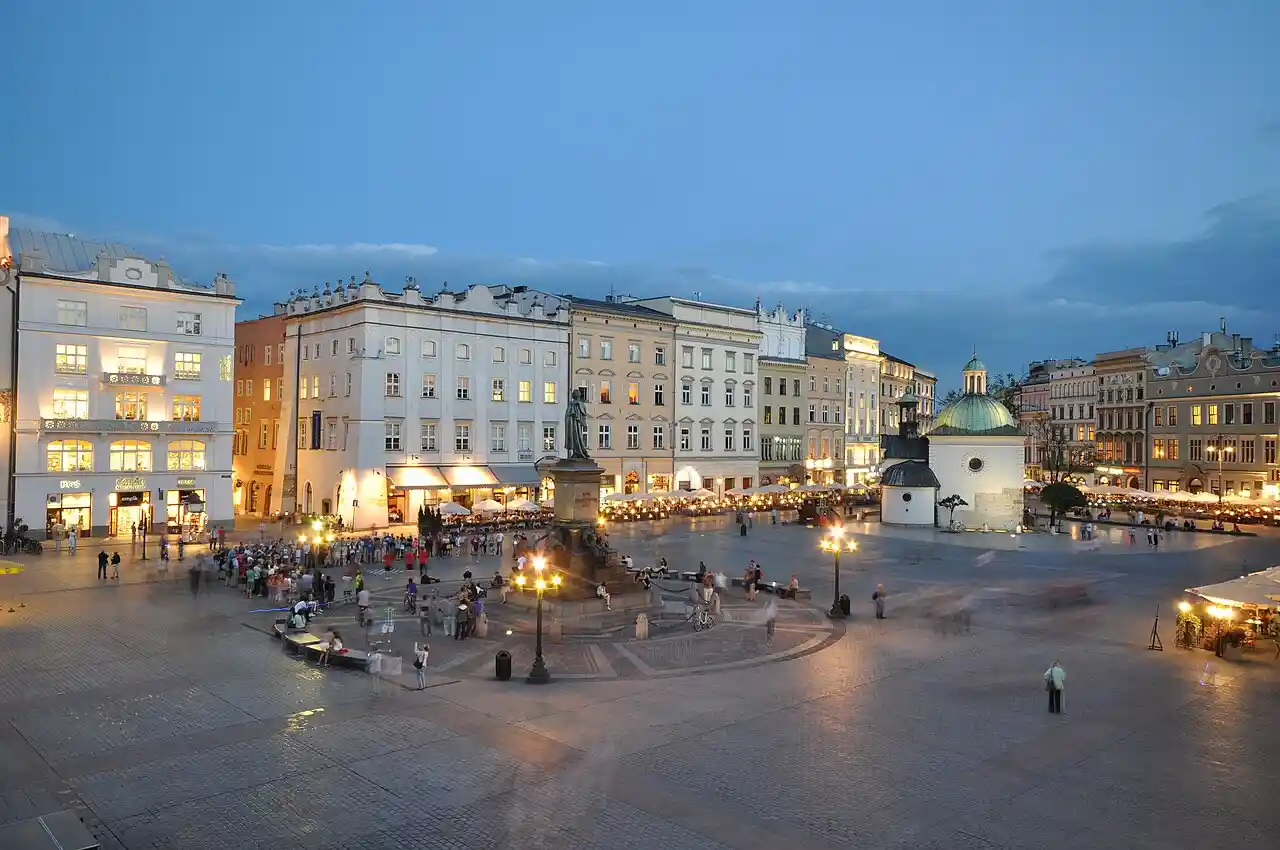
📊 Quick Facts for Your Travel guide to Poland
- Capital: Warsaw💡 Largest city; Kraków is the cultural capital
- Currency: Polish złoty (PLN)💡 Cards and contactless almost everywhere. Check today's rate
- Language: Polish💡 English is common among younger people
- Population: About 37 million💡 2026 estimate
- Area: 312,696 km²💡 Slightly smaller than Germany
- Time zone: UTC+1 (UTC+2 in summer)💡 Central European Time. Convert times
- UNESCO sites: 17💡 Including Kraków, Warsaw, Wieliczka, Malbork and Auschwitz-Birkenau
- Power: 230 V, plug types C and E💡 Standard European plugs
ℹ️ Figures in this travel guide to Poland are 2026 estimates from official and international sources.
📍 Where Is Poland?
Poland lies in the heart of Central Europe, between Germany to the west and Ukraine, Belarus and Lithuania to the east. The Baltic Sea forms its northern coast, and the Carpathian and Sudeten mountains, including the Tatras, run along its southern border with the Czech Republic and Slovakia. Most of the country is flat farmland, forest and lakes, with the Masurian Lake District in the north-east.
Warsaw is about 2 hours by air from London and 1.5 hours from Paris. Fast trains link Warsaw with Kraków, Gdańsk and Wrocław in 2.5–4 hours. Check the distance from your city with our distance calculator.
📅 Best Time to Visit Poland
The best time to visit Poland is May to September, when days are long and warm (18–25 °C), cafés spill onto old-town squares and the Baltic beaches and mountain trails are open. September is especially pleasant, with fewer crowds. December brings famous Christmas markets in Kraków, Wrocław and Gdańsk, while January to March is ski season in Zakopane. Winters are cold (often below 0 °C) and days are short.
Mild, green and quiet; Constitution Day on 3 May.
Baltic beaches, lakes, festivals and busy old towns.
Golden forests, wine bars and fewer visitors.
Christmas markets and skiing in the Tatras.
📅 Use the seasons in this travel guide to Poland to match your trip to the weather, festivals and prices you want.
🛂 Poland Visa & Entry Requirements (Schengen)
Schengen rules apply: Poland is in the EU and the Schengen Area. Citizens of the USA, UK, Canada, Australia, New Zealand and many other countries can visit visa-free for up to 90 days in any 180-day period across the whole Schengen Area. EU citizens only need an ID card. Other nationalities need a Schengen visa before travel.
- PassportValid at least 3 months after you leave the Schengen Area, and issued within the last 10 years.
- Entry/Exit System (EES)Fully running since April 2026: non-EU visitors have fingerprints and a photo taken at the border on their first visit.
- ETIASA new online travel authorisation (€20) for visa-free visitors, expected in late 2026. It is not required yet, so check before you fly and use only the official EU website.
- Main airportWarsaw Chopin (WAW); Kraków (KRK) is best for southern Poland.
🔗 Official sources: Poland: visas (official) · EU: EES and ETIAS. Entry rules change, so always confirm before booking.
🛂 Entry rules in this travel guide to Poland were last checked in October 2026.
🏰 10 Best Places to Visit in Poland
These are the places we recommend most in this travel guide to Poland, with the best months to see each one.
The Main Square, Wawel Castle and the Kazimierz Jewish quarter (UNESCO).
💡 Best time: All yearThe rebuilt Old Town (UNESCO), the Royal Castle and the Warsaw Uprising Museum.
💡 Best time: May–SepThe former Nazi German camp, now a Memorial and Museum (UNESCO).
💡 Best time: All yearUnderground chapels carved from salt near Kraków (UNESCO).
💡 Best time: All yearThe Long Market, the Museum of the Second World War and nearby Sopot.
💡 Best time: May–SepA beautiful square, island churches and hundreds of tiny bronze dwarfs.
💡 Best time: All yearMorskie Oko lake, Kasprowy Wierch and highland culture.
💡 Best time: Jun–Sep, Jan–MarThe largest brick castle in the world, built by the Teutonic Knights (UNESCO).
💡 Best time: Apr–OctAn Old Town square with butting mechanical goats at noon.
💡 Best time: May–SepPrimeval forest and wild European bison (UNESCO).
💡 Best time: May–Oct🗺️ 7-Day Poland Itinerary: Warsaw, Kraków & the Tatras
A first trip by train: Warsaw, Kraków and the south. Book Intercity trains a few days ahead for the best prices.
Follow this route from our travel guide to Poland day by day, or shorten it to fit your trip.
- Warsaw: the Old Town, Royal Castle and Łazienki Park.
- Warsaw: the Warsaw Uprising Museum and POLIN Museum; evening train to Kraków (2.5 hours).
- Kraków: the Main Square, St Mary's Basilica, Wawel Castle and Kazimierz.
- Auschwitz-Birkenau: a full, sobering day (book your entry pass in advance).
- Wieliczka: the salt mine in the morning, then back to Kraków for Nowa Huta or Podgórze.
- Zakopane: by bus or train; hike to Morskie Oko or ride up Kasprowy Wierch.
- Kraków: return and fly home from Kraków (KRK).
➕ With more time: add Gdańsk and Malbork Castle on the Baltic, Wrocław and the Sudeten mountains, or a lake stay in Masuria.
💵 How Much Does a Trip to Poland Cost?
Poland is one of the best-value destinations in the EU. These are approximate daily costs per person in 2026, excluding flights. Use our currency converter to see them in your own currency.
| Travel style | Per day (approx.) | What it covers |
|---|---|---|
| Budget | PLN 200–300 | Hostels, milk bars (bar mleczny) and trains |
| Mid-range | PLN 450–800 | Central hotels, restaurants and museums |
| Luxury | PLN 1,500 + | Five-star hotels and private guides |
💡 All prices in this travel guide to Poland are per person, per day, and change with the season and exchange rates.
🎟️ Many museums have one free day a week. Some cities charge a small local tourist fee (opłata miejscowa) per night. Tipping about 10% in restaurants is normal.
💡 Safety & Travel Tips for Your Travel guide to Poland
Poland is very safe for travellers. Watch for pickpockets in busy old towns and on night trains, use licensed taxis or the Bolt and Uber apps, and check bills in bars around Kraków's Main Square. At Auschwitz-Birkenau, dress and behave respectfully, as it is a place of mourning. Check your government's travel advice before you go, especially for areas near the Belarus border.
Free passes are released 90 days ahead.
Fast, cheap trains between big cities.
Pierogi and soups for a few złoty.
Contactless and BLIK are everywhere.
Churches and memorials expect calm.
"Dzień dobry" (hello) and "Dziękuję" (thank you).
🏨 Best Hotels in Poland: 8 Top Picks
Stay near the Old Town in Kraków or Gdańsk, and around the Royal Route in Warsaw.
A restored 1857 grand hotel on the Royal Route.
Check prices on Booking.com →An Art Nouveau landmark beside the Presidential Palace.
Check prices on Booking.com →A 15th-century building steps from the Main Square.
Check prices on Booking.com →Elegant rooms near Wawel Castle.
Check prices on Booking.com →A 1892 classic near the Opera and Old Town.
Check prices on Booking.com →Historic townhouses on the Long Market.
Check prices on Booking.com →A 1927 grand hotel on the Baltic beach.
Check prices on Booking.com →A spa hotel in the Tatra foothills.
Check prices on Booking.com →🔎 How we chose for this travel guide to Poland: hotels are picked for location, reputation and a spread of regions and styles. Prices and availability change daily, so the buttons open live Booking.com results for each property.
🤝 Affiliate disclosure: hotel buttons are affiliate links. If you book through them, AtlasWise may earn a small commission at no extra cost to you. It never changes which hotels we list.
🎓 Top Universities in Poland
Poland is a popular and affordable place to study in Europe, with many English-taught degrees.
| University | City | Type |
|---|---|---|
| Jagiellonian University | Kraków | Public |
| University of Warsaw | Warsaw | Public |
| Warsaw University of Technology | Warsaw | Public |
| AGH University of Kraków | Kraków | Public |
| Adam Mickiewicz University | Poznań | Public |
Founded in 1364; Copernicus studied here.
Visit website →Poland's largest research university.
Visit website →A leading engineering school.
Visit website →Strong in computing, mining and materials.
Visit website →A major university in western Poland.
Visit website →🔎 How we chose for this travel guide to Poland: the leading universities in Poland by reputation and research. Last checked: October 2026.
🥟 Polish Culture & Food
Polish culture is proud and resilient. Poland gave the world Chopin, Marie Curie and Copernicus, and rebuilt its capital almost brick by brick after the Second World War. Catholic traditions remain strong, from Easter basket blessings to Christmas Eve Wigilia, and the highland Górale culture around Zakopane keeps its own music and wooden architecture.
Try pierogi (dumplings), żurek (sour rye soup, often in a bread bowl), bigos (hunter's stew), kotlet schabowy, smoked oscypek cheese from the Tatras, pączki (doughnuts) and a zapiekanka from Kraków's Kazimierz.
❓ Travel Guide to Poland: FAQ
Do I need a visa for Poland?
No for US, UK, Canadian and Australian citizens: Schengen rules allow 90 days in any 180 days.
Do I need ETIAS for Poland?
Not yet. ETIAS is expected in late 2026; check the official EU site before you fly.
What is the best time to visit Poland?
May to September for warm weather, or December for Christmas markets.
Do I need to book Auschwitz in advance?
Yes. Book a free entry pass or a guided visit online at visit.auschwitz.org.
Is Poland expensive?
No, it is one of the cheapest countries in the EU for food, transport and hotels.
Is Poland safe for tourists?
Yes, it is one of the safest countries in Europe.
How many days do you need in Poland?
Seven days covers Warsaw, Kraków, Auschwitz and Zakopane.
What currency does Poland use?
The Polish złoty (PLN), not the euro.
📚 Trusted Resources for Your Travel guide to Poland
- Poland TravelOfficial tourism board
- Auschwitz-Birkenau MemorialOfficial booking for entry passes
- UNESCO: PolandWorld Heritage Sites in Poland
Finished this travel guide to Poland? 🌍 More Central Europe guides: Germany · Czechia · Slovakia · Lithuania · Hungary
⚖️ Compare Poland with other countries in Compare Countries.
🏛️ Planning a bucket list? See the 20 best World Heritage Sites to visit.
 Ready to plan Poland?
Use our free travel tools to compare costs, time zones and distances, or browse our printable AtlasWise guides for other destinations.
Free travel tools → Browse AtlasWise travel guides🔖 Bookmark this travel guide to Poland and check it again before you fly: we update entry rules, prices and hotels regularly.