
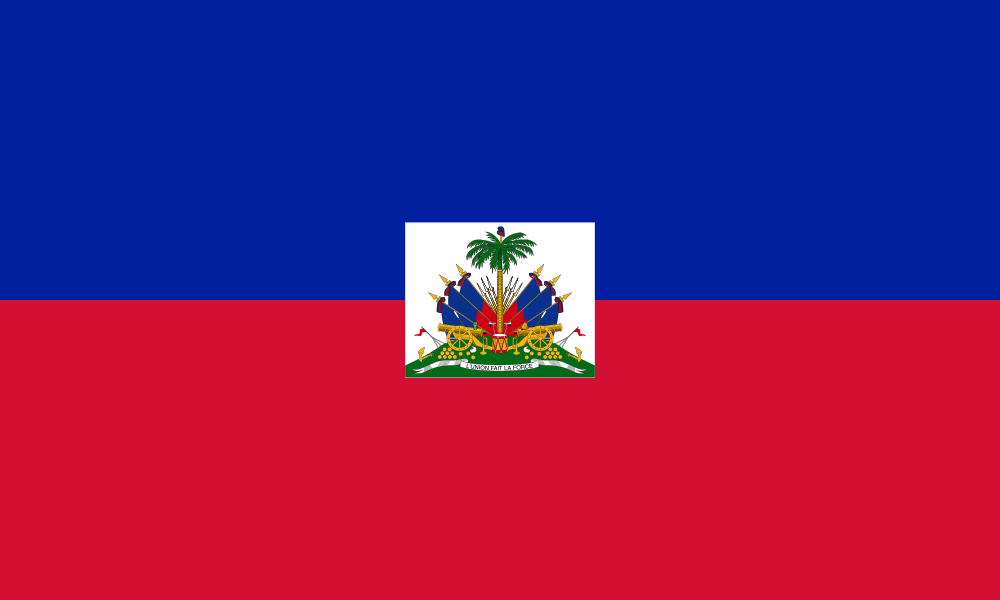
 Travel Guide to Haiti 2026: Cap-Haïtien, the Citadelle & Jacmel
Thinking about Haiti? This travel guide to Haiti gives you the honest picture for 2026: the current safety advice, where Haiti is, the best time to go, entry rules, the 10 most famous places, a sample itinerary for when travel is safer, costs and culture. Haiti was the first Black republic and the first country in Latin America and the Caribbean to win independence (1804), and its mountain-top Citadelle Laferrière, the ruins of Sans-Souci Palace, the art town of Jacmel and the beaches of Île-à-Vache are among the region's great sights. This guide explains what is possible now and what to wait for.
Last updated: October 2026 · Entry rules and costs in this travel guide to Haiti were checked against official sources

📊 Quick Facts for Your Travel guide to Haiti
- Capital: Port-au-Prince💡 Much of the city is controlled by armed gangs
- Currency: Haitian gourde (HTG)💡 US dollars are widely used. Check rates
- Languages: Haitian Creole and French💡 Creole is spoken by almost everyone
- Population: About 11.9 million💡 One of the most populous Caribbean countries
- Area: 27,750 km²💡 About the size of Belgium
- Time zone: UTC−5 (UTC−4 in summer)💡 Haiti uses daylight saving time. Convert times
- UNESCO sites: 1💡 National History Park: Citadel, Sans-Souci, Ramiers
- Power: 110 V, plug types A and B💡 Power cuts are frequent
ℹ️ Figures in this travel guide to Haiti are 2026 estimates from official and international sources.
📍 Where Is Haiti?
Haiti covers the western third of Hispaniola, the second-largest island in the Caribbean, with the Dominican Republic to the east. Cuba lies about 80 km to the west across the Windward Passage and Jamaica to the south-west. It is the most mountainous country in the Caribbean: its name comes from the Taíno word Ayiti, "land of high mountains". The highest peak is Pic la Selle (2,680 m).
The two international airports are Toussaint Louverture in Port-au-Prince and Hugo Chávez International in Cap-Haïtien in the north. Overland travel between towns is currently very dangerous because gangs control main roads out of the capital. See how far places are with our distance calculator.
📅 Best Time to Visit Haiti
Haiti is warm all year (about 25–32°C on the coast, cooler in the mountains of Kenscoff and Furcy). The driest months are December to March. There are two rainy periods, April to June and August to October, and the hurricane season runs from June to November. Kanaval (Carnival) takes place before Lent, and the Jacmel Carnival is famous for its papier-mâché masks.
The best weather; Carnival in February.
Green and hot, with afternoon showers.
Hot; the Saut-d'Eau pilgrimage.
The highest storm risk.
📅 Use the seasons in this travel guide to Haiti to match your trip to the weather, festivals and prices you want.
🛂 Haiti Visa & Entry Requirements (2026)
No visa for most visitors: citizens of the USA, UK, EU, Canada and many other countries can enter Haiti visa-free for up to 90 days. Visitors pay a tourist fee on arrival (about US$10). Entry is easy on paper, but the main question is safety: read the advice above before booking.
- PassportValid for at least 6 months.
- Onward ticketRequired on arrival.
- Arrival feeA small tourist fee, paid in cash on arrival.
- InsuranceGet cover that includes medical evacuation.
🔗 Official sources: US travel advisory: Haiti · Government of Canada: Haiti. Entry rules change, so always confirm before booking and avoid paid look-alike sites.
🛂 Entry rules in this travel guide to Haiti were last checked in October 2026.
🏰 10 Most Famous Places in Haiti
These are the best-known sights in this travel guide to Haiti. While the Do Not Travel advice is in place, treat this as background for planning a future trip, not as a list to visit now.
A giant 19th-century fortress on a 900 m peak above Milot.
💡 Best time: Dec–MarThe ruined palace of King Henri Christophe at the foot of the Citadelle.
💡 Best time: Dec–MarHaiti's second city, with French colonial streets and a bay.
💡 Best time: Dec–AprA private beach peninsula used by cruise ships.
💡 Best time: Dec–AprAn art and Carnival town with 19th-century iron balconies.
💡 Best time: FebBlue pools and waterfalls in the hills above Jacmel.
💡 Best time: Dec–AprA car-free island with quiet beaches off Les Cayes.
💡 Best time: Dec–AprPine forests and trails high above Port-au-Prince.
💡 Best time: Dec–MarWaterfalls and a famous July Vodou and Catholic pilgrimage.
💡 Best time: JulA village of artists making cut-metal art.
💡 Best time: All year🗺️ Sample 7-Day Haiti Itinerary (for When Travel Is Safer)
This route shows a classic trip from the north to the south. Do not follow it while the Do Not Travel advice is in place; roads between Port-au-Prince and other regions are currently unsafe.
Follow this route from our travel guide to Haiti day by day, or shorten it to fit your trip.
- Cap-Haïtien: the old town, the cathedral and the waterfront.
- Milot: Sans-Souci Palace and the climb to the Citadelle.
- North coast: beaches at Cormier and Labadee.
- Port-au-Prince area: art galleries in Pétion-Ville and Croix-des-Bouquets.
- Kenscoff and Furcy: cool mountain villages and pine forests.
- Jacmel: the historic centre, workshops and Bassin Bleu.
- Île-à-Vache: a boat from Les Cayes to quiet island beaches.
➕ When safer: add the Saut-d'Eau falls, Parc National La Visite or the beaches of the Côte des Arcadins.
💵 How Much Does a Trip to Haiti Cost?
Costs in Haiti are often higher than expected because of security, fuel and transport problems. These are approximate daily costs per person in 2026, excluding flights. Use our currency converter.
| Travel style | Per day (approx.) | What it covers |
|---|---|---|
| Basic | US$60–100 | Guesthouses and local food (where safe) |
| Mid-range | US$150–250 | Hotels and a private driver |
| With security | US$400 + | Security escorts and charter flights |
💡 All prices in this travel guide to Haiti are per person, per day, and change with the season and exchange rates.
💵 Carry small US dollar notes and gourdes; cards are accepted only in some hotels.
💡 Safety & Travel Tips for Your Travel guide to Haiti
Haiti is currently one of the most dangerous countries in the Americas for visitors. Gangs control most of Port-au-Prince and main roads out of the capital, and kidnapping for ransom is widespread, including of foreigners. Protests and roadblocks can start without warning, and health care is very limited. The US Embassy can give only very limited help. If you are in Haiti, keep a low profile, register with your embassy, make a communication plan, and have an exit plan that does not depend on your government.
Read your government's latest advisory first.
Enrol in STEP or your country's equivalent.
Main roads out of the capital are controlled by gangs.
Local health care is very limited.
ATMs are often empty or unsafe.
"Bonjou" means good morning in Haitian Creole.
🏨 Where to Stay in Haiti
While the US rates Haiti Level 4: Do Not Travel, we are not recommending individual hotels. In normal times, visitors stay in Pétion-Ville above Port-au-Prince, in Cap-Haïtien and the nearby beaches of Cormier, and in guesthouses in Jacmel and on Île-à-Vache.
🔎 Why there are no hotel picks in this travel guide to Haiti: we do not recommend individual hotels while major governments advise against all travel. We will add them if the advice changes.
🎓 Top Universities in Haiti
Haiti's universities have kept teaching through very hard years, often moving classes online or to other cities.
| University | City | Type |
|---|---|---|
| Université d'État d'Haïti (UEH) | Port-au-Prince | Public |
| Université Quisqueya | Port-au-Prince | Private |
| Université Notre Dame d'Haïti | Port-au-Prince | Private (Catholic) |
| Université Roi Henri Christophe | Limonade (north) | Public |
The national state university, with faculties across the country.
Visit website →A leading private university, strong in health and engineering.
Visit website →A Catholic university with campuses in several regions.
Visit website →A public campus near Cap-Haïtien, opened in 2012.
Visit website →🔎 How we chose for this travel guide to Haiti: the best-known public and private universities. Last checked: October 2026.
🎨 Haitian Culture & Food
Haitian culture is one of the richest in the Caribbean. The country's revolution (1791–1804) ended slavery and French rule, and independence on 1 January is celebrated with soup joumou, a pumpkin soup once forbidden to enslaved people and now on UNESCO's list of intangible heritage. Haitian naïve painting, metal art from Croix-des-Bouquets, Vodou traditions, kompa and rara music are famous around the world.
Food is spicy and hearty: try griot (fried pork) with pikliz (spicy pickled cabbage), diri ak djon djon (rice with black mushrooms), fried plantains, akra (malanga fritters) and Barbancourt rum, made in Haiti since 1862.
❓ Travel Guide to Haiti: FAQ
Is it safe to travel to Haiti now?
No. The US rates Haiti Level 4: Do Not Travel because of crime, kidnapping and unrest.
Are there flights to Haiti?
US airlines do not fly to Port-au-Prince; American Airlines flies Miami–Cap-Haïtien from 1 November 2026.
Do I need a visa for Haiti?
US, UK, EU and Canadian citizens do not need a visa for up to 90 days.
What language is spoken in Haiti?
Haitian Creole and French; Creole is spoken by almost everyone.
What is Haiti famous for?
The 1804 revolution, the Citadelle Laferrière, art, music and food.
What is the best time to visit Haiti?
December to March, the dry season, when travel is safe again.
What currency does Haiti use?
The Haitian gourde (HTG); US dollars are widely used.
Is Labadee in Haiti?
Yes. It is a private resort on the north coast used by cruise ships.
📚 Trusted Resources for Your Travel guide to Haiti
- US travel advisory: HaitiThe latest safety level
- US Embassy in HaitiSecurity alerts and help for citizens
- UNESCO: National History ParkThe Citadel, Sans-Souci and Ramiers
Finished this travel guide to Haiti? 🌍 More Caribbean guides: Dominica · Saint Lucia · Trinidad and Tobago · Honduras · All of North America
⚖️ Compare Haiti with other countries in Compare Countries.
🏛️ Planning a bucket list? See the 20 best World Heritage Sites to visit.
 Ready to explore Haiti?
Check the latest safety advice and plan a future trip with our free travel tools.
Explore more North America guides → Free travel tools🔖 Bookmark this travel guide to Haiti and check it again before you travel: we update entry rules, prices and hotels regularly.