
🇬🇶 Travel Guide to Equatorial Guinea — Spanish-Speaking Island Arc, Volcanic Craters & Rainforest Safaris
This comprehensive travel guide to Equatorial Guinea welcomes you to one of Africa's most unique and mysterious destinations—the only Spanish-speaking nation on the African continent. Split between the volcanic island of Bioko in the Gulf of Guinea and the continental jungle region of Río Muni, Equatorial Guinea combines Spanish colonial architecture with pristine Atlantic beaches and vast rainforest reserves. From the vibrant capital city of Malabo on Bioko Island to the sea turtle nesting beaches of Ureca, the gorilla-inhabited rainforests of Monte Alén National Park, and the modern coastal metropolis of Bata, this travel guide to Equatorial Guinea details entry requirements, transportation, and regional highlights. Whether hiking Pico Basilé, visiting cocoa plantations, or exploring pristine white sand islands like Corisco, this travel guide to Equatorial Guinea is your definitive travel companion.
Equatorial Guinea features 1,400 km² of protected rainforest in Monte Alén National Park, 4 species of nesting sea turtles in Ureca, and Africa's newest purpose-built interior capital city (Ciudad de la Paz).
🛂 Official Tourist eVisa System: Travelers can apply for an official tourist eVisa online prior to arrival. Passports must have at least 6 months validity from intended departure. Citizens of US and select ECOWAS states enjoy visa-free entry, while all other visitors must secure an eVisa before boarding international flights.
📢 AdSense Leaderboard #1 (728x90 or responsive)
📊 Quick Facts
- Capital: Malabo (Administrative) & Ciudad de la Paz (Future Capital) 💡 Island capital situated on the volcanic rim of Bioko
- Currency: Central African CFA Franc (XAF / FCFA) 💡 Cash-based economy; Euros converted at fixed exchange rates
- Language: Spanish, French & Portuguese (Official) 💡 Spanish is the primary everyday language; Fang and Bubi widely spoken
- Population: ~1.7 million (2026 est.)
- Land Area: 28,051 km²
- Time Zone: UTC +1 (WAT year-round)
📅 Plan Your Visit with This Travel Guide to Equatorial Guinea
When using your travel guide to Equatorial Guinea, choosing the right travel window ensures optimal conditions for rainforest trekking, volcanic crater hikes, and sea turtle nesting safaris. Equatorial Guinea experiences a tropical climate with regional climate variations between Bioko Island and mainland Río Muni. The dry season on Bioko Island (December to February) is widely considered the best time to visit Malabo and Ureca—offering clear skies, prime sea turtle nesting viewing, and ideal conditions for climbing Pico Basilé. The dry season on mainland Río Muni (June to August) is best for safari expeditions into Monte Alén National Park. Plan using this travel guide to Equatorial Guinea.
Best for: Ureca turtle nesting safaris, Malabo city tours, and Pico Basilé crater hikes
Best for: Gorilla and forest elephant trekking in Monte Alén National Park
Four species of sea turtles lay eggs on the southern beaches of Ureca
National holiday celebrating independence from Spain (1968) with parades and cultural festivals
📢 AdSense Leaderboard #2 (728x90 or responsive)
🛂 Visa & Entry Regulations for Your Travel Guide to Equatorial Guinea
eVisa System & Travel Authorization: Equatorial Guinea operates an official tourist eVisa system. International visitors can submit their applications via the government portal prior to travel. US citizens can enter visa-free for up to 90 days due to bilateral agreements. Passports must have at least 6 months remaining validity past the departure date. International flights arrive via Malabo International Airport (SSG) on Bioko Island or President Obiang Nguema International Airport (BSG) in Mengomeyén. A valid Yellow Fever vaccination certificate is mandatory for entry. Review this travel guide to Equatorial Guinea before departure.
📋 Entry Requirements Checklist
- Official Tourist eVisa Apply online prior to travel; processing takes 3–5 business days
- Passport Validity Must be valid for at least 6 months past intended departure with blank pages
- Yellow Fever Vaccination Mandatory health requirement checked upon arrival at airport health controls
- Internal Photography Permits Avoid photographing government buildings, military sites, or port facilities
🔗 Official Resources: Equatorial Guinea eVisa Portal · Embassy Tourism Information
📚 Trusted Official Resources for Your Travel Guide to Equatorial Guinea
- Official eVisa Portal — Equatorial Guinea Official government portal for tourist visa applications and entry protocols
- Embassy Tourism Portal Information on national parks, eco-lodges, and cultural itineraries
- Lonely Planet — Equatorial Guinea Independent West African travel recommendations, safety guidance, and eco-tours
🌍 Explore neighboring Central African destinations: Cameroon · Gabon · São Tomé & Príncipe
💡 Key Travel Tips for Visiting Equatorial Guinea
Equatorial Guinea is Africa's only Spanish-speaking nation; basic Spanish greetings like "¡Hola! ¿Cómo está?" open doors everywhere
Sample Equatoguinean cuisine staples: Pepesup (spicy fish soup), Succotash, chicken in peanut sauce (*Salsa de Cacahuete*), and plantains
Credit cards are only accepted at major international hotels in Malabo and Bata; carry cash in CFA Francs or Euros
Equatorial Guinea is a high-risk malaria zone; take prescribed anti-malarials and use DEET insect repellent
Equatorial Guinea uses European Type C and E electrical plugs operating at 220V / 50Hz
🏖️ Top Destinations & Attractions to Visit in Equatorial Guinea
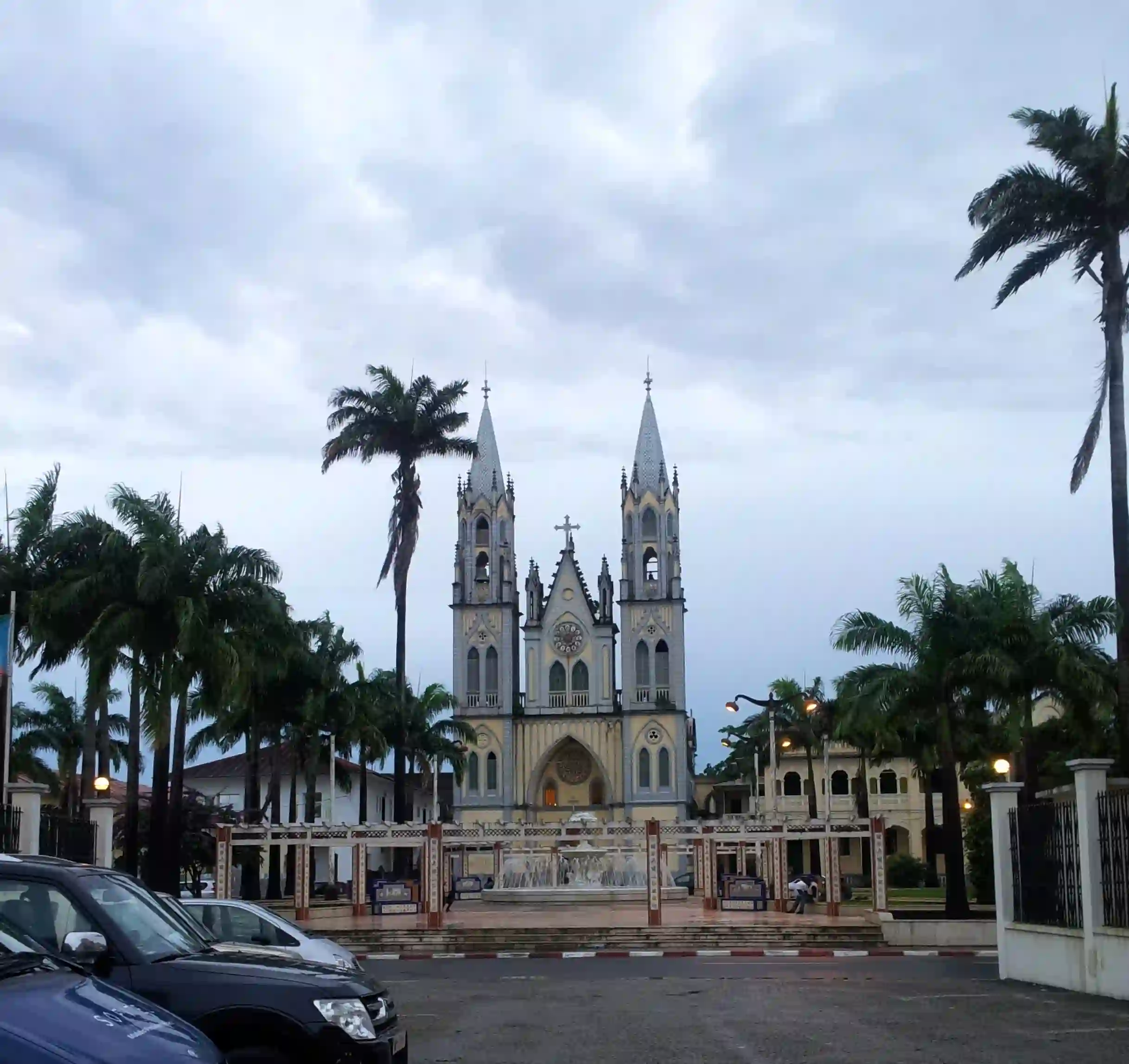
Bioko Island capital — neo-Gothic Santa Isabel Cathedral, Casa Verde colonial timber house, Malabo City Park, and Sipopo luxury resort area
💡 Best time: Dec–FebSouthern Bioko eco-paradise — dramatic Eoli River waterfalls and Moraka beach where sea turtles lay eggs
💡 Best time: Nov–Feb1,400 km² protected rainforest — lowland gorillas, forest elephants, chimpanzees, and jungle trekking trails
💡 Best time: Jun–AugHighest peak on Bioko Island (3,011m) — panoramic cloud forest hikes overlooking Mount Cameroon across the Gulf
💡 Best time: Dec–FebRemote island paradise — pristine deserted white sand beaches, turquoise lagoon waters, and traditional fishing villages
💡 Best time: Dec–FebLargest continental city — Paseo Marítimo waterfront boulevard, Freedom Tower monument, and local craft markets
💡 Best time: Jun–AugHistoric 19th-century cocoa estate outside Malabo — learn traditional bean-to-bar harvesting and taste world-renowned fine cocoa
💡 Best time: Dec–FebFuture planned interior capital city surrounded by dense rainforest — modern architecture, Grand Hotel Djibloho, and golf courses
💡 Best time: Jun–Aug📢 AdSense Leaderboard #3 (728x90 or responsive)
🏨 Top Luxury Hotels & Beach Resorts in Equatorial Guinea
Equatorial Guinea features luxury 5-star international resorts alongside seaside business hotels.
Sipopo Beach, Malabo
Visit Website → 🏆 Premier 5-star luxury oceanfront resort featuring an 18-hole championship golf course and private white sand beachCiudad de la Paz, Djibloho
Visit Website → ⭐ Ultra-luxury 5-star resort hotel set in the heart of the equatorial jungle with spa, golf course, and fine diningCarretera del Aeropuerto, Malabo
Visit Website → 👑 Top-rated 5-star airport luxury hotel featuring expansive swimming pools, tropical gardens, and executive suitesPaseo Marítimo, Bata
Visit Website → 🌿 Modern 3-star seaside hotel located directly on the waterfront boulevard in BataCalle Lumu Matindi, Bata
Visit Website → ✨ Stylish boutique oceanfront hotel featuring spa wellness facilities, sea view dining, and personalized serviceAvenida Parques de Africa, Malabo
Visit Website → 🏢 Dependable business hotel in Malabo city center with outdoor swimming pool, bar, and airport shuttle access⚠️ Note: Booking hotels in Malabo and Bata 2 to 4 weeks in advance is recommended.
🎓 Major Academic Institutions in Equatorial Guinea
Malabo & Bata Campuses
Visit Website → 🏆 Equatorial Guinea's primary public university, founded in 1995, offering faculties of medicine, agriculture, law, and engineeringOyala / Ciudad de la Paz
Visit Website → ⚙️ Modern international university campus specializing in technology, health sciences, and environmental management📘 Higher education in Equatorial Guinea operates under the Ministry of Education, University Teaching and Sports.
🌺 Culture & Culinary Heritage of Equatorial Guinea
Equatorial Guinea's culture reflects a unique blend of Spanish colonial influence and ancient indigenous traditions. Ethnic traditions flourish among the Fang majority on the mainland, the Bubi indigenous people of Bioko Island, and coastal Ndowe groups. Traditional music features the mvet (a harp-zither instrument), wooden drums, and energetic folk dances celebrated during harvest festivals.
Equatorial Guinea is home to extraordinary biodiversity, protecting pristine ecosystems like Monte Alén National Park and the coastal marine reserves of Ureca and Corisco Island.
Equatoguinean cuisine is rich, aromatic, and centered around fresh cassava, plantains, yams, fresh seafood, and rich peanut sauces. The national comfort food is Pepesup (a fiery, flavorful fish soup seasoned with indigenous spices). Enjoy Salsa de Cacahuete (chicken or fish simmered in a savory groundnut sauce served over boiled plantains), Succotash, fried fish with garlic and chili, and sweet coconut sweets (*Cocada*). Refresh with palm wine or cold Spanish-style lager.
Spanish is official and universally spoken. Friendly greetings like "¡Hola! ¿Cómo está?" and "Muchas gracias" bring immediate warm smiles everywhere you travel.
🇬🇶 Ready to explore Equatorial Guinea?
Start planning your Malabo city stay, Ureca turtle safari, and Monte Alén jungle trek with our expert travel resources.
Read Our Full Travel Guide →This travel guide to Equatorial Guinea is your ultimate reference for exploring Africa's Spanish-speaking gem. Start planning today!