

 Travel Guide to Djibouti 2026: Lake Assal, Whale Sharks & Canyon Landscapes
Planning to visit Djibouti? This travel guide to Djibouti covers everything you need for a first trip to the Horn of Africa's most surreal country: where Djibouti is, the best time to go, eVisa rules, the top places to visit, a 7-day itinerary, realistic costs, safety tips, and the best hotels and universities. Djibouti sits where three tectonic plates pull apart, so you can stand at Lake Assal, Africa's lowest point, walk among the steaming limestone chimneys of Lake Abbe, and swim with gentle whale sharks in the Gulf of Tadjoura, all within a few hours of the capital.
Last updated: October 2026 · Entry rules and taxes in this travel guide to Djibouti were checked against official sources
📊 Quick Facts for Your Travel guide to Djibouti
- Capital: Djibouti City💡 A Red Sea port with French colonial streets and busy markets
- Currency: Djiboutian franc (DJF)💡 Fixed at about 177.7 DJF per US dollar. Check today's rate
- Languages: French and Arabic💡 Somali and Afar are spoken every day
- Population: About 1.2 million💡 2026 estimate; most people live in the capital
- Area: 23,200 km²💡 About the size of Wales or New Jersey
- Time zone: EAT (UTC+3) all year💡 No daylight saving time. Convert times
- Lowest point: Lake Assal, −155 m💡 The lowest point in Africa
- Power: 220 V, plug types C and E💡 European two-pin plugs
ℹ️ Figures in this travel guide to Djibouti are 2026 estimates from official and international sources.
📍 Where Is Djibouti?
Djibouti is in the Horn of Africa, on the western shore of the Bab-el-Mandeb Strait, where the Red Sea meets the Gulf of Aden. It borders Eritrea to the north, Ethiopia to the west and south, and Somalia (Somaliland) to the southeast. Yemen is only about 30 km away across the strait. The country wraps around the deep Gulf of Tadjoura, and its interior is a dry volcanic landscape of salt lakes, lava fields and rift valleys.
Direct flights reach Djibouti from Addis Ababa (about 1 hour), Dubai, Istanbul and Paris (about 7 hours). A modern railway also links Djibouti City with Addis Ababa. Check the distance from your city with our distance calculator, or explore more in our Africa travel guides.
📅 Best Time to Visit Djibouti
The best time to visit Djibouti is the cool season, November to February, when days are around 25–30°C and the sea is calm. This is also the whale shark season: young whale sharks gather in the Gulf of Tadjoura near Arta from about November to February. March, April and October are warmer but still possible. Avoid June to September, when temperatures often pass 40–45°C and the hot khamsin wind blows dust across the country.
Best for Lake Assal, Lake Abbe, hiking and diving.
Swim with young whale sharks in the Gulf of Tadjoura near Arta.
Hotter days, fewer visitors, still good for diving.
Extreme heat above 40°C; most tours slow down.
📅 Use the seasons in this travel guide to Djibouti to match your trip to the weather, festivals and prices you want.
🛂 Djibouti Visa & Entry Requirements
eVisa before you fly: almost all visitors, including citizens of the USA, UK, Canada, EU countries and Australia, need a visa for Djibouti. The government recommends applying online for an eVisa on the official portal before travel. A short-stay tourist eVisa costs about US$23 and a short transit visa about US$12. Visas on arrival have been issued at the airport, but rules change and airlines may refuse boarding without an approved eVisa, so apply in advance.
- Valid passportValid for at least 6 months, with blank pages.
- Hotel booking and return ticketUsually requested with the eVisa and at arrival.
- Yellow fever certificateRequired if you arrive from a country with yellow fever risk.
- Main airportDjibouti–Ambouli International (JIB), 6 km from the city centre.
🔗 Official sources: Djibouti eVisa portal · Djibouti Tourism Office. Entry rules change, so always confirm before booking.
🛂 Entry rules in this travel guide to Djibouti were last checked in October 2026.
🌋 Best Places to Visit in Djibouti
These are the places we recommend most in this travel guide to Djibouti, with the best months to see each one.
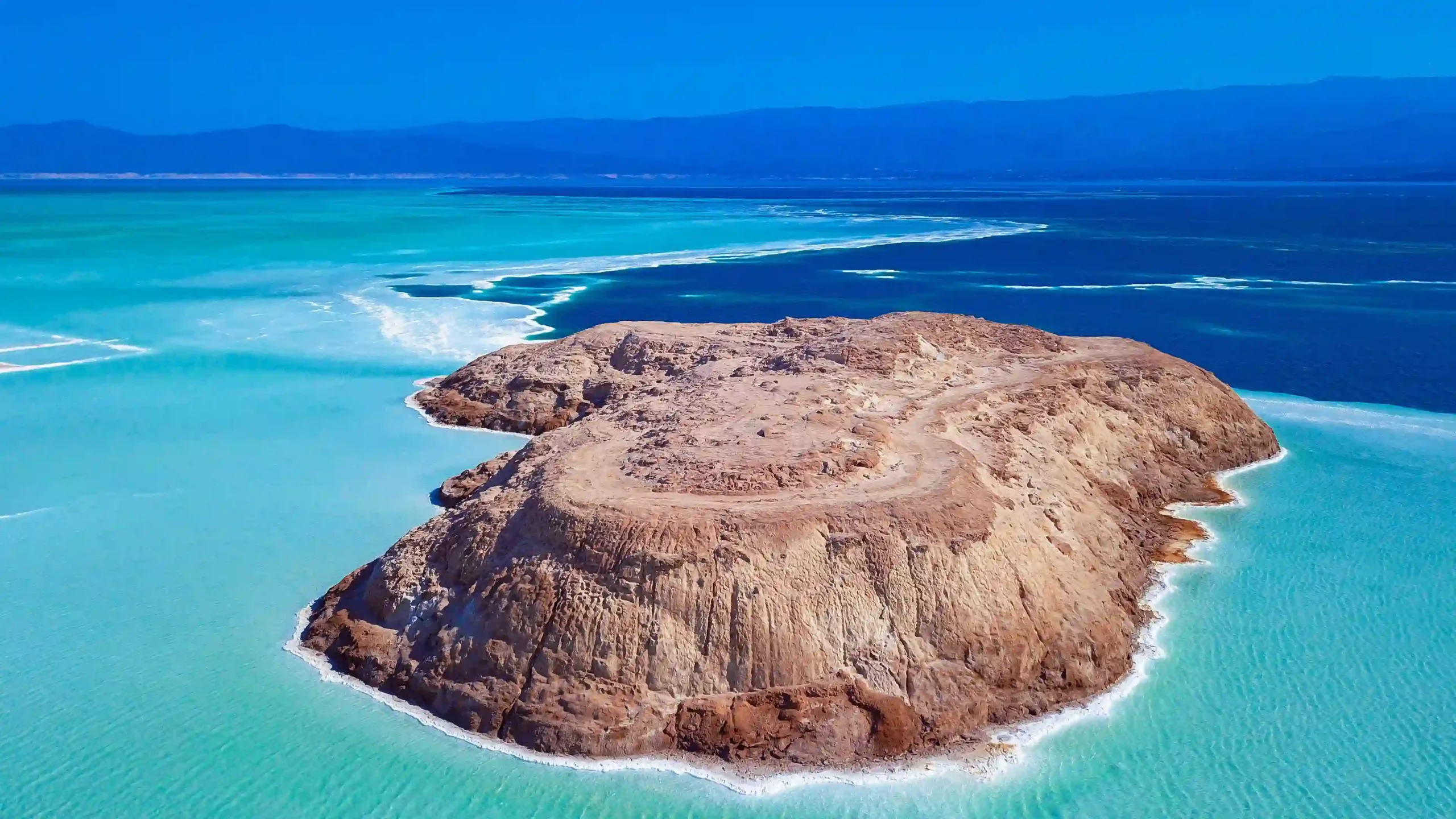
A turquoise crater lake 155 m below sea level, ringed by a thick white salt crust and black lava. Float in the salty water near the shore.
💡 Best time: Nov–FebHundreds of limestone chimneys puffing steam, with flamingos on the mudflats. Stay overnight to see sunrise over the chimneys.
💡 Best time: Nov–FebSnorkel with young whale sharks on a boat trip from Djibouti City.
💡 Best time: Nov–FebCoral islands a short boat ride from the capital, with white beaches, reefs and mangroves.
💡 Best time: Oct–MayPlace Menelik, the colourful central market, the Hamoudi Mosque and fresh seafood by the port.
💡 Best time: Nov–MarA rare cool juniper forest in the Goda Mountains, home to the endangered Djibouti francolin.
💡 Best time: Nov–AprDjibouti's oldest town, with whitewashed houses, mosques and a palm-lined seafront.
💡 Best time: Nov–AprA flat white clay plain known for mirages, sand yachting and the annual Grand Bara race.
💡 Best time: Nov–Feb🗺️ 7-Day Djibouti Itinerary for First-Time Visitors
Distances are short, but roads to the lakes are rough, so join a tour with a 4×4 and an experienced driver for Lake Abbe and Day Forest.
Follow this route from our travel guide to Djibouti day by day, or shorten it to fit your trip.
- Djibouti City: arrive, walk Place Menelik and the central market, then dinner of grilled fish by the port.
- Whale sharks: a morning boat trip to the Gulf of Tadjoura near Arta (Nov–Feb), with lunch on the beach.
- Lake Assal: drive to Africa's lowest point, float in the lake and see Ghoubbet Bay and Devil's Island on the way back.
- Lake Abbe: a long 4×4 drive via the Grand Bara Desert; overnight in a simple Afar camp.
- Lake Abbe sunrise: walk among the steaming chimneys at dawn, then return to the capital.
- Tadjoura & Day Forest: visit the old white town and the cool juniper forest in the mountains.
- Moucha Island: snorkel and relax on a final beach day before your flight.
➕ With more time: join a liveaboard dive trip to the Seven Brothers Islands, or combine Djibouti with Ethiopia by train.
💵 How Much Does a Trip to Djibouti Cost?
Djibouti is one of the more expensive countries in Africa, because almost everything is imported and tours need 4×4 vehicles. These are approximate daily costs per person in 2026, excluding international flights. Use our currency converter to see them in your own currency.
| Travel style | Per day (approx.) | What it covers |
|---|---|---|
| Budget | US$70–110 | Simple hotels, local cafés, shared transport, group tours |
| Mid-range | US$180–300 | Business hotels, restaurant meals, private 4×4 tours |
| Luxury | US$450 + | Five-star seafront hotels, private boats and guides |
💡 All prices in this travel guide to Djibouti are per person, per day, and change with the season and exchange rates.
🦈 A whale shark boat trip usually costs around US$80–150 per person, and a 4×4 tour to Lake Abbe with an overnight camp costs more. Ask what is included.
💡 Safety & Travel Tips for Your Travel guide to Djibouti
Djibouti is generally calm and one of the more stable countries in the region, with many foreign military bases. Take normal precautions in the capital and avoid the border areas with Eritrea and Somalia. The real risks are the heat and remote roads: travel with a licensed guide and a 4×4, carry plenty of water, and do not drive to the lakes alone. Taking photos of government buildings, the port, military sites and police is not allowed.
Even in winter, the lakes are hot, dry and far from shops.
Keep your distance, do not touch them and choose a responsible operator.
Ask permission before photographing people, and never photograph military sites.
Cards work in big hotels, but tours and markets often need cash in DJF or US dollars.
Djibouti is a Muslim country; cover shoulders and knees away from the beach.
"Bonjour" or "Salaam alaikum" opens every conversation.
🏨 Best Hotels in Djibouti: 8 Top Picks
Most hotels are in Djibouti City, especially on the Plateau du Serpent and the Héron peninsula. Outside the capital, expect simple camps and eco-lodges.
The capital's best-known five-star hotel, with pools, a private beach and a marina.
Check prices on Booking.com →A long-running seafront hotel with sea views and a pool.
Check prices on Booking.com →A modern high-rise hotel close to the port and business district.
Check prices on Booking.com →A relaxed hotel with a pool and garden, close to the sea.
Check prices on Booking.com →A central hotel, useful for walking to the market and Place Menelik.
Check prices on Booking.com →A simple hotel on the capital's main square.
Check prices on Booking.com →Bungalows on a white sand bay, good for snorkelling and the Day Forest.
Check prices on Booking.com →Simple huts and shared facilities; usually booked as part of a 4×4 tour.
Check prices on Booking.com →🔎 How we chose for this travel guide to Djibouti: hotels are picked for location, reputation and a spread of price levels, from five-star seafront hotels to the simple camps you need for the lakes. Prices and availability change daily, so the buttons open live Booking.com results for each property.
🤝 Affiliate disclosure: hotel buttons are affiliate links. If you book through them, AtlasWise may earn a small commission at no extra cost to you. It never changes which hotels we list.
🎓 Top Universities in Djibouti
Djibouti has one national university and a respected research centre that studies the country's unusual geology and environment.
| University | City | Type |
|---|---|---|
| University of Djibouti | Balbala, Djibouti City | Public |
| Centre d'Études et de Recherche de Djibouti (CERD) | Djibouti City | Public research centre |
The national university, founded in 2006, with faculties of science, law, economics and medicine.
Visit website →National research centre for earth sciences, energy, health and the Red Sea environment.
Visit website →🔎 How we chose for this travel guide to Djibouti: the main higher education and research institutions in Djibouti. Last checked: October 2026.
🌺 Djiboutian Culture & Food
Djibouti's culture mixes the traditions of its two main peoples, the Afar and the Somali (Issa), with Arab and French influences. Nomadic herding, poetry and hospitality are central to daily life. Djibouti became independent from France on 27 June 1977, and Independence Day is the biggest national celebration. Djibouti does not yet have a UNESCO World Heritage Site, but Lake Assal and Lake Abbe are among the strangest landscapes in Africa.
Food blends Somali, Ethiopian, Yemeni and French cooking. Try skoudehkaris (spiced rice with lamb), fah-fah (a spicy goat or beef soup), Yemeni-style fish baked in a clay oven, lahoh flatbread and sweet spiced tea. French baguettes and pastries are everywhere in the capital.
❓ Travel Guide to Djibouti: FAQ
Where is Djibouti?
Djibouti is in the Horn of Africa, at the entrance to the Red Sea, bordering Eritrea, Ethiopia and Somalia. Its capital is Djibouti City.
Do I need a visa for Djibouti?
Yes, almost all visitors need a visa. Apply online for an eVisa before travel; a short-stay tourist eVisa costs about US$23. Your passport should be valid for 6 months.
What is the best time to visit Djibouti?
November to February is the best time, with cooler weather and whale sharks in the Gulf of Tadjoura. June to September is extremely hot.
When can you swim with whale sharks in Djibouti?
Young whale sharks gather in the Gulf of Tadjoura near Arta from about November to February. Boat trips leave from Djibouti City.
Is Djibouti safe for tourists?
Djibouti is generally stable and calm. Avoid the border areas with Eritrea and Somalia, travel with a licensed guide in the desert, and protect yourself from the heat.
What currency is used in Djibouti?
Djibouti uses the Djiboutian franc (DJF), fixed at about 177.7 per US dollar. US dollars and euros are easy to exchange.
What is Lake Assal?
Lake Assal is a salt lake 155 metres below sea level, the lowest point in Africa. It is one of the saltiest lakes in the world.
How many days do you need in Djibouti?
Five to seven days covers the capital, Lake Assal, Lake Abbe, the whale sharks and a beach island.
📚 Trusted Resources for Your Travel guide to Djibouti
- Djibouti eVisa portalOfficial online visa applications
- Visit DjiboutiOfficial tourism office
- University of DjiboutiThe national university
- UK travel advice: DjiboutiSafety and entry updates
Finished this travel guide to Djibouti? 🌍 More Horn of Africa guides: Ethiopia · Eritrea · Somalia · Kenya · All of Africa
⚖️ Compare Djibouti with other countries in Compare Countries.
🏛️ Planning a bucket list? See the 20 best World Heritage Sites to visit.
 Ready to plan Djibouti?
Use our free travel tools to compare costs, time zones and distances, or browse our printable AtlasWise guides for other destinations.
Free travel tools → Browse AtlasWise travel guides🔖 Bookmark this travel guide to Djibouti and check it again before you fly: we update entry rules, prices and hotels regularly.