
🇧🇹 Travel Guide to Bhutan — Sacred Himalayan Dzongs, Tiger's Nest & Gross National Happiness
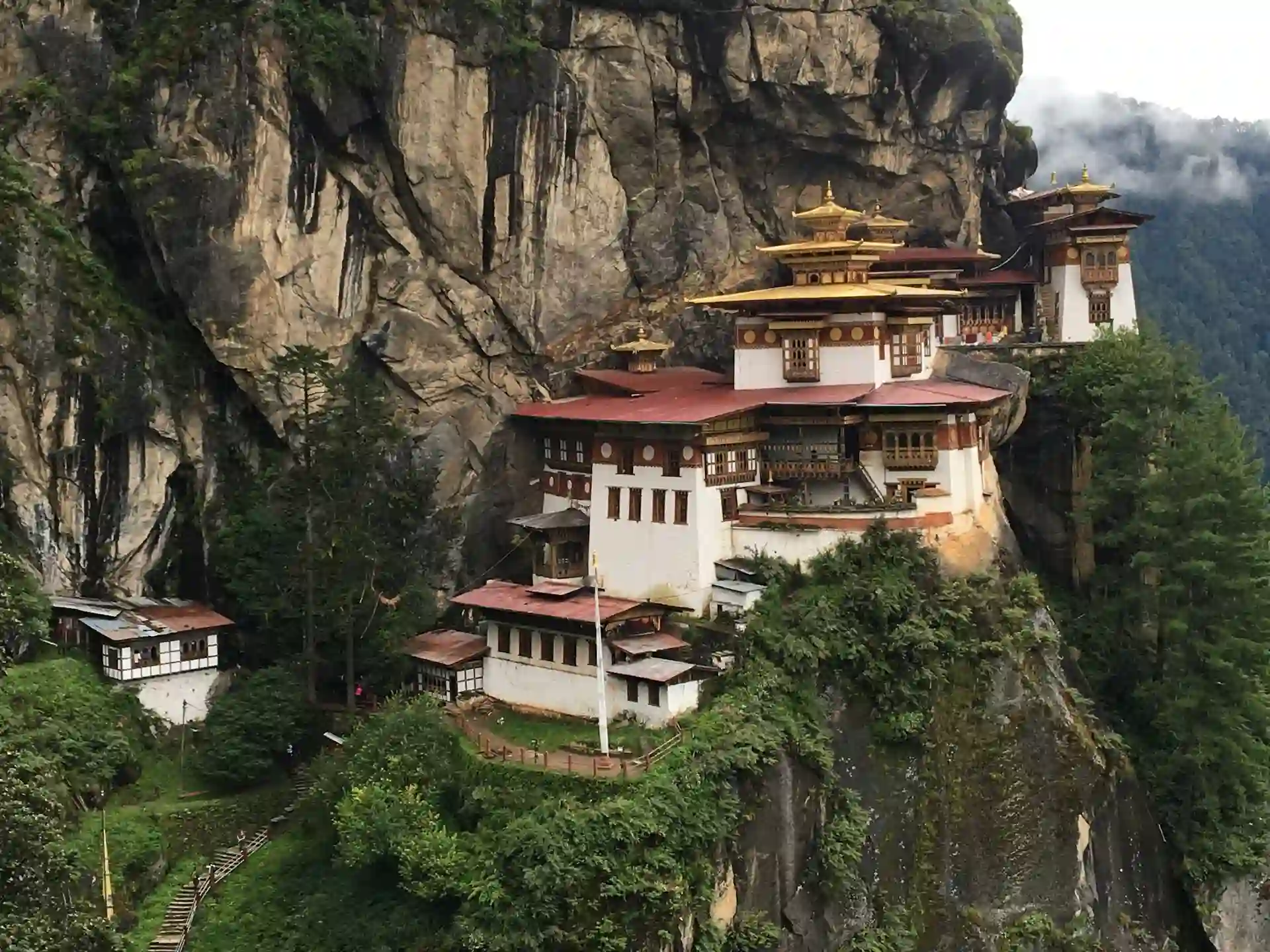
This comprehensive travel guide to Bhutan invites you into the Last Shangri-La—the world's only carbon-negative Himalayan kingdom guided by Gross National Happiness. From the clifftop sacred monastery of Paro Taktsang (Tiger's Nest) to the capital city of Thimphu, the majestic riverside fortress at Punakha Dzong, the high-altitude pass at Dochula Pass, and the glacial black-necked crane sanctuary in Phobjikha Valley, this travel guide to Bhutan details essential logistics, e-Visa rules, Sustainable Development Fees (SDF), and seasonal itineraries. Whether tasting spicy Ema Datshi, witnessing colorful Tshechu mask dances, or trekking remote Himalayan valleys, this travel guide to Bhutan is your ultimate resource.
Bhutan maintains over 70% forest cover constitutionally, hosts ancient Dzongs (fortress-monasteries), and preserves living Vajrayana Buddhist heritage amidst soaring Himalayan peaks.
🛂 Visa & Sustainable Development Fee (SDF) Rules: International tourists pay a mandatory daily Sustainable Development Fee (SDF) of **USD $100 per adult per night** (children aged 6–12 pay $50/night; under 6 enter free) alongside a one-time **USD $40 e-Visa fee**. Visas are submitted online via official portals or licensed tour operators. The local currency is the Bhutanese Ngultrum (BTN), pegged 1:1 with the Indian Rupee (INR).
📢 AdSense Leaderboard #1 (728x90 or responsive)
📊 Quick Facts
- Capital: Thimphu 💡 The world's only national capital without traffic lights
- Currency: Bhutanese Ngultrum (BTN / Nu.) 💡 Pegged 1:1 with Indian Rupee (INR cash accepted)
- Official Language: Dzongkha 💡 English is the medium of instruction and widely spoken
- Population: ~785,000 (2026 est.)
- Land Area: 38,394 km²
- Time Zone: UTC +6 (BTT)
📅 Plan Your Visit with This Travel Guide to Bhutan
When using your travel guide to Bhutan, aligning your trip with clear mountain weather and cultural festival dates is key. The autumn peak season (September to November) offers crisp blue skies, clear views of Himalayan peaks, and major Tshechu religious festivals in Paro and Thimphu. The spring season (March to May) paints valleys with blooming rhododendrons and magnolias, offering excellent conditions for high-altitude trekking. The winter season (December to February) brings clear sunny days, cold mountain nights, and opportunities to spot endangered black-necked cranes in Phobjikha Valley. Summer (June to August) brings monsoon rains, lush green landscapes, and fewer crowds. Plan using this travel guide to Bhutan.
Best for: Wildflower blooms, trekking, and Paro Tshechu mask dance festival
Best for: Alpine floral valleys, peaceful monastery visits, and wellness retreats
Best for: Himalayan mountain photography, Thimphu Tshechu, and Jhomolhari trek
Best for: Black-necked cranes in Phobjikha, clear mountain passes, and lower prices
📢 AdSense Leaderboard #2 (728x90 or responsive)
🛂 Visa & Entry Regulations for Your Travel Guide to Bhutan
Transit & Flight Logistics: Reaching Bhutan by air is an adventure itself. Paro International Airport (PBH) is the kingdom's sole international airport, nestled in a deep valley surrounded by 5,500-meter peaks. Flights are operated exclusively by state carriers Drukair and Bhutan Airlines from regional hubs including Bangkok, New Delhi, Singapore, Kathmandu, and Kolkata. Overland entry is available via land border crossings at Phuentsholing, Gelephu, and Samdrup Jongkhar on the Indian border. Review this travel guide to Bhutan before booking.
📋 Entry Requirements Checklist
- Sustainable Development Fee (SDF) USD $100 per adult per night paid online directly to the Royal Government
- E-Visa Application ($40) One-time USD $40 e-Visa fee processed online within 3 to 5 business days
- Passport Validity Passport must be valid for at least 6 months beyond intended stay
- Licensed Tour Guide Requirement A certified local guide is required for travel outside Paro and Thimphu
🔗 Official Resources: Department of Tourism Bhutan (Bhutan Believe) · Bhutan Tourism Services Portal
📚 Trusted Official Resources for Your Travel Guide to Bhutan
- Department of Tourism — Bhutan Believe Official national tourism portal, official visa application, SDF details, and festival calendar
- Bhutan Tourism Corporation Limited (BTCL) Official government-affiliated travel agency offering cultural tours and Himalayan trekking
- Lonely Planet — Bhutan Guide Independent travel itineraries, monastery etiquette guides, and mountain trekking tips
💡 Key Travel Tips for Visiting Bhutan
Start the 4-to-5 hour return hike up to Paro Taktsang at 7:00 AM to beat heat and afternoon trail crowds
Wear long sleeves and trousers/skirts covering legs when entering sacred fortress-monasteries
Try Bhutan's national dish made of hot green chili peppers cooked in melted local yak or cow cheese
Experience traditional herbal baths heated by river stones roasted over wood fires
Greeting locals with "Kuzuzangpo La" (Hello) and "Kadinchey La" (Thank you) shows warm respect
Bhutan uses Indian standard Type C, D, and G electrical outlets operating at 230V / 50Hz
🏰 Top Destinations & Attractions to Visit in Bhutan
Iconic 8th-century sacred cliffside monastery clinging to a sheer rock face 900m above the Paro Valley floor
💡 Best time: Oct–MayMajestic 17th-century fortress situated at the confluence of the Pho Chhu and Mo Chhu rivers surrounded by jacaranda trees
💡 Best time: Year-roundMassive 51.5-meter gilded bronze Buddha statue overlooking Thimphu Valley, Tashichho Dzong, and Centenary Farmers Market
💡 Best time: Year-roundScenic mountain pass at 3,100 meters featuring 108 memorial stupas (*Druk Wangyal Chortens*) with panoramic snow-capped views
💡 Best time: Oct–MarGlacial wetland valley home to wintering endangered black-necked cranes, Gangtey Goempa monastery, and nature trails
💡 Best time: Oct–MarCentral valley cluster containing Bhutan's oldest Buddhist temples (Jambay Lhakhang, Kurjey Lhakhang) and buckwheat fields
💡 Best time: Mar–May, Sep–NovOne of Bhutan's longest suspension bridges draped in colorful prayer flags spanning 160 meters over the Po Chhu River
💡 Best time: Year-roundSecluded western alpine valley reached via Chele La Pass (3,988 meters)—highest motorable pass in Bhutan with mountain vistas
💡 Best time: Mar–May, Sep–Nov📢 AdSense Leaderboard #3 (728x90 or responsive)
🏨 Top Luxury Lodges & Sanctuary Resorts in Bhutan
Bhutan offers world-renowned luxury mountain sanctuaries, boutique heritage lodges, and eco-wellness resorts.
Five Lodges Across Bhutan Valleys
Visit Website → 🏆 Ultra-luxury 5-star circuit of five peaceful lodges combining traditional Dzong architecture with modern luxuryThimphu, Punakha, Paro, Gangtey & Bumthang
Visit Website → ⭐ Award-winning "Circuit of Happiness" luxury lodges focused on holistic wellness and mountain ecologyParo Valley & Punakha Valley
Visit Website → 👑 World-class luxury retreats combining traditional artisan crafts with COMO Shambhala wellness spa programsSamten Lam, Thimphu
Visit Website → 🌿 Landmark 5-star palace hotel set in the heart of Thimphu featuring hand-painted murals and Jiva SpaPhobjikha Valley, Wangdue Phodrang
Visit Website → ✨ Multi-award winning 5-star eco-lodge offering sweeping valley views, freestanding baths, and fireplace suitesSatsam Choten, Paro
Visit Website → 🏙️ 100% Bhutanese-owned 5-star hotel featuring authentic hand-carved woodwork, shrine room, and mountain gardens⚠️ Note: Booking luxury lodges in Paro, Thimphu, and Punakha 3 to 6 months in advance for spring and autumn festival seasons is strongly recommended.
🎓 Major Academic Institutions in Bhutan
Central System Headquarters, Thimphu
Visit Website → 🏆 The national university system founded in 2003, consolidating constituent colleges across the kingdomRinchending, Phuentsholing
Visit Website → ⚙️ Premier engineering college in Bhutan delivering degrees in civil, electrical, IT, and architecture engineeringKanglung, Trashigang
Visit Website → 📜 Bhutan's oldest tertiary institution, known as the "Peak of Knowledge," offering arts, sciences, and computer studiesJigme Dorji Wangchuck National Referral Hospital, Thimphu
Visit Website → 🌱 Specialized medical university preparing healthcare professionals in modern medicine and traditional Sowa Rigpa healing📘 Higher education in Bhutan is overseen by the Ministry of Education and Skills Development.
🌺 Culture & Culinary Heritage of Bhutan
Bhutanese culture is deeply rooted in Vajrayana Buddhism, reflected in daily life, national dress (the Gho for men and Kira for women), and traditional architecture. The kingdom's philosophy of **Gross National Happiness (GNH)** balances economic development with environmental conservation, cultural preservation, and good governance.
Bhutan maintains its cultural legacy through annual **Tshechu** religious festivals held in fortress courtyards (Dzongs), where sacred masked cham dances depict Buddhist teachings and bestow blessings upon attendees.
Bhutanese cuisine is famous for its bold use of hot chili peppers, which are treated as a main vegetable rather than a spice. The national dish is Ema Datshi (fresh green or red chili peppers simmered with local melted cheese). Enjoy **Kewa Datshi** (sliced potatoes with cheese and chilies), **Shakam Paa** (dried beef cooked with dried chilies and radishes), **Momo** (steamed dumplings filled with pork or cheese), red rice, and warm **Suja** (salted butter tea).
Dzongkha is the national language. Friendly greetings like "Kuzuzangpo La" (Hello) and "Kadinchey La" (Thank you) will bring bright smiles across Bhutanese mountain villages.
🇧🇹 Ready to explore Bhutan?
Start planning your Tiger's Nest hike, Punakha Dzong tour, and Thimphu Himalayan valley trip with our expert travel resources.
Read Our Full Travel Guide →This travel guide to Bhutan is your ultimate reference for exploring this Himalayan kingdom. Start planning today!