
🇦🇫 Travel Guide to Afghanistan — Ancient Silk Road Crossroads, Cobalt Lakes & Rugged Peaks
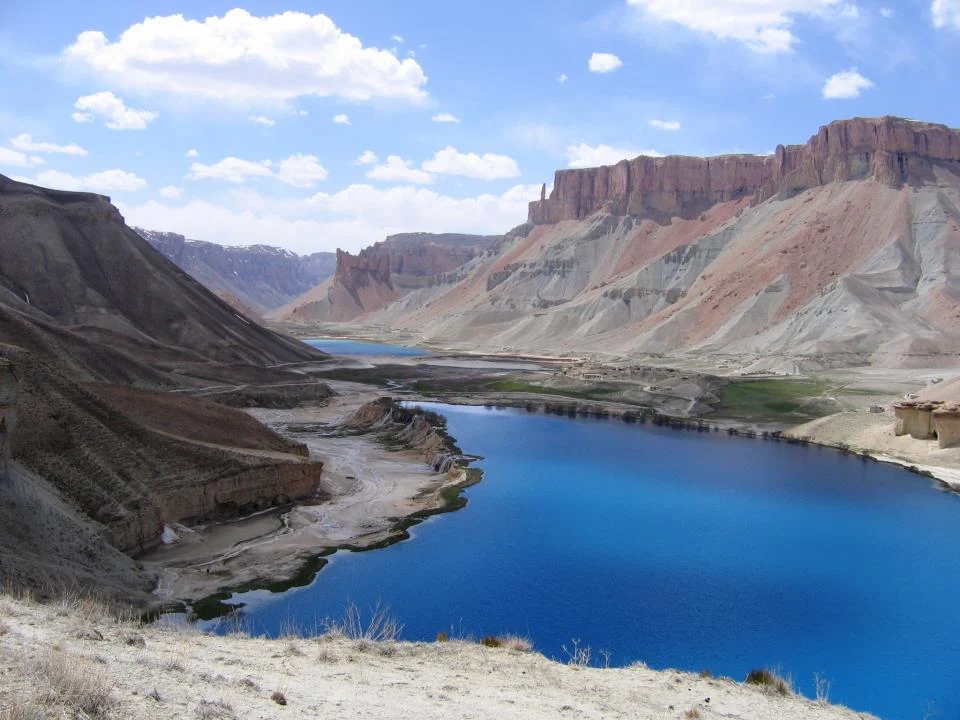
This comprehensive travel guide to Afghanistan invites experienced travelers and cultural historians to understand the deep heritage of a land positioned at the crossroads of Central Asia, South Asia, and the Middle East. From the bustling ancient markets, historic gardens, and museum treasures of Kabul to the breathtaking cobalt-blue travertine lakes of Band-e Amir National Park, the cliffside niches of Bamiyan Valley (UNESCO), the tiled grandeur of Herat’s Citadel & Blue Mosque, and the solitary 12th-century Minaret of Jam (UNESCO), this travel guide to Afghanistan outlines essential visa procedures, provincial travel permits, cultural norms, and geography. Whether researching Silk Road archaeology or admiring Hindu Kush landscapes, this travel guide to Afghanistan is your detailed factual resource.
Afghanistan features 2 UNESCO World Heritage Sites (Cultural Landscape and Archaeological Remains of the Bamiyan Valley & Minaret and Archaeological Remains of Jam), Band-e Amir (the country's first national park), and thousands of years of Silk Road heritage.
⚠️ Travel Advisory & Visa Notice: International government travel advisories generally recommend avoiding travel to Afghanistan due to security risks. Visitors must secure an official visa in advance via designated diplomatic missions or embassies, obtain regional travel permits (* جواز/Maktoub*) upon arrival in Kabul for province-to-province transit, and strictly adhere to local dress codes and regulations at all times.
📢 AdSense Leaderboard #1 (728x90 or responsive)
📊 Quick Facts
- Capital: Kabul 💡 Historic high-altitude capital city along the Kabul River
- Currency: Afghan Afghani (AFN / ؋) 💡 Entirely cash economy; bring physical US Dollars for exchange
- Official Languages: Dari (Persian) & Pashto 💡 Dari acts as the primary lingua franca across major urban hubs
- Population: ~42.2 million (2026 est.)
- Land Area: 652,864 km²
- Time Zone: UTC +4:30 (AFT)
📅 Plan Your Visit with This Travel Guide to Afghanistan
When consulting your travel guide to Afghanistan, factoring in high-altitude mountain topography and severe seasonal temperature shifts is vital. Afghanistan experiences a continental climate with harsh, cold winters and hot summers. The spring season (April to May) and autumn season (September to October) are universally recognized as the best times to visit—offering mild daytime temperatures, clear blue mountain skies, blooming almond orchards, and manageable mountain pass driving conditions. Summer (June to August) brings intense heat to southern desert regions like Kandahar and Mazar-i-Sharif, though high-altitude Bamiyan remains temperate. Winters (November to March) bring heavy snow and mountain road blockages across central highlands. Plan using this travel guide to Afghanistan.
Best for: Green valleys, blooming fruit orchards in Shamali, and comfortable city walks in Kabul
Best for: Overland travel to Bamiyan and Band-e Amir, clear mountain photography, and fresh pomegranate harvests
Traditional Persian New Year historically centered around the Blue Mosque in Mazar-i-Sharif
Abundant local market displays of world-famous Afghan grapes, melons, and dried fruits
📢 AdSense Leaderboard #2 (728x90 or responsive)
🛂 Visa & Entry Regulations for Your Travel Guide to Afghanistan
Consular Logistics & Travel Authorizations: All foreign travelers require a valid visa issued prior to arrival at an official diplomatic representation. International flights arrive primarily at Kabul International Airport (KBL). Upon arrival in Kabul, foreign visitors must register with local administrative offices and obtain specific provincial travel permits (*Maktoub*) detailing every province intended to be visited (such as Bamiyan, Herat, or Balkh). Foreign credit cards, debit cards, and international banking networks do not operate; travelers must carry crisp, unblemished US Dollar banknotes for local currency exchange into Afghanis (*AFN*). Review this travel guide to Afghanistan carefully.
📋 Entry & Transit Requirements Checklist
- Consular Tourist Visa Pre-Approval Must be issued and stamped into passport before boarding inbound flights
- Passport Validity (6+ Months) Must maintain at least 6 months validity from planned entry date
- Provincial Travel Permits (*Maktoub*) Mandatory permits obtained in Kabul for traveling across provincial borders
- Physical Currency (USD) Bring clean, untorn US Dollars for all accommodation, transport, and living costs
🔗 Official Resources: UNESCO World Heritage Sites in Afghanistan
📚 Trusted Official Resources for Your Travel Guide to Afghanistan
- UNESCO — Bamiyan Valley Heritage Official documentation on the cultural landscape, cliff cavities, and monastic caves of Bamiyan
- UNESCO — Minaret of Jam Architectural archive on the isolated 65-meter 12th-century Ghurid minaret in Ghor Province
- Lonely Planet — Afghanistan Overview Historical background, geographical overviews, and regional heritage summaries
🌍 Explore neighboring Central and South Asian destinations: Uzbekistan · Tajikistan · Pakistan
💡 Key Travel Tips for Visiting Afghanistan
Navigating road check-points and mountain terrain requires experienced local drivers fluent in Dari and Pashto
Sample Afghan cuisine staples: fragrant rice with carrots and raisins (*Kabuli Pulao*), steamed dumplings (*Mantu*), and stuffed flatbread (*Bolani*)
Men should wear modest local attire (*Perahan Tunban*); female travelers must wear loose-fitting head coverings (*hijab*) and conservative clothing
Never photograph government buildings, military infrastructure, checkpoints, or local people without explicit prior consent
Polite Dari phrases like "Salam Alaykum" (Hello) and "Tashakor" (Thank you) demonstrate immediate cultural respect
Afghanistan uses European Type C and Type F electrical outlets operating at 220V / 50Hz
🏔️ Top Historical & Natural Destinations in Afghanistan
Natural wonder — six interconnected deep blue mineral travertine lakes formed high in the Hindu Kush mountains of Bamiyan
💡 Best time: May–OctSilk Road heritage — ancient cliffside cavities, Buddhist monastic caves featuring historic wall frescoes, and Shahr-e Gholghola fortress ruins
💡 Best time: May–OctTimurid architectural masterpiece — Citadel of Alexander, intricate blue tilework of the Friday Mosque, and Musalla minarets
💡 Best time: Spring & Autumn12th-century monument — isolated 65-meter baked brick minaret soaring above a rugged river canyon in Ghor Province
💡 Best time: Jun–SepNorthern landmark — stunning turquoise-tiled Islamic shrine complex adorned with cobalt mosaics and white pigeons
💡 Best time: Spring & AutumnCapital history — 16th-century terraced Mughal gardens (*Bagh-e Babur*), National Museum of Afghanistan, and Bird Market (*Ka Faroshi*)
💡 Best time: Spring & AutumnDramatic mountain gorge — emerald-green alpine valley, roaring Panjshir River, and mountain hiking trails
💡 Best time: May–OctAncient Silk Road center — ancient mudbrick city walls, Noh Gumbad 9-domed mosque ruins, and historical Sufi heritage sites
💡 Best time: Spring & Autumn📢 AdSense Leaderboard #3 (728x90 or responsive)
🏨 Accommodation & Hotel Landscape in Afghanistan
Major urban centers like Kabul offer established commercial city hotels, while regional provincial capitals feature traditional guesthouses.
Frogh Street, Downtown Kabul
Visit Website → 🏆 Premium 5-star international standard hotel set in landscaped gardens, offering dining and wellness facilitiesBagh-e Bala Hill, Kabul
⭐ Historic hilltop hotel offering sweeping views over the city of Kabul and surrounding mountain peaksCity Center, Herat
👑 Established multi-story hotel in central Herat providing convenient access to the Citadel and Old BazaarBamiyan Valley
🌿 Popular regional hotel offering direct views across the Bamiyan cliff cavity and surrounding mountain peaks⚠️ Note: Accommodations in regional provinces should be arranged directly through your local tour operator prior to arrival.
🎓 Major Academic Institutions in Afghanistan
Aliabad, Kabul
Visit Website → 🏆 Founded in 1932, Afghanistan's oldest and primary public institution of higher educationKarte Mamourin, Kabul
Visit Website → ⚙️ Established in 1963, premier public technical university specializing in engineering, architecture, and geologyHerat City
Visit Website → 📜 Major regional public university serving western Afghanistan, established in 1988Mazar-i-Sharif, Balkh Province
Visit Website → 🌱 Prominent northern public university offering faculties in medicine, engineering, agriculture, and law📘 Higher education in Afghanistan is governed by the Ministry of Higher Education (MoHE).
🌺 Culture & Culinary Heritage of Afghanistan
Afghanistan’s culture is defined by strong hospitality traditions, poetry, and ethnic diversity—including Pashtun, Tajik, Hazara, Uzbek, and Turkmen communities. Guests are traditionally welcomed with tea (*Chai*) and treated with immense respect. Classic Afghan hospitality revolves around the *Dastarkhan* (a dining cloth laid upon the floor). Intricate craft traditions thrive across regions, including hand-knotted Afghan carpets, lapis lazuli jewelry, and blue glassware from Herat.
Afghanistan protects 2 UNESCO World Heritage Sites: the Minaret and Archaeological Remains of Jam (inscribed in 2002) and the Cultural Landscape and Archaeological Remains of the Bamiyan Valley (inscribed in 2003).
Afghan cuisine is rich, mild, and aromatic—celebrating rice, slow-cooked meats, fresh yogurt, and dried fruits. The national dish is Kabuli Pulao (tender lamb buried beneath steamed long-grain basmati rice, crowned with caramelized carrots, raisins, and slivered pistachios). Enjoy **Mantu** (steamed beef or lamb dumplings topped with garlic yogurt and tomato lentil sauce), **Bolani** (crispy flatbread stuffed with spiced potatoes, leeks, or pumpkins), grilled lamb kebabs, and warm flatbread (*Naan*). Finish meals with green cardamon tea (*Chai Sabz*) paired with almonds and walnuts.
Dari and Pashto are official languages. Traditional greetings like "Salam Alaykum" (Peace be upon you) or "Tashakor" (Thank you) will be warmly received everywhere.
🇦🇫 Understanding Afghanistan's Heritage
Discover more about the natural landscapes, historical monuments, and Silk Road heritage of Afghanistan with our structured travel guides.
Read Our Full Travel Guide →This travel guide to Afghanistan is your detailed reference for exploring the geography and historic crossroads of Central Asia.