
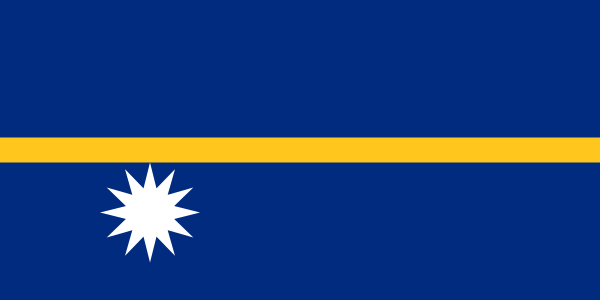
🇳🇷 Travel Guide to Nauru — The World's Least-Visited Country
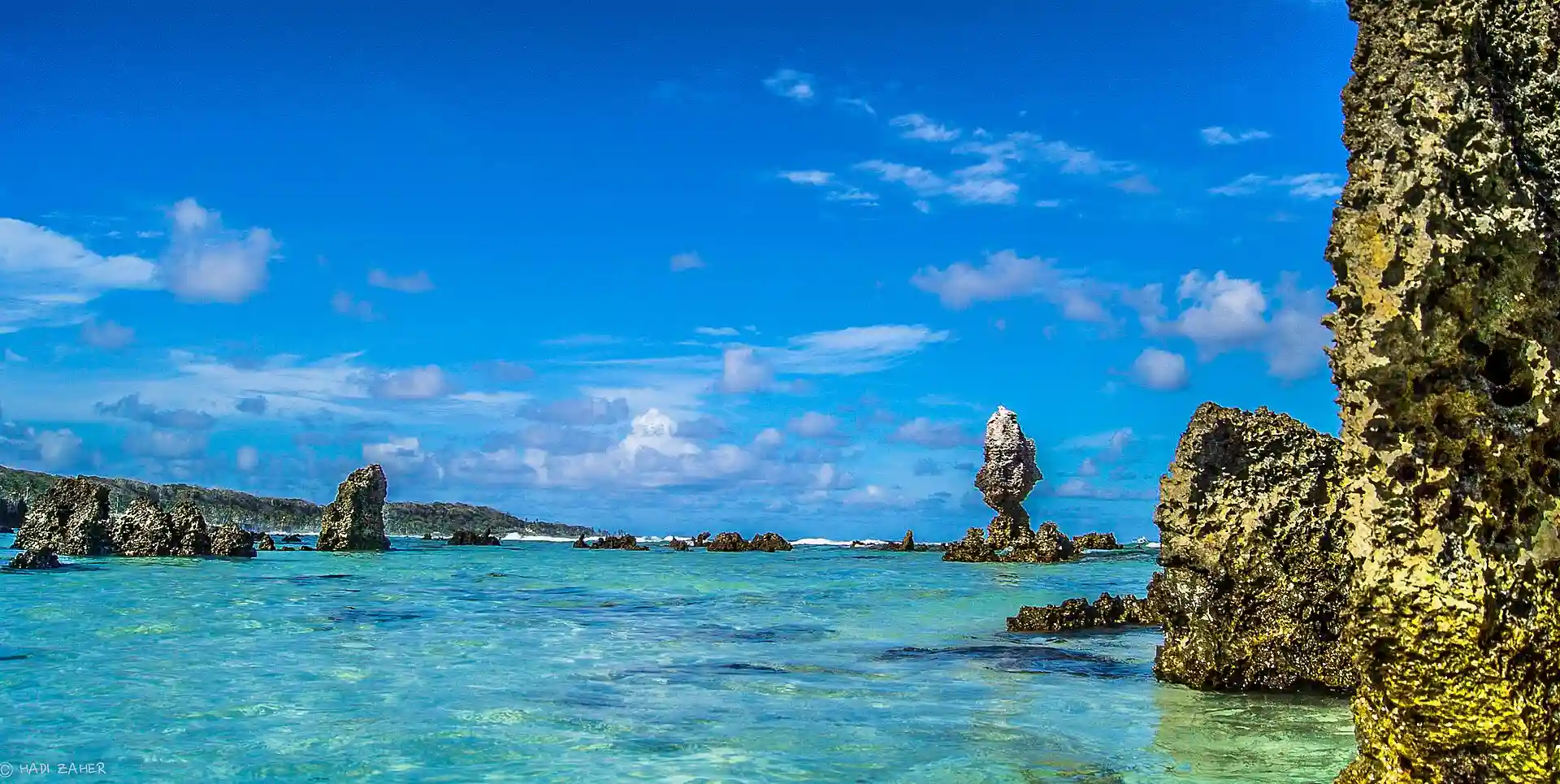
This comprehensive travel guide to Nauru will help you discover the world's least-visited sovereign nation — a tiny Micronesian island of lunar landscapes, turquoise waters, and resilient culture. From the pristine shores of Anibare Bay to the eerie phosphate pinnacles of Command Ridge and the tranquil waters of Buada Lagoon, this travel guide to Nauru covers everything you need to plan an extraordinary journey. As the world's least-visited country with only 200 tourists per year, Nauru offers intrepid travellers a one-of-a-kind experience: a 21-square-kilometre island of stark contrasts, WWII relics, and genuine isolation. Whether you're circling the 19 km coastal road by scooter, snorkelling the coral reef at Anibare Bay, or learning about the island's complex phosphate history, this travel guide to Nauru is your essential companion.
Nauru is the third-smallest country in the world by area, with a population of approximately 10,834. It was once the richest country per capita due to phosphate mining.
⚠️ Important Travel Advisory: Nauru is one of the world's most difficult countries to visit. All visitors require a pre-approved Letter of Invitation (LOI) before travel, and the visa process takes 4–6 weeks. The island operates on an entirely cash-based economy — bring enough Australian Dollars for your entire stay. This travel guide to Nauru provides practical advice for making the most of this unique destination.
📢 AdSense Leaderboard #1 (728x90 or responsive)
📊 Quick Facts
- Capital: Yaren 💡 The administrative centre of the island republic
- Currency: Australian Dollar (AUD) 💡 Cash only — bring physical cash for your entire stay
- Language: Nauruan, English 💡 English is widely spoken in government and tourism
- Population: ~10,834 (2026 est.)
- Area: 21 km²
- Time Zone: UTC +12 (NRT)
📅 Plan Your Perfect Trip with This Travel Guide to Nauru
When planning your travel guide to Nauru, the tropical climate offers warm temperatures year-round, with consistent highs of around 28°C (82°F). The best time to visit Nauru is during the dry season from May to October, when southeast trade winds bring lower humidity, clearer water for snorkelling, and more comfortable conditions for exploring. The wet season from November to April brings higher rainfall and humidity. June to September is generally considered the peak period for reliable weather. This travel guide to Nauru will help you plan the perfect trip for this unique destination.
Best for: Snorkelling, island exploration, and beach activities — clear water and lower humidity
Best for: Lush landscapes and lower prices — expect higher humidity and rain
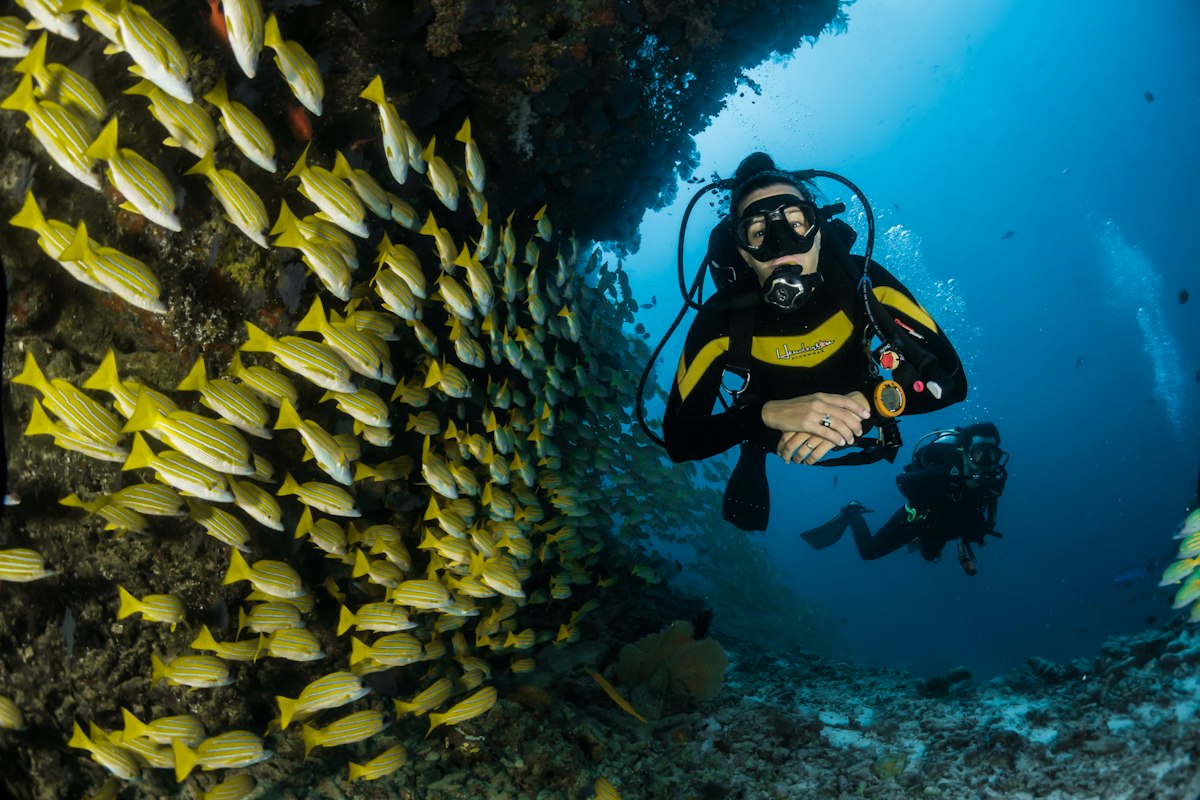
Best for: Crystal-clear water and vibrant marine life at Anibare Bay
Independence Day (31 January) · Constitution Day (17 May)
📢 AdSense Leaderboard #2 (728x90 or responsive)
🛂 Visa Information for Your Travel Guide to Nauru
Pre‑Approved Entry Permit Required: Nauru is one of the most difficult countries to visit. Every visitor — regardless of nationality — must obtain a pre-approved Letter of Invitation (LOI) before boarding a flight to the island. The visa process is entirely email-based and takes four to six weeks minimum. You need a confirmed hotel booking before Immigration will even send you the application form. The standard tourist visa fee for a one-month stay is AU$50 (2026 rate).
📋 Visa Requirements
- Letter of Invitation (LOI) Mandatory for all visitors — apply via email to Nauru Immigration
- Passport Validity Must be valid for at least six months beyond your stay
- Onward Travel Proof of onward travel within 30 days is required
- Visa Fee AU$50 for a one-month tourist visa (2026 rate)
🔗 Official Resources: Nauru Government — Visa Requirements · Nauru Immigration (visa@naurugov.nr)
📚 Trusted Resources for Your Travel Guide to Nauru
- Government of Nauru Official government website
- South Pacific Islands — Nauru Regional tourism information
- Britannica — Nauru Comprehensive country profile
- Lonely Planet — Nauru Travel information and attractions
💡 Key Travel Tips for Your Nauru Adventure
Nauru operates almost entirely on cash — bring all the Australian Dollars you need for your entire stay. ATMs frequently run out of cash.
Start the visa process 4–6 weeks in advance. You need a hotel booking before Immigration will send the application form.
Nauru Airlines is the only commercial carrier, operating from Brisbane via Nadi and Tarawa. Build flexibility into your itinerary.
There is no public transport. Rent a scooter or car (approx. AUD 25/day) to explore the 19 km coastal road.
Local Digicel SIM cards are available; Wi-Fi requires prepaid data vouchers.
Nauru has a low crime rate. Take normal precautions and be mindful of strong currents at Anibare Bay.
🏝️ Top Attractions to Visit in Nauru
The jewel of Nauru's east coast — a 2 km stretch of white sand, turquoise water, and vibrant coral reefs. The only swimmable beach on the island.
💡 Best time: High tide for snorkellingA jade-green freshwater lagoon in the heart of the island — an oasis surrounded by pandanus trees and phosphate pinnacles.
💡 Best time: Afternoon for a refreshing swimThe highest point on the island — offers panoramic views and features Japanese WWII bunkers and artillery positions.
💡 Best time: Sunrise for the best viewsA hidden underground cave pool in the Yaren District — a cool, refreshing escape from the tropical heat.
💡 Best time: Midday to escape the heatLocated in the Yaren District — houses artefacts documenting the island's culture, phosphate history, and WWII occupation.
💡 Best time: WeekdaysA lunar landscape of jagged white limestone pinnacles — a haunting reminder of Nauru's phosphate mining era.
💡 Best time: Late afternoon for dramatic lightThe seat of Nauru's government — a modern building with views over the island's interior.
💡 Best time: Weekdays during sessionThe island's largest supermarket — a hub of daily life, and the place to rent scooters and stock up on supplies.
💡 Best time: Weekday mornings📢 AdSense Leaderboard #3 (728x90 or responsive)
🏨 Top Hotels in Nauru
Nauru has exactly three main accommodation options across the entire island, and none of them appear on standard booking platforms. All bookings require direct contact by email or phone. An average hotel room for two, with a good breakfast, costs around AU$110–180 per night.
Meneng District
Contact directly 🏨 The largest accommodation complex — includes a restaurant, bar, and one of only four ATMs on the island.Aiwo District
Contact directly 🏨 The tallest building in Nauru — budget-friendly rooms, often with a faint diesel scent from the nearby power station.Ewa District
Contact directly 🏡 Connected to Nauru's biggest supermarket — a practical and convenient stay.Nauru
Contact directly 🏨 The newest and highest-rated stay — features a pool, spa, and gym.Anibare District
Contact directly 🏡 Steps from Anibare Bay — a homestay experience with local hospitality.⚠️ Please note: Book accommodation 3–6 months in advance. All bookings require direct contact — no online booking platforms work reliably.
🎓 Education in Nauru
Nauru has a limited higher education system. Students pursue tertiary education overseas, primarily in Australia, Fiji, and New Zealand. The University of the South Pacific has a presence in the region, but there is no campus on Nauru itself.
Regional (Fiji-based)
Visit Website → 🌏 Regional university serving Pacific Island nations — Nauruan students often enrol hereAustralia / Fiji / New Zealand
Contact directly 📘 Most Nauruan students pursue higher education overseas📘 Higher education opportunities in Nauru are extremely limited; most students study abroad.
🌺 Culture & Cuisine in Nauru
Nauruan culture is a unique blend of Micronesian traditions and Western influences, shaped by centuries of isolation and the dramatic impact of phosphate mining. The island was settled by Micronesian and Polynesian peoples at least 3,000 years ago, and the distinctive Nauruan language suggests a long period of isolation from nearby islands. Traditional Nauruan society was organised into 12 tribes, with a stratified class system. The displacement of traditional culture by contemporary Western influences is evident, with little remaining from old customs. The discovery of phosphate in 1900 plunged Nauru into colonialism and drastically altered the islanders' way of life. Traditional music, dance, and community singing remain important, with performances at cultural events and the Independence Day celebrations on 31 January.
Nauruan cuisine is built around fresh seafood, coconut, and imported staples. The island's remoteness means that most food is imported, but local fish is abundant. Traditional dishes include coconut crab, fresh reef fish, and taro. Local barbecues and fish markets offer the best taste of Nauruan life. Meals are often simple and fresh, with fish grilled over open fires and served with rice or root vegetables. The national drink is kava, a traditional Pacific beverage made from the root of the kava plant — it is consumed in the evenings and plays a role in social gatherings.
Dress codes are casual, but modest attire is appreciated when visiting government buildings and churches. Nauru is a predominantly Christian country, and Sunday is widely observed as a day of rest. English is widely spoken, making communication straightforward for travellers.
🇳🇷 Ready to explore Nauru?
Start planning your journey to the world's least-visited country with our expert guides and resources.
Read Our Full Travel Guide →This travel guide to Nauru is your ultimate resource for planning an extraordinary trip to one of the world's most remote and fascinating island nations. Start your adventure today with our expert tips, insider recommendations, and practical advice.