
🇰🇲 Travel Guide to Comoros — The Perfume Islands of the Indian Ocean
This comprehensive travel guide to Comoros will help you discover one of the Indian Ocean's most authentic and off-the-beaten-path archipelagos, where volcanic peaks, aromatic ylang-ylang plantations, and turquoise lagoons remain untouched by mass tourism. From the ancient Swahili stone alleys of the capital Moroni and the colossal crater of active volcano Mount Karthala to the nesting sea turtles of Mohéli and the fragrant clove hills of Anjouan, this travel guide to Comoros covers everything you need to plan an extraordinary adventure. Known historically as the "Islands of the Moon" (Jazair al-Qamar), Comoros offers travellers a mesmerizing blend of African, Arab, and French influences wrapped in warm island hospitality. Whether you are snorkeling alongside humpback whales in the Mohéli Marine Park, swimming in the emerald waters of Lac Salé, or tasting fresh lobster cooked with vanilla, this travel guide to Comoros is your essential companion.
The Union of the Comoros comprises three major volcanic islands — Grande Comore (Ngazidja), Mohéli (Mwali), and Anjouan (Nzwani) — located in the Mozambique Channel off the East African coast.
⚠️ Practical Travel Advice: Comoros is a peaceful and culturally rich destination, but infrastructure is rustic. Cash is essential — credit card acceptance is extremely rare outside major hotels in Moroni, and ATMs can run out of cash; bring Euros (€) for easy exchange. Cultural respect — Comoros is a predominantly Muslim nation; dress modestly when visiting villages and historic mosques. Inter-island travel — domestic flights and boat ferries connect the islands but operate on flexible schedules, so build buffer days into your itinerary. This travel guide to Comoros equips you with all the details for a seamless journey.
📢 AdSense Leaderboard #1 (728x90 or responsive)
📊 Quick Facts
- Capital: Moroni 💡 Historic capital on Grande Comore known for medina alleys and coral stone mosques
- Currency: Comorian Franc (KMF) 💡 Fixed peg: 1 EUR = 491.96 KMF — Euros (€) accepted almost everywhere
- Languages: Comorian (Shikomor), French, Arabic 💡 French is widely used in government and tourism; Shikomor is spoken daily
- Population: ~870,000 (2026 est.)
- Area: 1,861 km²
- Time Zone: UTC +3 (EAT - East Africa Time)
📅 Plan Your Perfect Trip with This Travel Guide to Comoros
When planning your travel guide to Comoros, keep in mind that the tropical maritime climate features two primary seasons. The best time to visit Comoros is during the dry, cool season (Kusi) from May to October, when temperatures average pleasant 20–28°C (68–82°F) with low humidity and minimal rainfall — ideal for hiking Mount Karthala and island hopping. The hot, humid rainy season (Kashkazi) runs from November to April, bringing tropical downpours and warmer waters. July to October coincides with the annual migration of humpback whales through the Mozambique Channel, making it an extraordinary time for marine wildlife enthusiasts. This travel guide to Comoros will help you plan the perfect trip for every season.
Best for: Trekking Mt Karthala, beach lounging, cultural tours, and pleasant weather
Best for: Humpback whale watching and sea turtle nesting in Mohéli Marine Park
Best for: Nightly green sea turtle egg laying on the beaches of Itsamia in Mohéli
Best for: Lush tropical foliage, blooming ylang-ylang trees, and warm diving waters
📢 AdSense Leaderboard #2 (728x90 or responsive)
🛂 Visa Information for Your Travel Guide to Comoros
Visa-on-Arrival for All Foreign Tourists: Comoros maintains an exceptionally open immigration policy. Citizens of all countries worldwide can obtain a 45-day tourist visa on arrival at Prince Said Ibrahim International Airport (HAH) in Moroni or at sea ports. The visa cost is approximately €30 / $50 USD or 15,000 KMF (payable in cash in Euros or US Dollars). Ensure your passport is valid for at least six months beyond your entry date and that you have proof of return flight tickets and hotel accommodation. For a complete travel guide to Comoros, double-check your documents prior to travel.
🌍 Eligible Nationalities (Universal Visa-on-Arrival)
* Visa on arrival is granted to virtually all international passports upon payment of the fee.
📋 Mandatory Entry Requirements
- Passport Validity Must be valid for at least 6 months past your date of arrival
- Visa Fee in Cash €30 / $50 USD cash required at airport arrival counter
- Return Flight Ticket Printed proof of onward or departure flight ticket mandatory
- Yellow Fever Certificate Required if arriving from yellow fever endemic areas (e.g. East Africa)
🔗 Official Resources: Ministère du Tourisme des Comores
📚 Trusted Resources for Your Travel Guide to Comoros
- Britannica — Comoros Profile Comprehensive history, geography, and cultural analysis
- Lonely Planet — Comoros Travel itineraries, highlights, and practical tips
- UNESCO — Mohéli Biosphere Reserve Official information on marine park marine conservation
- U.S. State Dept — Comoros Consular updates and travel safety guidance
🌍 Explore our other island guides: Madagascar · Seychelles · Mauritius
💡 Key Travel Tips for Your Comoros Adventure
Euros (€) are widely accepted alongside Comorian Francs (KMF). ATMs are limited; carry ample cash Euro banknotes.
Try Langouste à la vanille (lobster in vanilla sauce), Pilaou (spiced rice), and fresh grilled tuna with cassava.
Shared taxis (taxi-brousse) are cheap for island routes. Hire private drivers or boats for remote beaches and Mohéli transfers.
Comoros is one of the world's leading producers of Ylang-Ylang essence used in fine French perfumes. Visit local distilleries!
Cover shoulders and knees in public towns and medinas. Swimsuits are appropriate at beach resorts and isolated bays.
Malaria prophylaxis is recommended. Bring reef-safe sunscreen, mosquito repellent, and comprehensive medical insurance.
🏝️ Top Islands and Destinations to Visit in Comoros
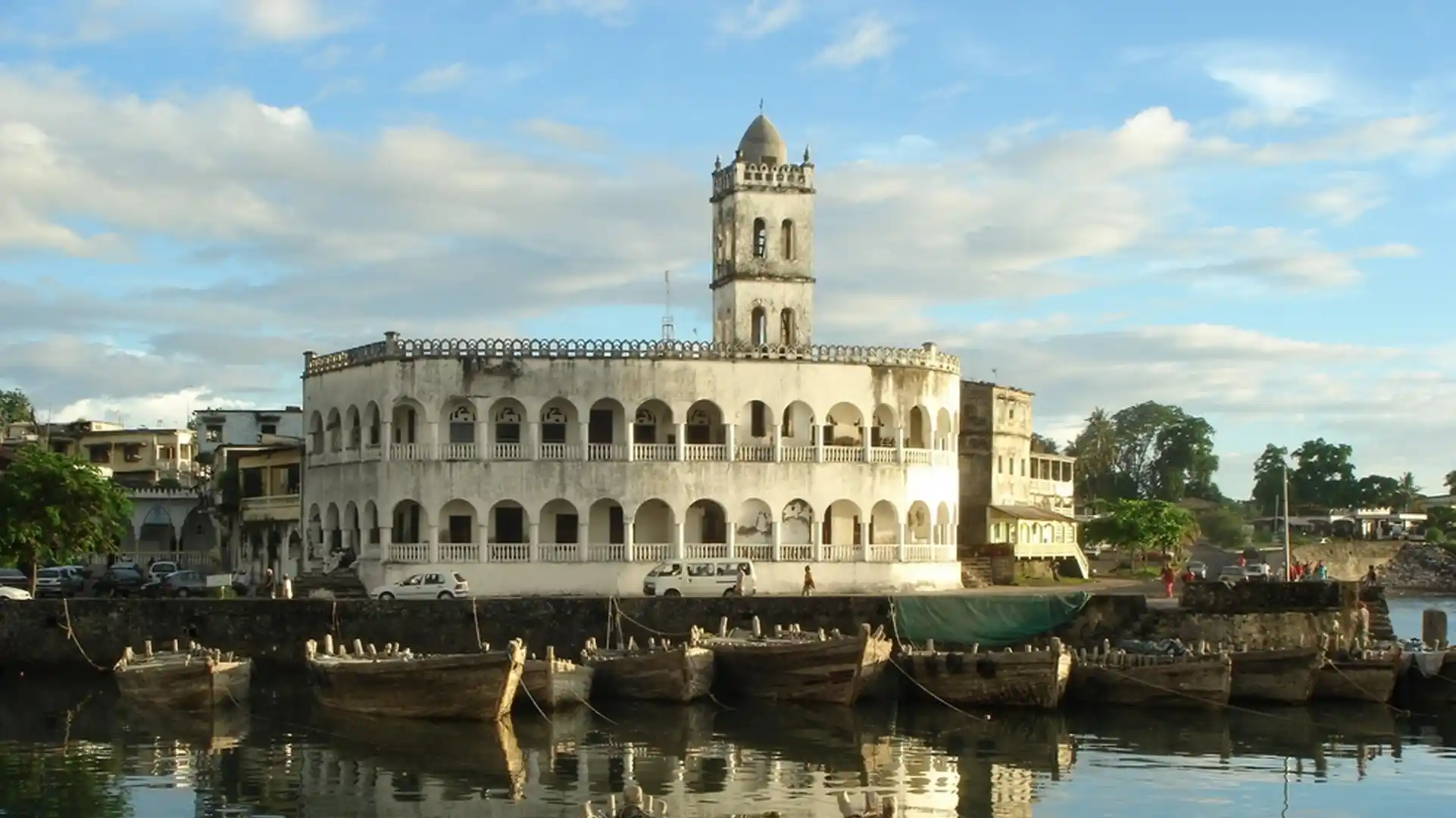
Capital city — ancient stone Medina, Badjanani Mosque, bustling Volo-Volo market, and historic port atmosphere
💡 Best time: May–OctActive 2,361m volcano on Grande Comore featuring one of the world's largest caldera craters — a premier trekking challenge
💡 Best time: May–OctEcotourism gem — UNESCO biosphere reserve with giant sea turtles at Itsamia, humpback whales, and pristine coral reefs
💡 Best time: Year-round (Jul–Oct for whales)"The Pearl of Comoros" — steep green hillsides fragrant with ylang-ylang, cloves, and historic 15th-century sultans' palaces at Mutsamudu
💡 Best time: May–OctMystical saltwater crater lake near Mitsamiouli on northern Grande Comore, set against dramatic black volcanic cliffs
💡 Best time: May–OctBlinding white coral sands juxtaposed against dark lava rock formations and crystal turquoise waters
💡 Best time: May–Oct18th-century citadel built on Anjouan to protect against Malagasy pirates, offering winding alleys and panoramic bay views
💡 Best time: May–OctSpot rare giant fruit bats with 1.4-meter wingspans in the highland forests of Anjouan and Mohéli
💡 Best time: May–Oct📢 AdSense Leaderboard #3 (728x90 or responsive)
🏨 Top Hotels & Lodges in Comoros
Accommodations in Comoros range from comfortable oceanfront hotels in Moroni to eco-lodges dedicated to conservation in Mohéli.
Moroni, Grande Comore
Visit Website → 🏨 Premier seaside hotel in Moroni with swimming pool and ocean viewsNioumachoua, Mohéli
Visit Website → 🐢 Famous eco-lodge nestled inside Mohéli Marine Park for whale and turtle toursMitsamiouli, Grande Comore
Visit Website → 🏖️ Beachfront resort located near the northern white sand beachesFomboni, Mohéli
Contact directly 🌿 Charming guest house in Mohéli's main town with friendly local hostingMoroni City Centre
Contact directly 🏨 Quiet boutique hotel in central Moroni with garden diningMutsamudu, Anjouan
Contact directly 🏨 Comfortable base for exploring Anjouan's citadel and perfume estates⚠️ Please note: Hotel availability on Mohéli and Anjouan is limited. Book eco-lodges well in advance of peak season.
🎓 Top Universities in Comoros
Higher education in Comoros is anchored by the national university across its main island campuses.
Moroni, Grande Comore & Anjouan
Visit Website → 🏆 The nation's public university offering programs in law, sciences, humanities, and environmental studiesMvouni, Grande Comore
Visit Website → ⚙️ Technical and vocational higher education branch of UDC🌺 Culture & Cuisine in Comoros
Comorian culture is a unique fusion of Swahili coastal traditions, Arab merchant history, and French colonial influence. The island's social fabric is famously celebrated through the Grand Mariage (Anda) — a grand traditional wedding festival on Grande Comore that grants high social status and community prestige to men. Music blends traditional drums with Arab oud strains and Malagasy rhythms.
The cuisine of Comoros reflects its nickname, the Perfume Islands, generously incorporating locally grown spices such as vanilla, cloves, cinnamon, nutmeg, and cardamom. Seafood is central: don't miss Langouste à la vanille (lobster poached in native vanilla sauce), Pilaou (a fragrant beef or chicken rice pilaf seasoned with cloves and cardamom), and Mkatra foutou (leavened coconut milk bread). Fresh tropical fruits like mango, papaya, jackfruit, and fresh coconut water are served at every meal.
🇰🇲 Ready to explore Comoros?
Start planning your Indian Ocean getaway with our expert guides and resources.
Read Our Full Travel Guide →This travel guide to Comoros is your ultimate resource for planning an unforgettable trip to the Perfume Islands. Start your adventure today with our expert tips, insider recommendations, and practical advice.